Every year in AP Psychology, we spend a unit studying psychological disorders; how they are classified, what causes them, and how they are treated. It’s one of the most complex and important topics we cover because it pushes students to think carefully about mental health, stigma, and the many ways human behavior can be understood.
But reading about disorders in a textbook is only part of the story.
To help students truly engage with the material, I assign a creative project: students must rewrite a fairy tale and give one or more characters a psychological disorder. Their challenge is to tell a compelling story while also accurately portraying the psychological condition they’ve chosen.
From there, the possibilities are wide open.
Students can present their story in any medium they choose. Some create short films. Others write and illustrate children’s books. Some perform short plays in class. We’ve even had students compose songs or record podcast episodes. The goal is to combine scientific understanding with creative storytelling.
Every year the results are imaginative, thoughtful, and often surprisingly moving.
This year was no exception.
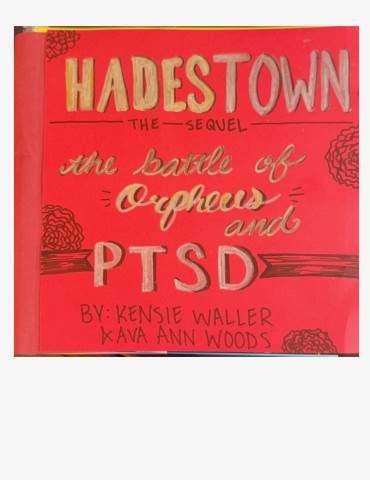
One of the most creative projects came from Kensie Waller and Ava Ann Woods, who drew inspiration from the Broadway musical "Hadestown," a show they just performed in during Darlington’s winter musical. Their project retold the story through a beautifully illustrated picture book they created entirely from scratch. In their version, the character Orpheus struggles with post-traumatic stress disorder (PTSD), and the story explores how trauma can shape a person’s fears, decisions, and relationships. The artwork and storytelling worked together in a way that made the psychological themes both accessible and emotionally powerful.
Another standout project came from Jaylen Patel, who produced a short film centered on the animated racing legend Lightning McQueen. In Jaylen’s version, the character wrestles with narcissistic personality disorder, and the film cleverly used the familiar character’s competitive personality to explore themes of ego, insecurity, and personal growth. It was a creative way to take a character students already knew and examine him through a psychological lens.
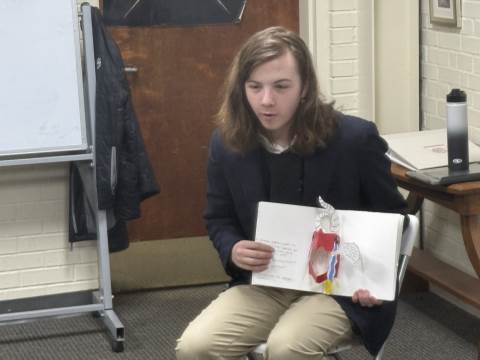
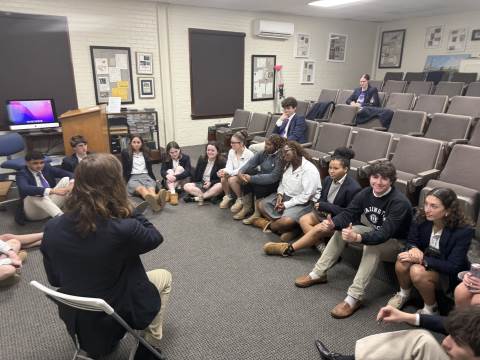
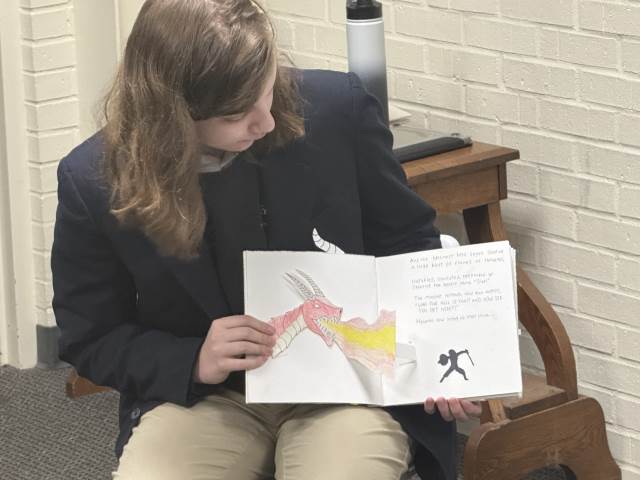
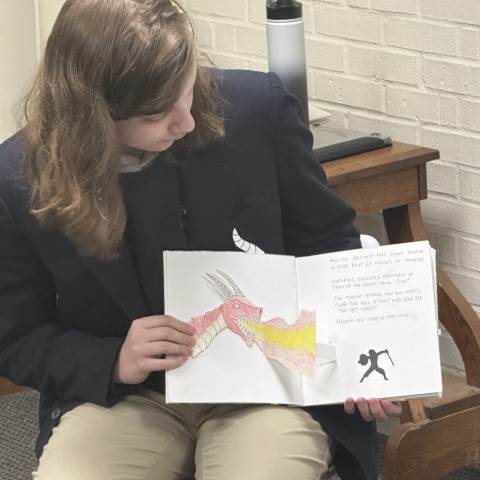
Perhaps the most memorable presentation of the year came from Riley Rast, who reimagined the Greek myth of Herakles battling the Lernaean Hydra. Riley created an elaborate handmade pop-up book, complete with moving elements and layered illustrations. When it came time to present, Riley invited classmates to gather around for “story time” as the book unfolded page by page. It felt a little like being back in elementary school and the format made the story both engaging and memorable.
Projects like these highlight something important about learning. When students are given the freedom to create, they often produce work that goes far beyond a traditional assignment. They connect psychology to storytelling, art, film, music, and mythology, and in the process they develop a deeper understanding of the material.
Just as importantly, the project encourages students to approach psychological disorders with empathy and accuracy. Instead of seeing mental health conditions as labels or stereotypes, students begin to understand them as complex human experiences.
And along the way, we get to enjoy some incredibly creative fairy tales.