
Faculty Spotlight: How Darlington Grows its Teachers

By Stefan Eady
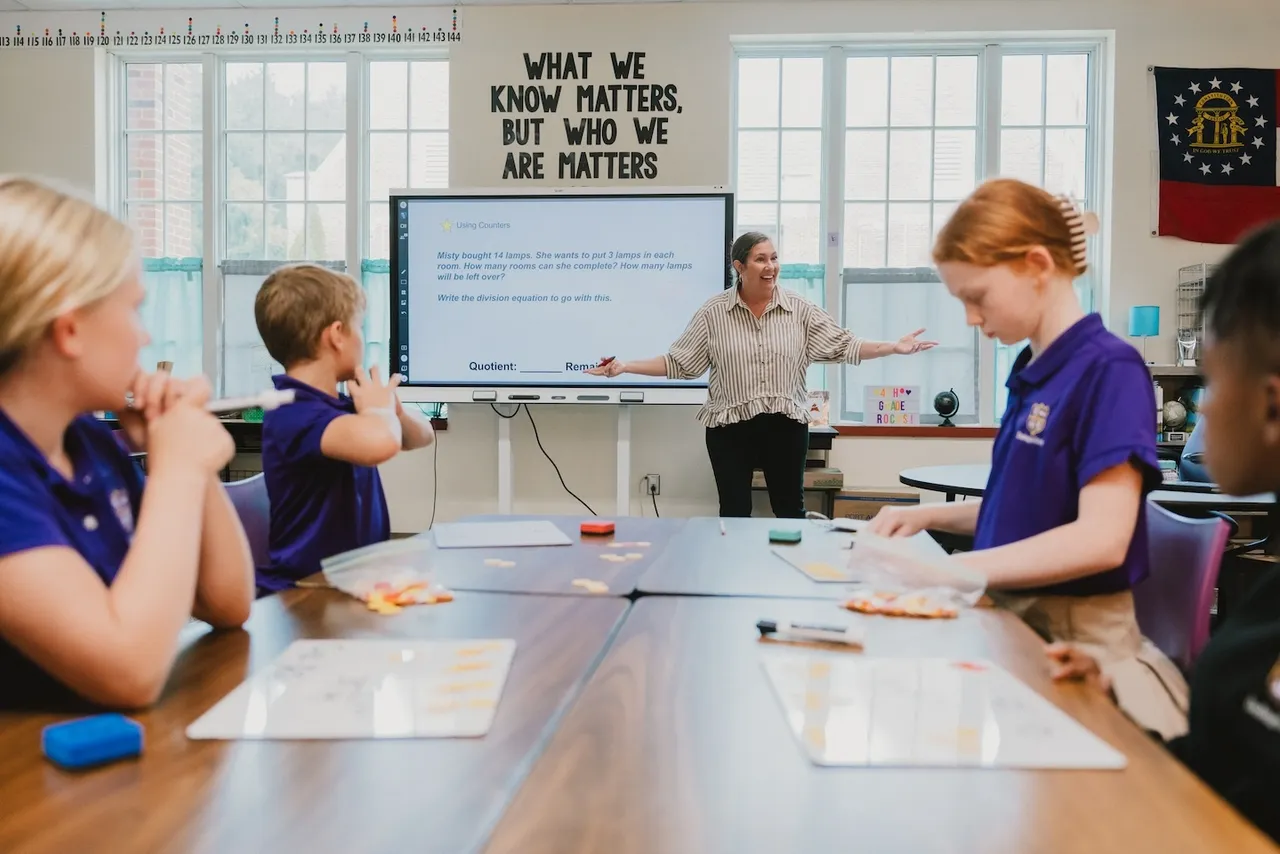
Mario Cantin, who teaches Spanish, recently stood in front of our entire faculty and walked through how he uses Gemini Notebook, a Google AI tool that lets you load your own sources and then ask questions from them. It was a short presentation. But in the days that followed, two different colleagues mentioned to me that they had tried it in their own work. One got great results; the other teacher's results were more mixed. What struck me was that both told me, unprompted, which tool they had used and why they had tried it: a colleague had shown them how.
That is how good teaching practice tends to spread in a school. It rarely comes from a single outside speaker or a required training. It comes from one teacher showing another what worked in a real classroom, and that teacher passing it on again. At Darlington, we have been intentional about building that ripple effect, and much of it is made possible by our endowed faculty development grants.
Endowed Funds for Faculty Growth
Each year, Darlington faculty can apply for funding through two endowed programs. Thatcher Faculty Development Grants support professional learning projects that take place within a single school year, from conferences to coursework to school visits. The Carla and Leonard Wood Distinguished Faculty Fellowship is a larger, two-year award for more ambitious projects. Both exist because of the generosity of the donors who endowed them.
The proposals I find most exciting are the ones that don't stop with a single teacher. Leah Lynn, our academic technology coordinator, has two grants this year that show exactly what I mean. She applied for both individually, but each one was written to train a group of teachers, who then bring what they learn back to the rest of the faculty through their departments, faculty meetings, and professional development workshops.
The Vanguard Team
Leah's Wood Fellowship supports what we call the Vanguard Team. The name comes from her training with Apple (Darlington is an Apple Distinguished School), where the idea of a "Vanguard" group kept coming up. "It literally means the people who are on the forefront of new ideas," Leah explained. She started building the team about three years ago, and the fellowship now gives it formal structure and support.
The team includes a teacher from pre-K through second grade, one from grades 3 through 5, one from grades 6 through 8, and a representative from every Upper School department. The grant compensates them for time spent outside the school day, during summer sessions and before- or after-school meetings, and funds visits to other schools and conferences, so they can see what is working elsewhere. It also includes professional learning with Apple, which the team is planning to use once it has a clearer picture of exactly what it needs.
Vanguard members serve as both representatives and listeners. They bring their colleagues' questions and needs to the group, which meets every other rotation, and they carry decisions and ideas back out. Not surprisingly, artificial intelligence has dominated those conversations: how students should use it, how teachers should use it, and how all of us use it well. "A lot of the conversation has been, how do we feel about technology, and what is Darlington's position on it?" Leah said. "That way we can have one voice shared across the whole faculty, regardless of personal opinion." The three-level system for AI use on assignments that I described in a recent post came out of this group.
At a recent round of department meetings, every Vanguard member presented to their own department. In math, Breonna Blankenship built a complete and professional worksheet live, asking AI to write it in LaTeX, the typesetting code math teachers use for clean equations. What might have taken hours appeared in about 20 seconds. More important than the speed, though, was how she framed it: what she was trying to assess, how she wrote her prompt, what sources she used, and the mistakes she always has to catch and fix before the assignment goes to students. That is precisely the kind of thoughtful, eyes-open approach we want our teachers modeling for one another.
The work has reached students, too. At the Vanguard teachers' suggestion, Leah brought in the DarTech Team, our student technology group, to create "stall walls" in the Upper School with practical technology tips written for students. The DarTech Team is led by student president Logan Cochran, who now runs the group's meetings himself. "Those two teams are even working together without knowing it," Leah said, since she carries feedback back and forth between them.
A Faculty Tradition: GaETC
Leah's Thatcher Grant funds something that has become a fixture of our faculty development program: sending a cohort of six to eight teachers to the Georgia Educational Technology Conference (GaETC) in Atlanta. Vanguard members receive the first invitations, and when one can't attend, a colleague from the same department takes the spot, so nearly every department is represented. Each teacher chooses the sessions most relevant to their own subject and grade level, which means the group returns with a wide range of ideas.
What makes this grant so effective is what happens next. Soon after the early November conference, our faculty gather for a full professional development day, and the GaETC teachers lead sessions for their colleagues. "Yes, we're taking a small group of teachers," Leah said, "but as soon as they get back, they're distributing the information to everybody." That learning continues through department meetings, workshops, and informal conversations among colleagues throughout the year.
Having a tech-savvy point person in every department has also changed how Leah supports teachers. If a first-year teacher needs help in a particular area, she can now ask a Vanguard colleague in that same department to model a lesson or work alongside them, help that is far more immediate and relevant than anything she could offer alone.
The Ripple Effect
Think of faculty growth at Darlington as a shared pool: the knowledge, energy, and support our teachers draw from and pour back into for one another. Teachers alone can’t keep it full, and our endowed grants have become one of the most important ways we replenish it. When I thanked Leah, I told her that every ripple in that pool starts with a single drop, and with these two grants, she added two big ones. One person's proposal became a cross-divisional team, a conference cohort, a series of department presentations, workshops, a faculty meeting, a student team's efforts, and countless one-on-one conversations between colleagues.
There is another lesson here, too. Our teachers have always had the expertise and capacity to lead one another. What a program like Vanguard does is formalize it, giving it structure and creating the time and space for it to happen. When your child's teacher tries something new this year, there's a good chance it started with a colleague down the hall, and there's a good chance an endowed faculty grant helped make that conversation possible.