
Why It's OK for the Learning Process to Be Challenging

By Cindy McGehee - FF/S
As researchers gain insight into the brain and its functions, they are better able to understand the process of how we learn. So what has this research taught them?
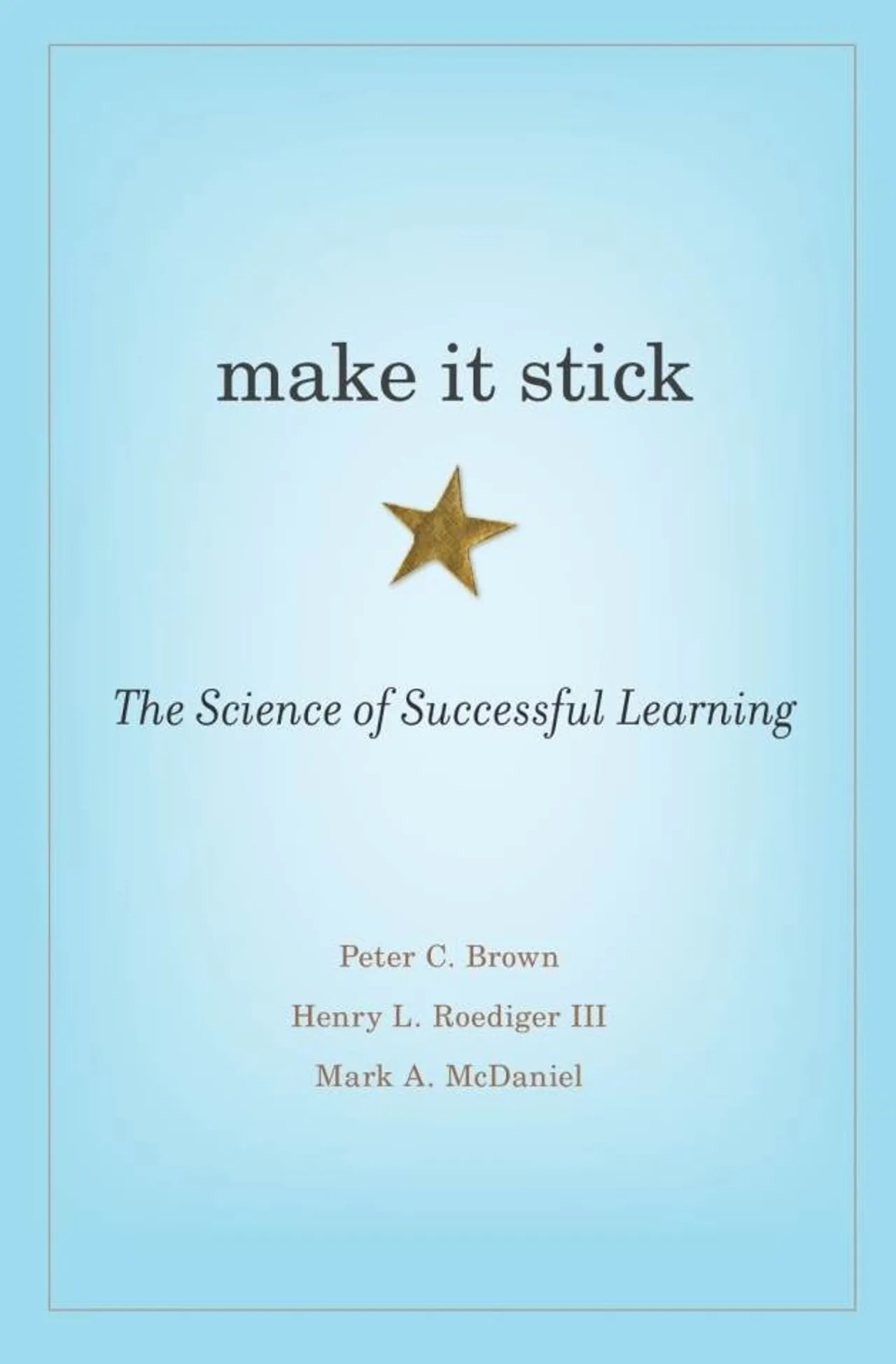
I recently read, “Make It Stick: The Science of Successful Learning,” by Peter C. Brown, Henry L. Roediger III, and Mark A. McDaniel. Two cognitive psychologists and a writer reviewed evidence-based research about learning and call into question research that does not meet standards of review. What their findings show is that learning is not easy. It is a process that each of us must commit time and effort.
The belief that learning should be easy and fast is incorrect; in fact, the writers refute that claim by showing that “when learning is harder, it’s stronger and lasts longer.” The authors reviewed research that proves in order to learn, we need to focus on the retrieval and recall of material, for it is the act of recall that is true learning. By utilizing active learning strategies that require retrieval, such as self-quizzing, flash cards, discussions and reflection, we truly learn material. When we cram for a test, we may know the material the next day, but over time, we loose that memory.
Instead, when we utilize active learning strategies, we have better long-term recall of material. So if our goal is knowledge (making information a permanent part of who we are), we must practice daily.
The authors also note the importance of the research by Carol Dweck and colleagues that has been replicated and expanded. Her work on growth mindset and fixed mindset is based on “her curiosity of why some people become helpless when they encounter challenges.” She notes that some people “interpret failure as due to their own inability, while others interpret failure as a result of insufficient effort or ineffective strategies.”
Her research also demonstrates the differences in learning for performance goals (grades) and learning goals (the sake of learning). She found that often children who have been praised as being smart (achieving performance goals) want to continue looking smart and will not push themselves to try something more difficult for fear of losing praise; while children praised for their effort (effort in learning) will continue to push themselves when faced with new challenges.
Paul Tough, in “How Children Succeed: Grit, Curiosity, and the Hidden Power of Character,” “draws on Dweck’s works by stating that the essential ingredient to success is encountering adversity in childhood and learning to overcome it.” He notes that “children in the lowest strata of society are so beset by challenges and starved of resources that they don’t stand a chance of experiencing success.”
But he also notes that “kids at the top of the heap, who are raised in cosseted settings, praised for being smart, bailed out of predicaments by helicopter parents, and never allowed to fail or overcome adversity on their own initiative, are also denied the character building experiences essential for success later in life.”
In conclusion, the authors note that “effortful learning changes the brain,” and “the effort itself extends the boundaries of our abilities.” They conclude “the more we do, the more we can do.” The act of learning requires self-discipline, grit and persistence working through failures.
What can we do to facilitate learning? As teachers, we need to teach active learning techniques that students can use in the classroom and at home. As parents we need to teach our children to “take charge of their own learning” and follow a simple but disciplined strategy. They need to know that learning is difficult but can be indeed accomplished with “disciplined practice.”
If you would like to learn more about growth mindset, active learning strategies, or retrieval practices, read “Make It Stick,” a resource to learning research. Additionally, you can talk with one of the learning specialists at Darlington’s Glenn Teaching and Learning Center about how you can support your child’s learning.