
NewsUpper SchoolStudent LifeServiceAcademicsCollege Guidance
To the Class of 2004: Frank Barron Jr.'s Commencement speech
Jul 21, 2004 8:00 AM
By Tannika King - Faculty
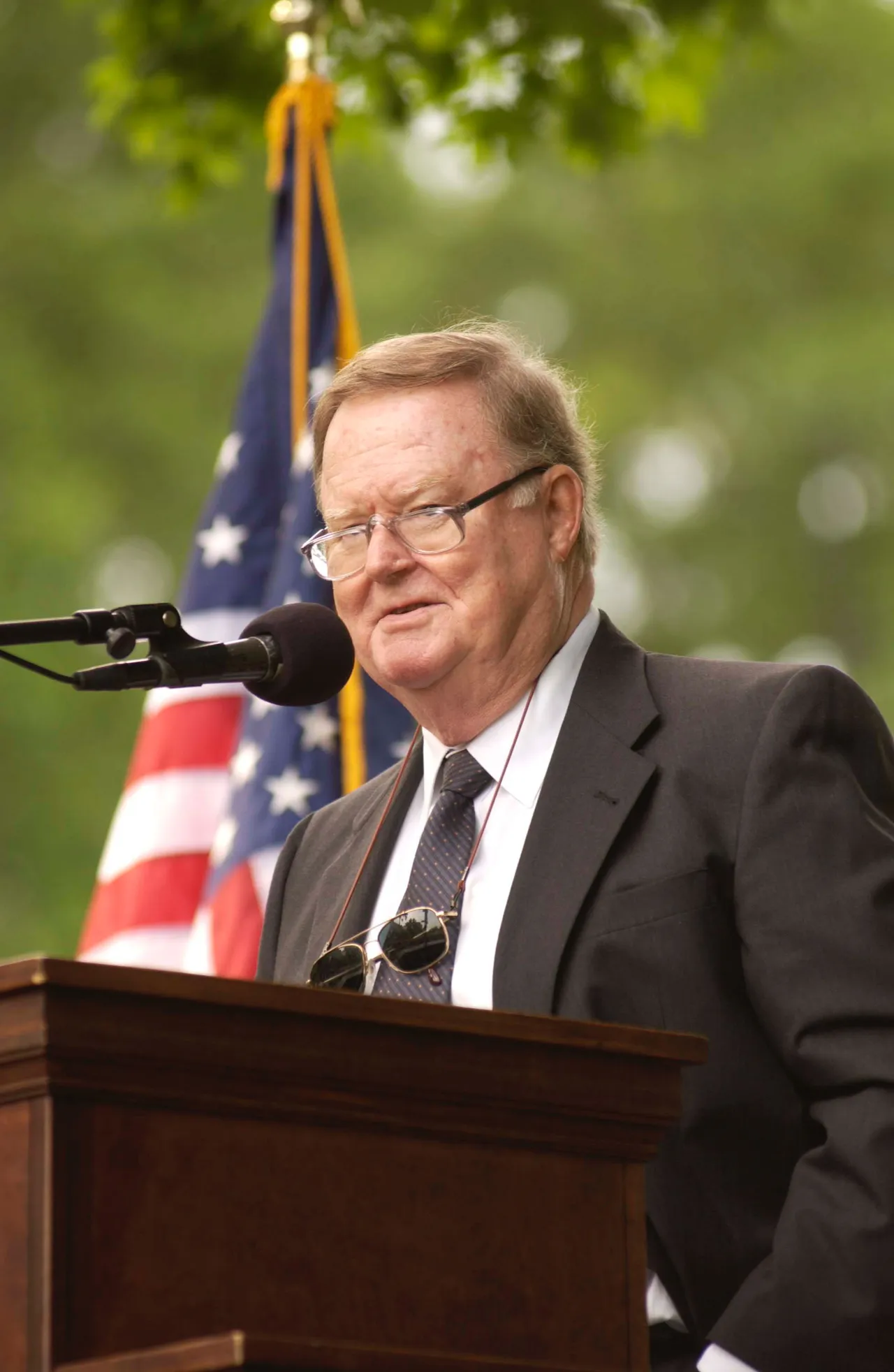
Read the full text of the speech given by Frank Barron Jr. (’48) at Darlington School commencement ceremonies held Saturday, May 15, 2004:
What a great privilege it is to speak to the Class of 2004, made even more special by the fact that I have a granddaughter graduating in this class. It’s not often you can do that. By the same token, it’s not every granddaughter that gets to hear her very own personal grandfather give the graduation speech. So pay attention, Mary Sue, there may be a test for you. Incidentally, speaking of grandparents, there is a right unusual situation today. Where is Richard Denny IV in this graduating class? There he is. Your grandfather and I are both here with our grandchildren who are graduating. But the coincidence is that Dick Denny and I both graduated in the Class of 1948 and were classmates. I think that’s sort of unusual to have two grandfathers and two grandchildren here.
I have a present for the Class of 2004. When I was first asked to do this, I asked for an hour. I was told I could have between 20 and 30 minutes to give this talk. My present to you is it is only going to be about six-and-a-half minutes long and one-and-a-half of this are already gone. If you feel constrained to clap, now would be a very good time to do this!
Some of you may have heard me tell the story of Zell Miller riding down the road and looking over and seeing a fence post with a turtle on it. He made the comment that the turtle did not get there by himself. So it is with you. You didn’t get here by yourself. Neither did I. Neither did anybody in this entire audience get here by themselves. We were all helped by people along the way. I want to tell you about two people who helped me when I was at Darlington.
The first one was a fellow named George A. Dorsey. Some of the older folks, Dick Denny and others, here will remember Mr. Dorsey. He was a tall, spare, almost skeleton-like fellow. He wore a great large brimmed hat. He lived over in what you call Wilcox. He did bird calls. I’m not a whistler, so I can’t whistle his bird calls for you. There is one I can do, however. He’d lean back and go sort of “Ahh! Ahh!” That’s a crow. Mr. Dorsey was what we would call an ecologist today. He used to say to us, “Boys, be good to nature and nature will be good to you.” I don’t know how I can expound on that. It’s such a simple message.
The next guy that I want to tell you about was Mr. Paul Jefferson King. He was a classicist sort of fellow. He taught Latin, and he taught Bible. When I say Bible, I don’t mean religion. He taught Bible more like a history course than anything else. He had a lot of great attributes. His greatest talent was he should have been a baseball pitcher for the Atlanta Braves. Given their record, I wish he was.
Do y’all have these little felt erasers on the blackboard? Our classroom was right at the back of Wilcox Hall. In the summer, there was no air conditioning in those days, and on a spring day like it is today, we had the window open. Bible and Latin were not the most interesting courses in the world, and we would sort of drift off. The weather was pretty, and we would begin to doze. Mr. King would pick up the felt eraser and throw it at you. He would hit you on the head. It didn’t make any difference; it was soft, made out of felt. If we didn’t get it the first time, he had another trick. He could take a little piece of chalk, about this long, in his finger like this and flip it. When that hit you, you knew something had hit you. Why did Mr. King do that? He did it because he wanted us to learn.
So, here we are. Three little stories. Short. Simple. First, the one about the turtle on the fence post. Does that mean you should run out to everybody here, all your teachers, and say thank you? Of course it does; that’s only manners. But the greater lesson is you should start putting a few turtles on fence posts yourself. You graduated, or will in the next few minutes, from one of the greatest, finest schools in the country, certainly in the South. As you mature, you go on up, and it’s time for you to begin helping others. This may be a younger brother or sister or neighbor down the street.
Mr. Dorsey, “Be good to nature and nature will be good to you.” I don’t know what I could say about that. There are hundreds and thousands of dissertations, books, everything about nature. It’s an attitude about life. It doesn’t mean just don’t dig up the dirt and let it wash away. It means be good to me and I’ll be good to you. It’s a whole attitude of life.
And then, Mr. King and the eraser. Why did Mr. King throw an eraser at us? He threw it at us because he wanted us to learn. Why did he want us to learn? Because he loved us.
You need to know this, Class of 2004. Everybody here that I can see and can hear me loves you very much. And I want you to know that I love you, too, most of all you, Mary Sue.
I made it. Thank you very much.
Frank Barron Jr., retired director of Rome Coca-Cola and six other local Coca-Cola companies, is a 1948 graduate of Darlington School. With a bachelor's degree from Washington & Lee University, Barron began his career with Coca-Cola Bottling Company in 1956 after serving three years in the U.S. Navy in the Korean War. He currently serves on the Board of Advisors for The Georgia Conservancy, the Board of Trustees of the Georgia Public Policy Foundation, the Board of Councilors of the Carter Center of Emory University (of which he is a Life Member), the Board of Directors of the Georgia Chamber of Commerce and the Board of Trustees of the Richard B. Russell Foundation. He is also a member of Rome Rotary Club, a life trustee of the Boys and Girls Club, and is vice president and director at both Echota Realty and Shorter Realty. A member of First Baptist Church in Rome, Barron has also served on the Board of Deacons. Barron is also a former director of the Atlanta Gas Light Company and has served on the Berry College Board of Trustees for 31 years. He and his wife, Anne, have two children: Rebekah (’78) and Frank III (’77), and five granddaughters, all of whom attend or have attended Darlington School.
What a great privilege it is to speak to the Class of 2004, made even more special by the fact that I have a granddaughter graduating in this class. It’s not often you can do that. By the same token, it’s not every granddaughter that gets to hear her very own personal grandfather give the graduation speech. So pay attention, Mary Sue, there may be a test for you. Incidentally, speaking of grandparents, there is a right unusual situation today. Where is Richard Denny IV in this graduating class? There he is. Your grandfather and I are both here with our grandchildren who are graduating. But the coincidence is that Dick Denny and I both graduated in the Class of 1948 and were classmates. I think that’s sort of unusual to have two grandfathers and two grandchildren here.
I have a present for the Class of 2004. When I was first asked to do this, I asked for an hour. I was told I could have between 20 and 30 minutes to give this talk. My present to you is it is only going to be about six-and-a-half minutes long and one-and-a-half of this are already gone. If you feel constrained to clap, now would be a very good time to do this!
Some of you may have heard me tell the story of Zell Miller riding down the road and looking over and seeing a fence post with a turtle on it. He made the comment that the turtle did not get there by himself. So it is with you. You didn’t get here by yourself. Neither did I. Neither did anybody in this entire audience get here by themselves. We were all helped by people along the way. I want to tell you about two people who helped me when I was at Darlington.
The first one was a fellow named George A. Dorsey. Some of the older folks, Dick Denny and others, here will remember Mr. Dorsey. He was a tall, spare, almost skeleton-like fellow. He wore a great large brimmed hat. He lived over in what you call Wilcox. He did bird calls. I’m not a whistler, so I can’t whistle his bird calls for you. There is one I can do, however. He’d lean back and go sort of “Ahh! Ahh!” That’s a crow. Mr. Dorsey was what we would call an ecologist today. He used to say to us, “Boys, be good to nature and nature will be good to you.” I don’t know how I can expound on that. It’s such a simple message.
The next guy that I want to tell you about was Mr. Paul Jefferson King. He was a classicist sort of fellow. He taught Latin, and he taught Bible. When I say Bible, I don’t mean religion. He taught Bible more like a history course than anything else. He had a lot of great attributes. His greatest talent was he should have been a baseball pitcher for the Atlanta Braves. Given their record, I wish he was.
Do y’all have these little felt erasers on the blackboard? Our classroom was right at the back of Wilcox Hall. In the summer, there was no air conditioning in those days, and on a spring day like it is today, we had the window open. Bible and Latin were not the most interesting courses in the world, and we would sort of drift off. The weather was pretty, and we would begin to doze. Mr. King would pick up the felt eraser and throw it at you. He would hit you on the head. It didn’t make any difference; it was soft, made out of felt. If we didn’t get it the first time, he had another trick. He could take a little piece of chalk, about this long, in his finger like this and flip it. When that hit you, you knew something had hit you. Why did Mr. King do that? He did it because he wanted us to learn.
So, here we are. Three little stories. Short. Simple. First, the one about the turtle on the fence post. Does that mean you should run out to everybody here, all your teachers, and say thank you? Of course it does; that’s only manners. But the greater lesson is you should start putting a few turtles on fence posts yourself. You graduated, or will in the next few minutes, from one of the greatest, finest schools in the country, certainly in the South. As you mature, you go on up, and it’s time for you to begin helping others. This may be a younger brother or sister or neighbor down the street.
Mr. Dorsey, “Be good to nature and nature will be good to you.” I don’t know what I could say about that. There are hundreds and thousands of dissertations, books, everything about nature. It’s an attitude about life. It doesn’t mean just don’t dig up the dirt and let it wash away. It means be good to me and I’ll be good to you. It’s a whole attitude of life.
And then, Mr. King and the eraser. Why did Mr. King throw an eraser at us? He threw it at us because he wanted us to learn. Why did he want us to learn? Because he loved us.
You need to know this, Class of 2004. Everybody here that I can see and can hear me loves you very much. And I want you to know that I love you, too, most of all you, Mary Sue.
I made it. Thank you very much.
Frank Barron Jr., retired director of Rome Coca-Cola and six other local Coca-Cola companies, is a 1948 graduate of Darlington School. With a bachelor's degree from Washington & Lee University, Barron began his career with Coca-Cola Bottling Company in 1956 after serving three years in the U.S. Navy in the Korean War. He currently serves on the Board of Advisors for The Georgia Conservancy, the Board of Trustees of the Georgia Public Policy Foundation, the Board of Councilors of the Carter Center of Emory University (of which he is a Life Member), the Board of Directors of the Georgia Chamber of Commerce and the Board of Trustees of the Richard B. Russell Foundation. He is also a member of Rome Rotary Club, a life trustee of the Boys and Girls Club, and is vice president and director at both Echota Realty and Shorter Realty. A member of First Baptist Church in Rome, Barron has also served on the Board of Deacons. Barron is also a former director of the Atlanta Gas Light Company and has served on the Berry College Board of Trustees for 31 years. He and his wife, Anne, have two children: Rebekah (’78) and Frank III (’77), and five granddaughters, all of whom attend or have attended Darlington School.