
NewsUpper SchoolStudent LifeFaculty/StaffServiceAcademicsResidential Life
Summer reading features Ray’s “Ecology of a Cracker Childhood”
May 31, 2005 12:13 PM
By Tannika King - Faculty
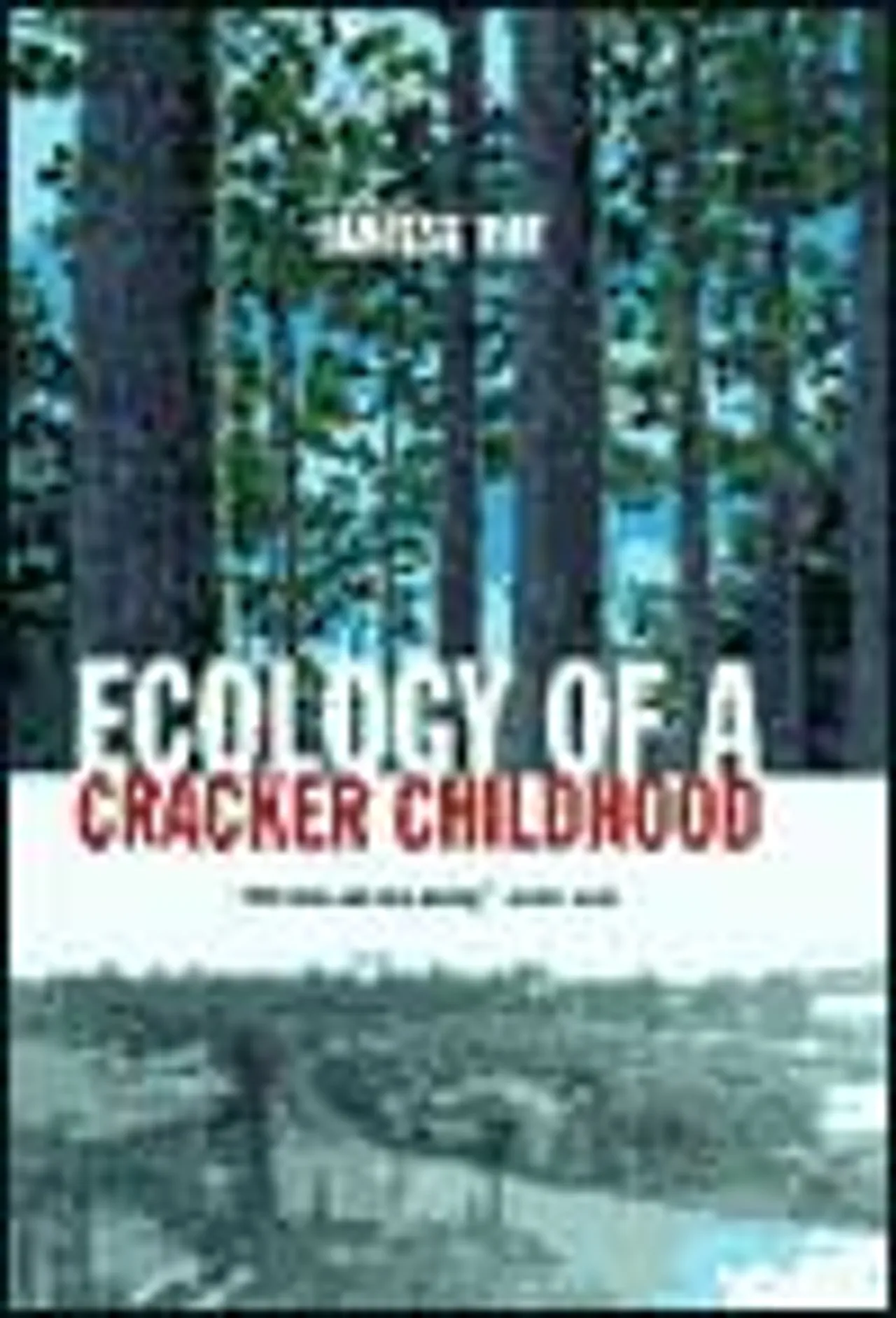
All students entering the Upper School have the opportunity to read Janisse Ray’s “Ecology of a Cracker Childhood” through the summer reading program. Then, in late September, Ray will visit the School.
Janisse Ray grew up in a junkyard along U.S. Highway 1, hidden from Florida-bound travelers by the hedge at the edge of the road and by hulks of old cars, stacks of blown-out tires, and primeval jumbles of rusted metal. “Ecology of a Cracker Childhood” tells how a childhood spent in rural isolation – living in the country but not even knowing how to swim – grew into a passion to save the almost vanished longleaf pine ecosystem that existed before the region was ever called the South.
In language at once colloquial, elegiac, and informative, Ray redeems two Souths. She shows the world perceived from a junkyard by a child reared in a fundamentalist religion with relatives as colorful as any character from fiction. She also catalogs the Edenic beauty of longleaf pine forests, where orchids grow amid wiregrass at the feet of widely spaced, lofty trees. Today, both worlds exist in fragments, cherished and threatened.
“Ecology of a Cracker Childhood” has won the Southeaster Booksellers Award for Nonfiction 1999, the Southern Environmental Law Center 2000 Award for Outstanding Writing on the Southern Environment and the Southern Book Critics Circle Award for nonfiction 2000. It was chosen as the Book All Georgians Should Read for 2001, and has been chosen for freshman reading programs at many universities.
Fellow author Jim Kilgo said he was most impressed by the seamless interweaving of personal memoir and natural history, calling it “an interweaving the more remarkable in view of the jolting difference between the junkyard of the author’s childhood and what is left of the natural landscape of her beloved south Georgia.”
Ray’s second book, “Wild Card Quilt: Taking a Chance on Home,” was published in 2003, and “Pinhook: Finding Wholeness in a Fragmented Land” is due out this year. She has also published essays and poems in such periodicals as “Audubon,” “Gray’s Sporting Journal,” “Hope,” “Natural History,” “Oprah Magazine,” “Orion,” “Sierra” and “Water’s Edge.” She is anthologized in “The Norton Anthology of Nature Writing,” “Elemental South,” “The Woods Stretched for Miles,” “Wild Heart of Florida: Writers on Florida’s Wildlands,” “American Nature Writing 2000” and “The Best of Hope.” She has also written a chapbook of poetry called “Naming the Unseen.”
As an activist, much of Ray’s work focuses on providing alternatives for industrial capitalism, slowing the rate of global warming, working to decelerate fragmentation and making logging in global forests sustainable. She is a founding board member of Altamaha Riverkeeper, and is on the board of the Satilla Riverkeeper. She helped form the Georgia Nature-Based Tourism Association, and worked to save the 3,400-acre Moody Forest in her home county, Appling. She also organizes gatherings of Southern nature writers.
Ray has been a writer-in-residence at The Island Institute, Florida Gulf Coast University, Keene State College and the University of Mississippi. She travels extensively giving readings and lectures.
Interim President Jim Hendrix, former headmaster of Lovett School in Atlanta, Ga., said “I continue to think a lot about [Janisse Ray’s] mesmerizing visit to Lovett. There is true magic in [her] presence, [her] words, [her] life – [she] touched us all in powerful ways.”
"Ecology of a Cracker Childhood" is available to students at the Darlington bookstore for $14.95.
Janisse Ray grew up in a junkyard along U.S. Highway 1, hidden from Florida-bound travelers by the hedge at the edge of the road and by hulks of old cars, stacks of blown-out tires, and primeval jumbles of rusted metal. “Ecology of a Cracker Childhood” tells how a childhood spent in rural isolation – living in the country but not even knowing how to swim – grew into a passion to save the almost vanished longleaf pine ecosystem that existed before the region was ever called the South.
In language at once colloquial, elegiac, and informative, Ray redeems two Souths. She shows the world perceived from a junkyard by a child reared in a fundamentalist religion with relatives as colorful as any character from fiction. She also catalogs the Edenic beauty of longleaf pine forests, where orchids grow amid wiregrass at the feet of widely spaced, lofty trees. Today, both worlds exist in fragments, cherished and threatened.
“Ecology of a Cracker Childhood” has won the Southeaster Booksellers Award for Nonfiction 1999, the Southern Environmental Law Center 2000 Award for Outstanding Writing on the Southern Environment and the Southern Book Critics Circle Award for nonfiction 2000. It was chosen as the Book All Georgians Should Read for 2001, and has been chosen for freshman reading programs at many universities.
Fellow author Jim Kilgo said he was most impressed by the seamless interweaving of personal memoir and natural history, calling it “an interweaving the more remarkable in view of the jolting difference between the junkyard of the author’s childhood and what is left of the natural landscape of her beloved south Georgia.”
Ray’s second book, “Wild Card Quilt: Taking a Chance on Home,” was published in 2003, and “Pinhook: Finding Wholeness in a Fragmented Land” is due out this year. She has also published essays and poems in such periodicals as “Audubon,” “Gray’s Sporting Journal,” “Hope,” “Natural History,” “Oprah Magazine,” “Orion,” “Sierra” and “Water’s Edge.” She is anthologized in “The Norton Anthology of Nature Writing,” “Elemental South,” “The Woods Stretched for Miles,” “Wild Heart of Florida: Writers on Florida’s Wildlands,” “American Nature Writing 2000” and “The Best of Hope.” She has also written a chapbook of poetry called “Naming the Unseen.”
As an activist, much of Ray’s work focuses on providing alternatives for industrial capitalism, slowing the rate of global warming, working to decelerate fragmentation and making logging in global forests sustainable. She is a founding board member of Altamaha Riverkeeper, and is on the board of the Satilla Riverkeeper. She helped form the Georgia Nature-Based Tourism Association, and worked to save the 3,400-acre Moody Forest in her home county, Appling. She also organizes gatherings of Southern nature writers.
Ray has been a writer-in-residence at The Island Institute, Florida Gulf Coast University, Keene State College and the University of Mississippi. She travels extensively giving readings and lectures.
Interim President Jim Hendrix, former headmaster of Lovett School in Atlanta, Ga., said “I continue to think a lot about [Janisse Ray’s] mesmerizing visit to Lovett. There is true magic in [her] presence, [her] words, [her] life – [she] touched us all in powerful ways.”
"Ecology of a Cracker Childhood" is available to students at the Darlington bookstore for $14.95.