NewsStudent LifeService
Students visit England for World Jamboree
Aug 17, 2007 12:00 AM
By Tannika King - Faculty
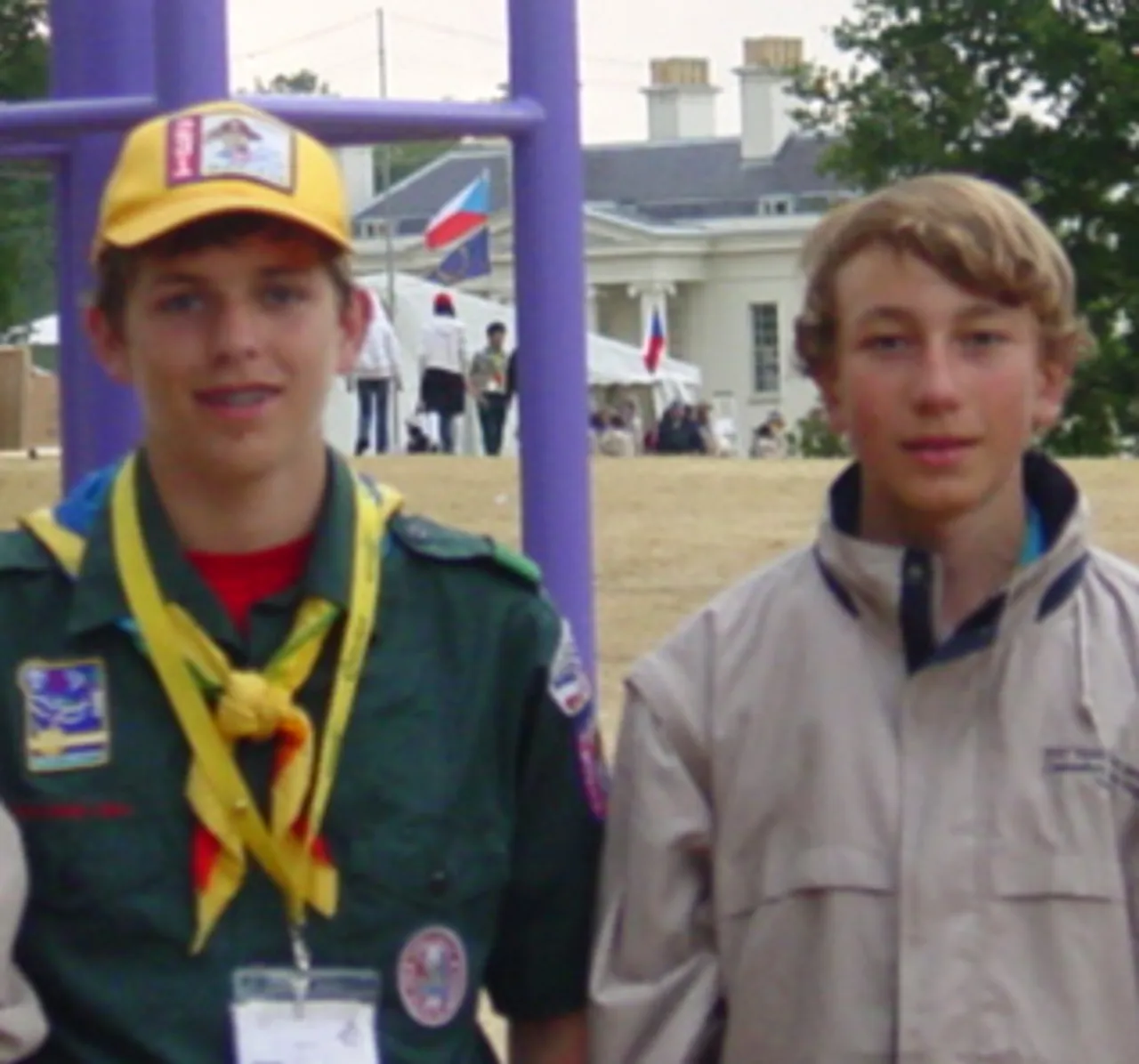
While most students spend their summers on the beach or at the pool, freshmen Will Thoms and Zach Martin were celebrating 100 years of scouting at the 21st World Scout Jamboree in Hylands Park, Chelmsford, England.
The birthplace of scouting, England seemed the most appropriate location for this special celebration as Sir Robert Baden-Powell, who founded the scouting program, also pioneered the very first jamboree in London in 1920. That very first event saw 301 participants, while this year’s centennial jamboree, hosted by the Scout Association of the United Kingdom, brought together 40,000 scouts, venturers, leaders and staff for 12 days.
“The 100th anniversary of an organization like this is amazing,” said Martin, who is already looking forward to the next World Jamboree in 2011. “To think that one person started out with 20 scouts, and within 100 years, there are 28 million scouts worldwide in all but six countries in the world. You just have to sit back and think about it for a second.”
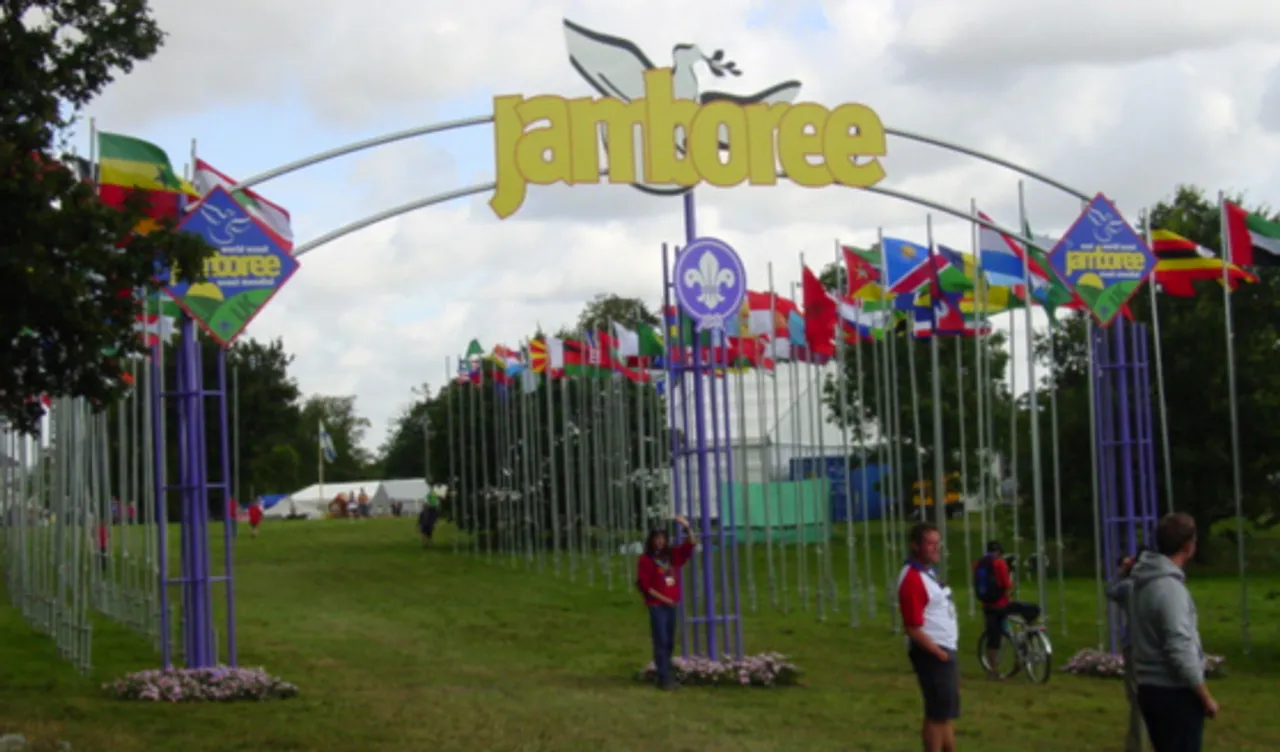
From July 27 to Aug. 8, scouts representing 158 countries worldwide gathered together to celebrate the time-honored tradition of scouting with the theme “One World, One Promise.”
“At the opening ceremony, we got to see Prince William and the Duke of Kent, who read a letter from the Queen,” said Martin. “England’s royal horses were there, too, each with a knight in armor on top and the Cross of St. George draped over them. They did a great job from the start to the finish of this ceremony, from the World Scout Flag being brought in by a skydiver, to various presentations from the four nations of the United Kingdom.”
Both Martin and Thoms agreed that the best part of the jamboree experience was meeting other scouts from all over the world. “Being able to walk 10 yards one way and talk to someone from Finland, and 10 yards the other way and talk to someone from England was incredible,” said Martin. “While I was brushing my teeth at night, there were at least five different languages going on around me … I now appreciate the Darlington experience, with all of the students from different nationalities, a lot more.”
Thoms said he values now, more than ever, that he was born in the United States of America. “I was listening to one scout talk about his life in Africa and the impact scouting and other organizations had on his life, and it really gave me some insight into how things are in other parts of the world,” he said. “It also strengthens my resolve to work to the best of my ability to help these people get a better life. That’s what scouting is all about.”
The jamboree aims to motivate, challenge and excite participants through a variety of different elements, including the World Village, the Gilwell Adventure, the Global Development Village and Community Action Day. The program combines Baden-Powell’s insights – learning by doing, working in small groups, and giving responsibility to scouts/venturers – with the realization that different people learn in different ways, at different speeds, and with different styles.
Each day, the scouts participated in either a half- or whole-day activity, ranging from water activities to team-building skills. Participants also had opportunities to tour various landmarks in the city of London.
“We did things like Splash, where each subcamp went to a big lake,” said Martin. “During Starburst, each subcamp completed a certain service project. Mine was cleaning up a community athletic building. Then, we had Aquaville and Terraville, both of which were on site, and we did various activities to learn about pollution and other things that have to do with water.”
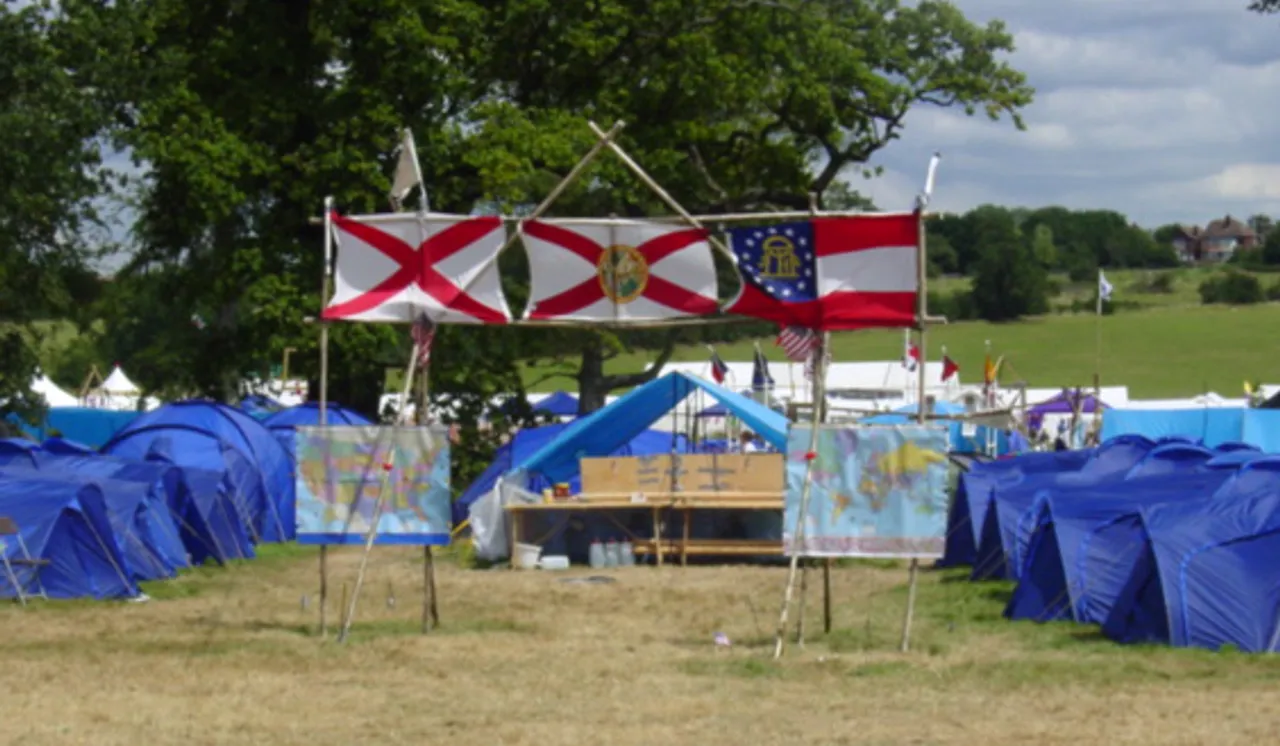
Showing scouts from other parts of the world what is unique or interesting about a troop’s home area is a jamboree tradition, and troop gateways are one of the most visible ways to do that. Troops usually design their gateways to reflect the most notable aspects of their home area – history, geography, industry, etc.
“Our gateway had three banners on the front – two which illustrated the U.S. flags represented by our crew members and one which said ‘Welcome,’” said Thoms. “It also had two flag-sized banners on the inside, one which was a map of the world and the other, a map of the United States. We had markers available so that visitors could write down where they were from.”
And while this article barely skims the surface of the World Jamboree experience, it is clear that those who attended were proud to be a part of scouting’s centennial celebration.
“Scouting, the largest peacekeeping and international cooperation group in the world, has been around for 100 years. I wouldn’t have missed this celebration for anything,” said Thoms. “We are tomorrow’s leaders and peacekeepers, and if we can carry the moral teachings and guidance of scouting into our professions, it can only make the world a better place.”
The birthplace of scouting, England seemed the most appropriate location for this special celebration as Sir Robert Baden-Powell, who founded the scouting program, also pioneered the very first jamboree in London in 1920. That very first event saw 301 participants, while this year’s centennial jamboree, hosted by the Scout Association of the United Kingdom, brought together 40,000 scouts, venturers, leaders and staff for 12 days.
“The 100th anniversary of an organization like this is amazing,” said Martin, who is already looking forward to the next World Jamboree in 2011. “To think that one person started out with 20 scouts, and within 100 years, there are 28 million scouts worldwide in all but six countries in the world. You just have to sit back and think about it for a second.”
From July 27 to Aug. 8, scouts representing 158 countries worldwide gathered together to celebrate the time-honored tradition of scouting with the theme “One World, One Promise.”
“At the opening ceremony, we got to see Prince William and the Duke of Kent, who read a letter from the Queen,” said Martin. “England’s royal horses were there, too, each with a knight in armor on top and the Cross of St. George draped over them. They did a great job from the start to the finish of this ceremony, from the World Scout Flag being brought in by a skydiver, to various presentations from the four nations of the United Kingdom.”
Both Martin and Thoms agreed that the best part of the jamboree experience was meeting other scouts from all over the world. “Being able to walk 10 yards one way and talk to someone from Finland, and 10 yards the other way and talk to someone from England was incredible,” said Martin. “While I was brushing my teeth at night, there were at least five different languages going on around me … I now appreciate the Darlington experience, with all of the students from different nationalities, a lot more.”
Thoms said he values now, more than ever, that he was born in the United States of America. “I was listening to one scout talk about his life in Africa and the impact scouting and other organizations had on his life, and it really gave me some insight into how things are in other parts of the world,” he said. “It also strengthens my resolve to work to the best of my ability to help these people get a better life. That’s what scouting is all about.”
The jamboree aims to motivate, challenge and excite participants through a variety of different elements, including the World Village, the Gilwell Adventure, the Global Development Village and Community Action Day. The program combines Baden-Powell’s insights – learning by doing, working in small groups, and giving responsibility to scouts/venturers – with the realization that different people learn in different ways, at different speeds, and with different styles.
Each day, the scouts participated in either a half- or whole-day activity, ranging from water activities to team-building skills. Participants also had opportunities to tour various landmarks in the city of London.
“We did things like Splash, where each subcamp went to a big lake,” said Martin. “During Starburst, each subcamp completed a certain service project. Mine was cleaning up a community athletic building. Then, we had Aquaville and Terraville, both of which were on site, and we did various activities to learn about pollution and other things that have to do with water.”
Showing scouts from other parts of the world what is unique or interesting about a troop’s home area is a jamboree tradition, and troop gateways are one of the most visible ways to do that. Troops usually design their gateways to reflect the most notable aspects of their home area – history, geography, industry, etc.
“Our gateway had three banners on the front – two which illustrated the U.S. flags represented by our crew members and one which said ‘Welcome,’” said Thoms. “It also had two flag-sized banners on the inside, one which was a map of the world and the other, a map of the United States. We had markers available so that visitors could write down where they were from.”
And while this article barely skims the surface of the World Jamboree experience, it is clear that those who attended were proud to be a part of scouting’s centennial celebration.
“Scouting, the largest peacekeeping and international cooperation group in the world, has been around for 100 years. I wouldn’t have missed this celebration for anything,” said Thoms. “We are tomorrow’s leaders and peacekeepers, and if we can carry the moral teachings and guidance of scouting into our professions, it can only make the world a better place.”