NewsAthleticsUpper SchoolStudent LifePre-K to 8Service
Soccer Academy travels to Europe
Jul 20, 2006 10:46 AM
By Tannika King - Faculty
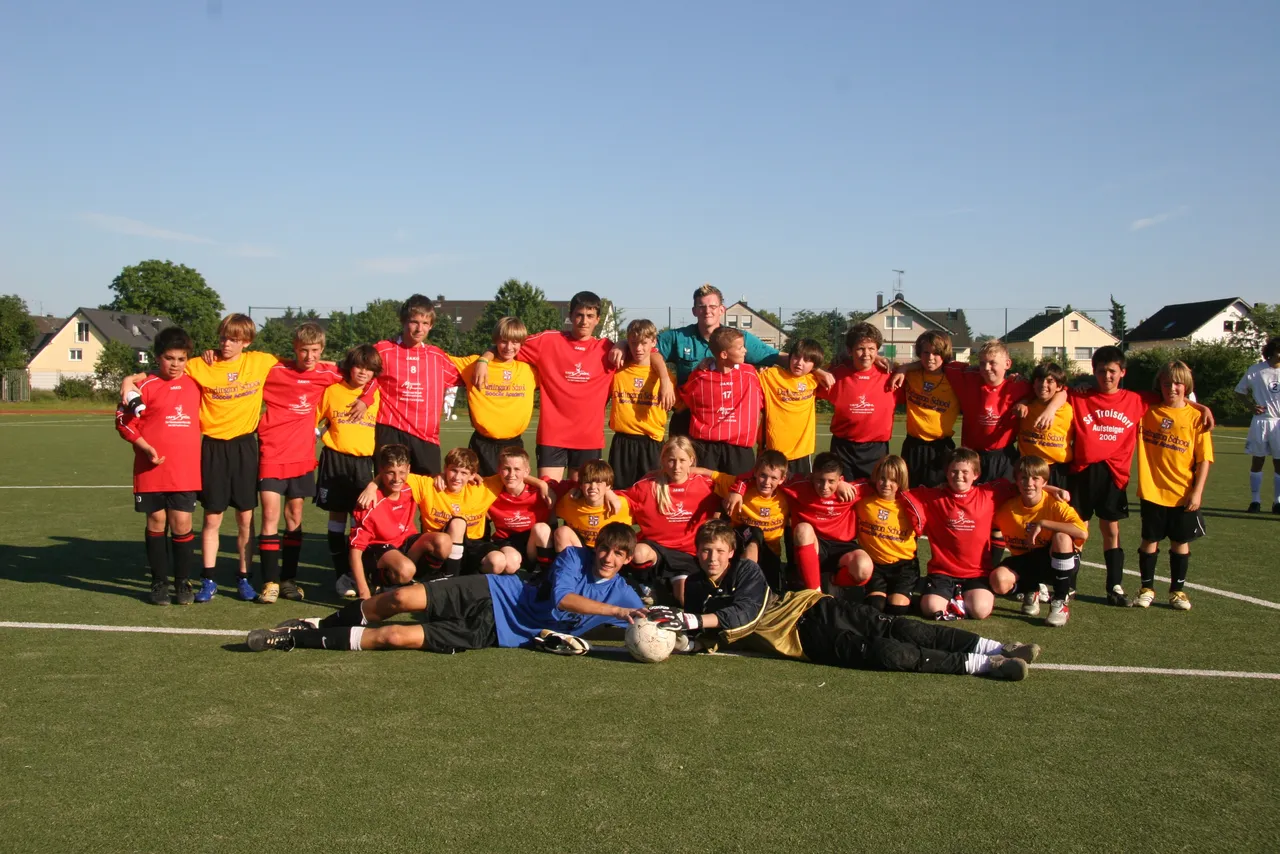
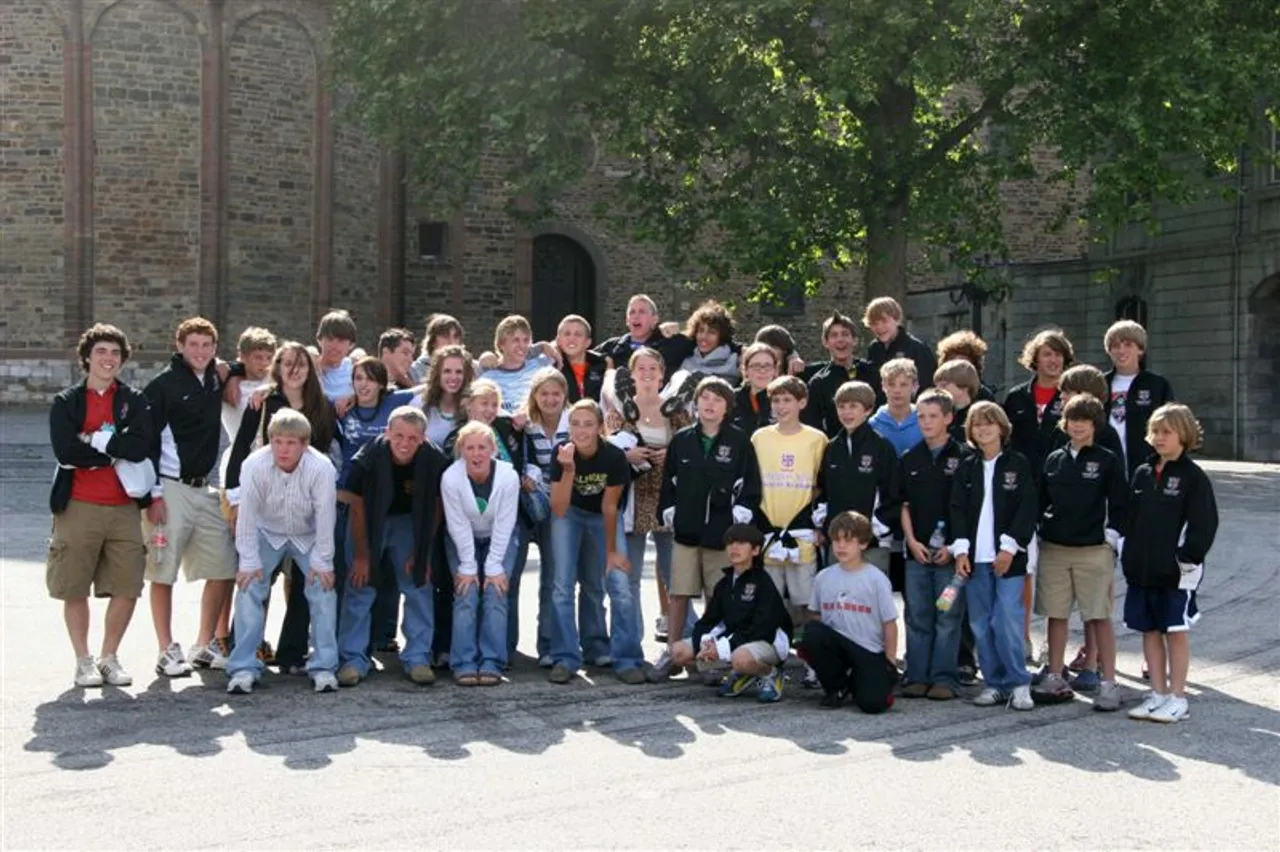
June was an exciting time for Darlington School Soccer Academy. A group of 65 players and 20 adults traveled to Europe, where the Soccer Academy competed in an international tournament and attended the FIFA World Cup.
Friendly Competition
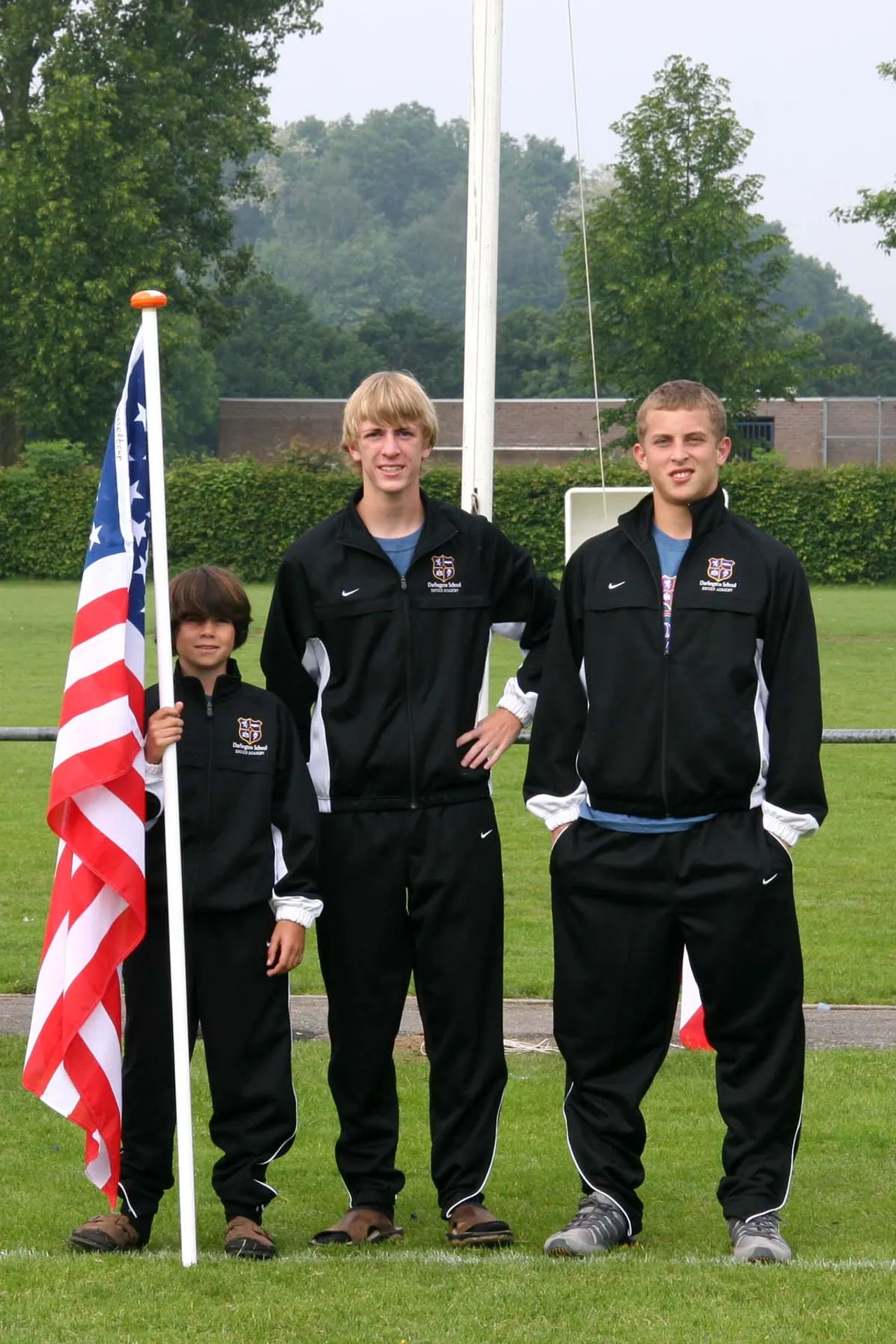
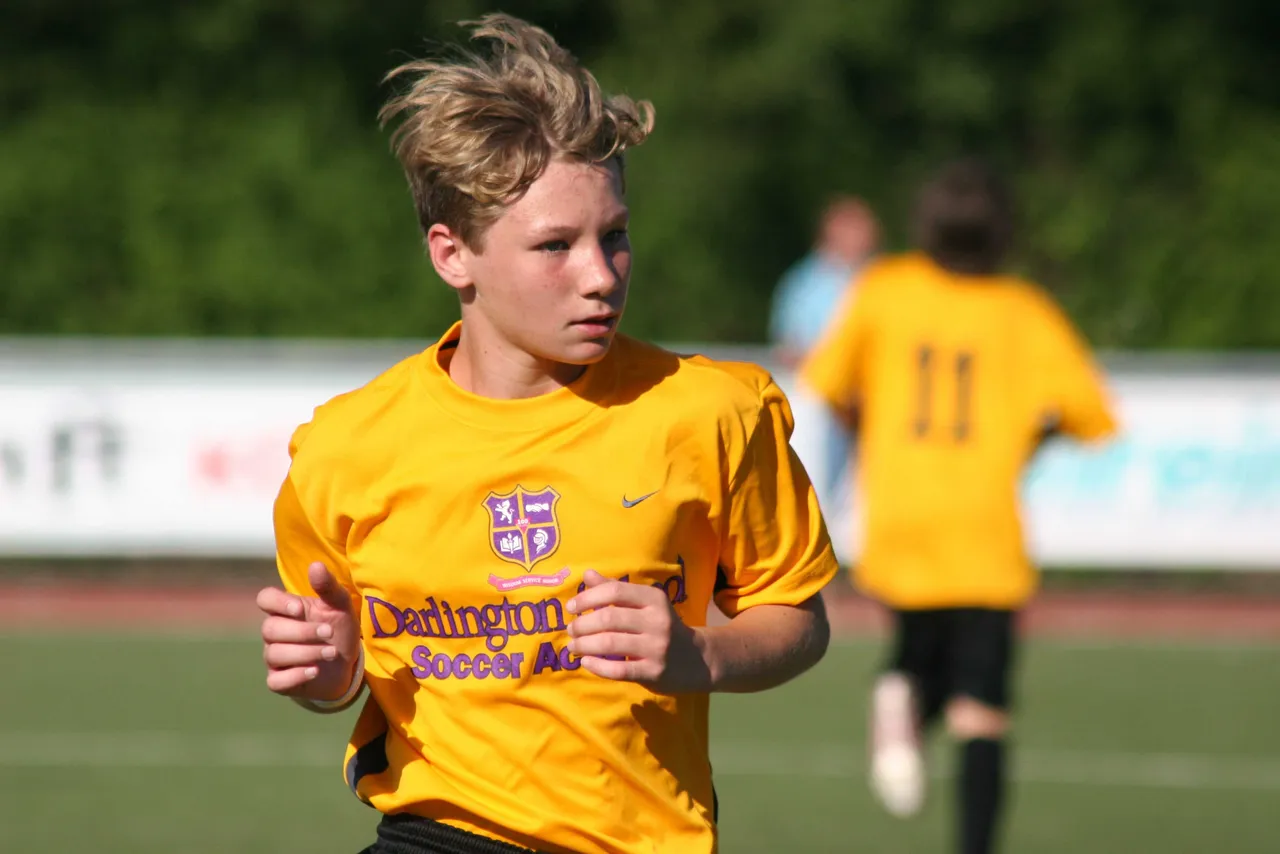
Darlington’s boys competed in the Maastricht Trophy Tournament (in the Netherlands) against teams from nine different countries. Complete with an opening ceremony, the event was described as a “mini-Olympics.”
In the end, the younger team had a record of 4-2, placing second overall in the tournament, while the older boys went 2-2-2. Chris McClure, a guest player who traveled with the Soccer Academy, won the Most Valuable Player award for his age group.
“Our team’s performance in the tournament surpassed all expectations of how Americans can play soccer,” said senior Alex Milhous. “We played exceptionally in our games … Had the games been full length, our team would have performed even better.”
Unfortunately, the Soccer Academy girls were not eligible to participate in the tournament, but they did play “friendly” games against local teams.
“Most European countries still don’t look too fondly on girls playing soccer,” said Chad Liddle, Soccer Academy director. “The United States is just so far ahead of most everyone else in terms of girls’ soccer.”
The coaches said they were proud of Darlington’s finish in the tournament, especially since some of the opposing teams had European professional players.
“We were fast and played a good brand of soccer,” said Liddle.
Parents and coaches enjoyed seeing the interaction between Darlington students and international players.
“Getting to play against teams from other countries was a great learning experience for the Soccer Academy,” said Gwen Bullock, a chaperone. “I believe they played their hearts out and wanted to win every game. Such hard work comes from good leadership and dedication. Darlington’s Soccer Academy should be proud of their leaders and players.”
By the end of the week, teams were trading team hats and pennants. Darlington’s boys even attempted to show the French team how to play American football.
“It was neat to see our kids trying to interact and exchanging things,” said Liddle. “It was a good show of fair play and friendly competition.”
Bullock agreed, “The swapping of shirts and hats was fun for them, and seeing them mingling with other young folks with smiles on their faces was great.”
The team also bonded with Ronald, their bus driver from the Netherlands. Though he spoke broken English, the players adopted him as part of their team. Ronald even cheered for them during their games.
“Ronald had a way to spark humor in whatever was going on,” said Milhous. “We were stretching before one game, and Ronald took over the coach’s position by telling us to do 30 pushups. He was quickly fired from the coach’s position by a unanimous decision by the players.”
At the end of the trip, the students bought Ronald a Netherlands national team jersey and gave him a Darlington School photo book. This would become a favorite memory for many.
“He started to cry a little, and you could tell he was really touched,” said Liddle.
Bullock called Ronald an added bonus of the trip. “He was so good with all the kids and adults,” she said. “It was such a pleasure to have someone like him to be with us during the entire trip. I truly believe he felt like one of us. Seeing him playing and having a good time with the kids was so rewarding.”
A Bit of History
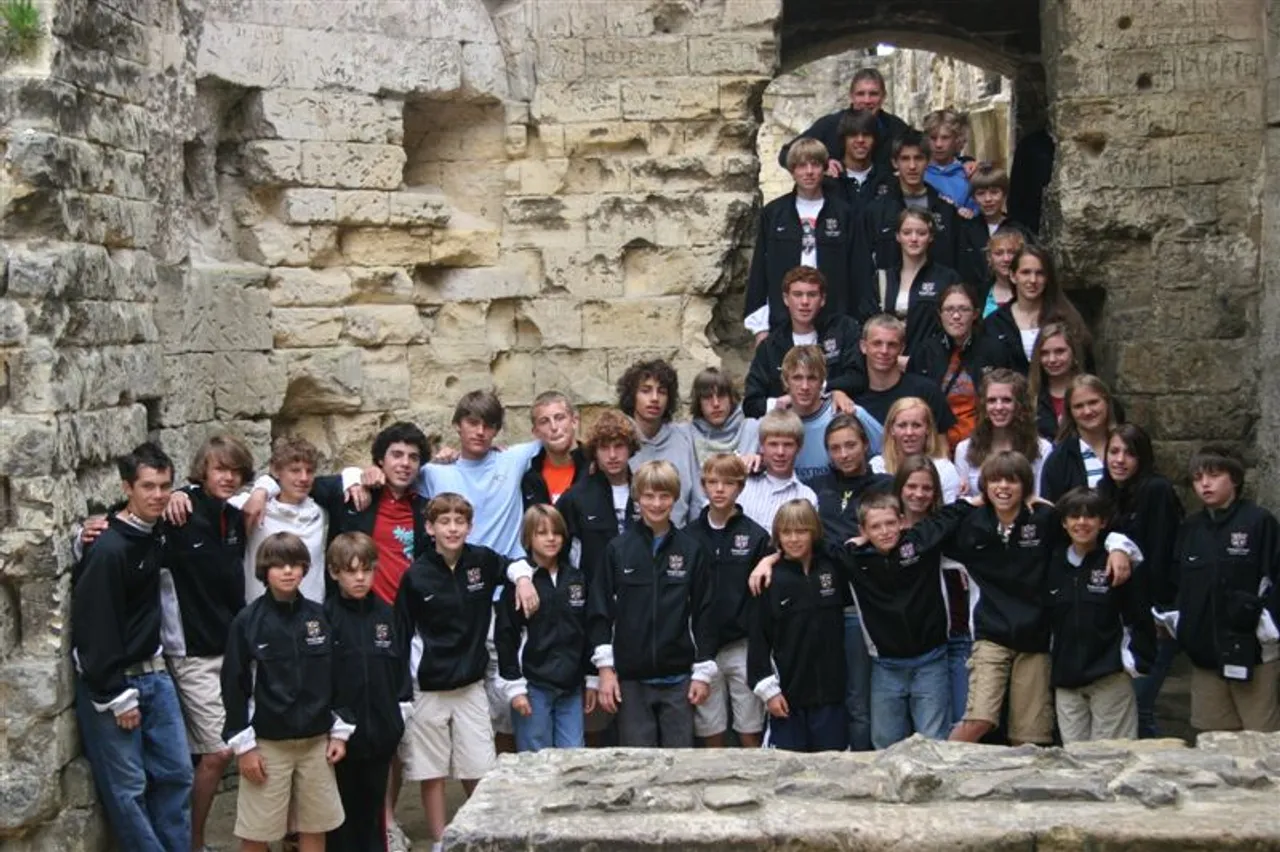
One highlight of the team’s stay in Maastricht was visiting a castle built during medieval times. The castle was located atop a large hill with tunnels carved into it. While touring the tunnels, the group learned that American soldiers hid from Nazi forces in these tunnels during World War II. After the war ended, artists visited the caves and created charcoal portraits of the soldiers who had died in the tunnels.
After leaving Maastricht for Cologne, the group was able to visit another historical landmark – Netherlands American Cemetery and Memorial, the burial site for World War II soldiers. At the cemetery, a guide told stories about some of the soldiers.
“Our trip to the cemetery was an almost eerie experience as we walked through it,” said Milhous. “In every direction I looked, there was a cross marking a grave. The crosses weren’t organized in a straight line, but had a slight curve to them. When we were on the pathway, it looked like a never ending line that blurred into itself.”
Assistant Soccer Academy Director Jamey Newsome said this was a special moment for his wife, who also chaperoned the trip.
“Her uncle is buried in the cemetery, and she was able to take pictures and share them with her family when she arrived at home,” he said. “It was great to see these historical places and for the students to have that experience as well.”
World Cup Fever
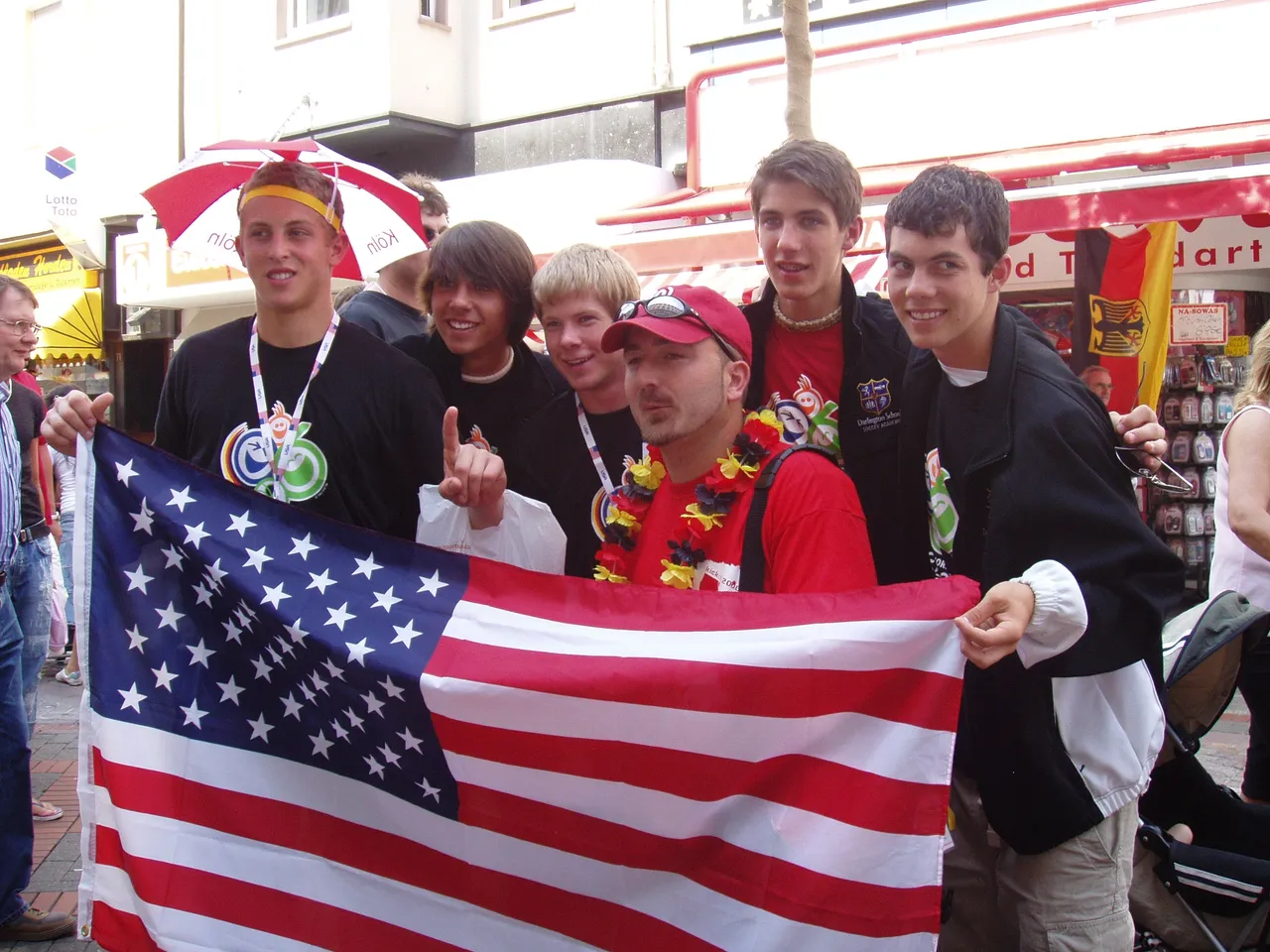
Upon arriving in Cologne, it was evident that World Cup fever had taken over. Several large screens were set up around town for public viewing of the games, and street vendors had set up booths and painted the sidewalks.
“This event brings people together from all over the world,” said Milhous. “Before games, people from both teams were talking together at cafes on the street, not even about soccer sometimes … We saw street TV showings of the games that could hold up to 20,000 people or more.”
According to Liddle, the viewing area next to the Dom Cathedral was almost majestic. “The national pride you see during the World Cup is huge,” he said. “Everyone was walking down the streets, chanting and wearing team colors. The yards were decorated like we do for Christmas. One car was even painted with Portugal’s colors and had balloons all over it.”
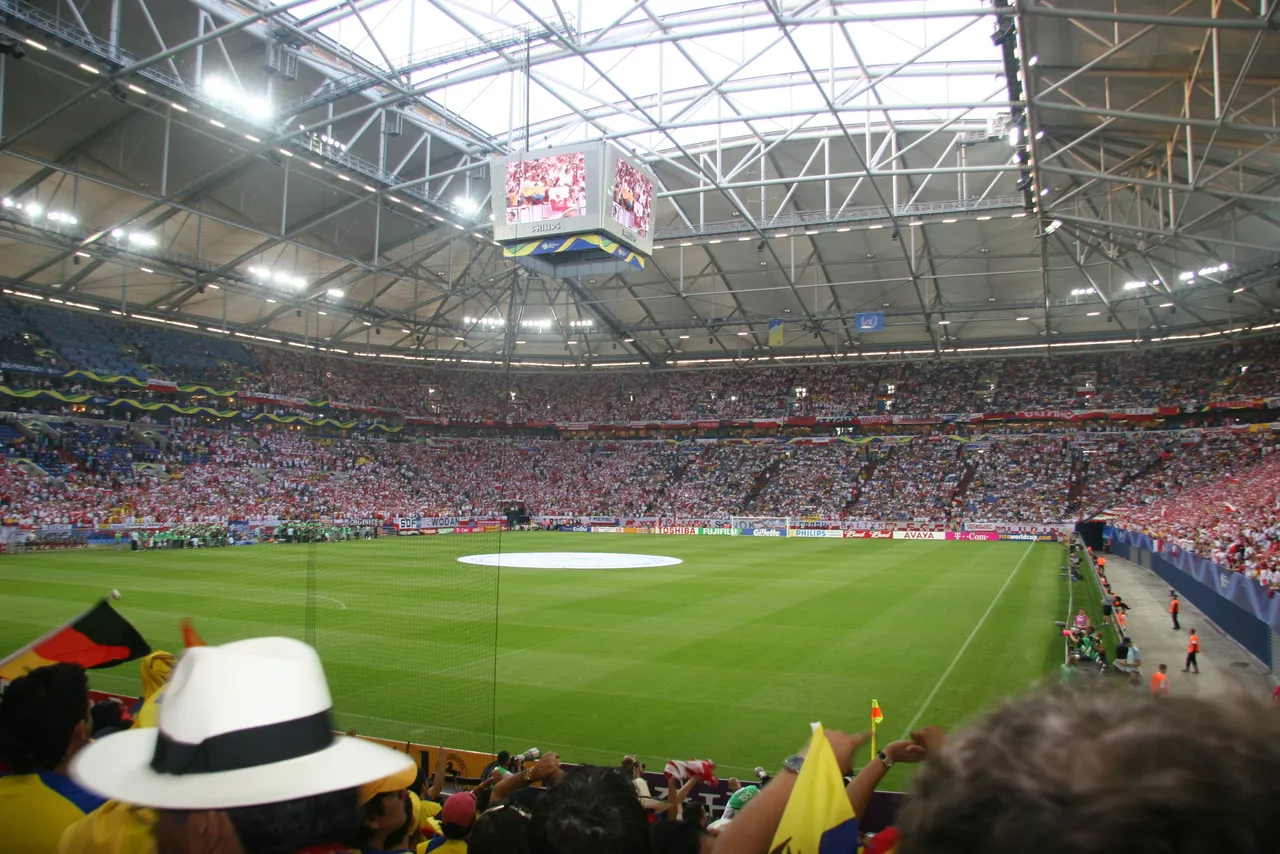
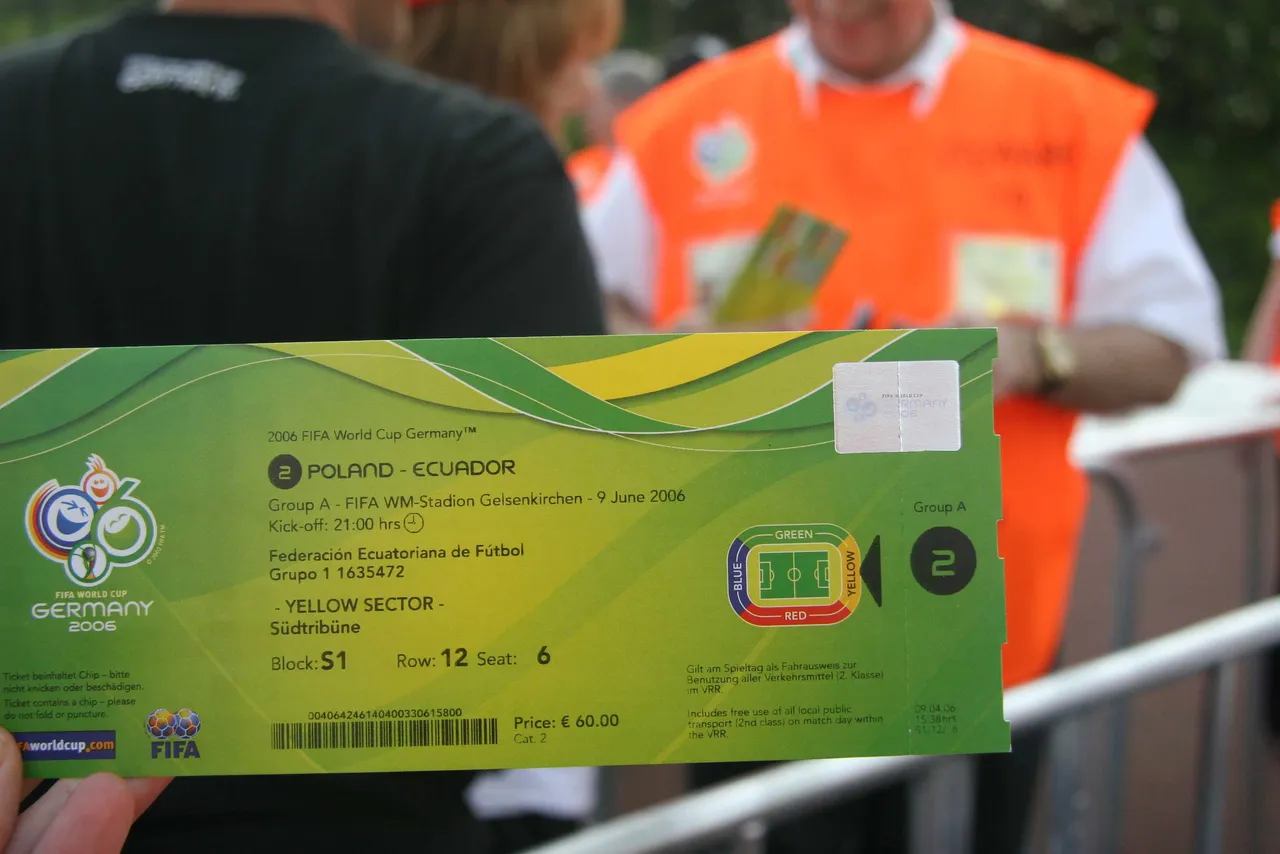
The following day, the group set out to watch Ecuador play Poland in the World Cup. On the train to the city, passengers were packed in shoulder to shoulder, and a group of Polish fans began blowing horns and chanting for their team.
“Some of our kids began chanting and along with them,” said Newsome. “At first the fans were curious, but once they understood we were cheering for their team, they got really excited.”
Upon arrival at the stadium, they were seated in the Ecuador section and decided to cheer for them. Surrounding Ecuador fans took notice and adopted Darlington’s group.
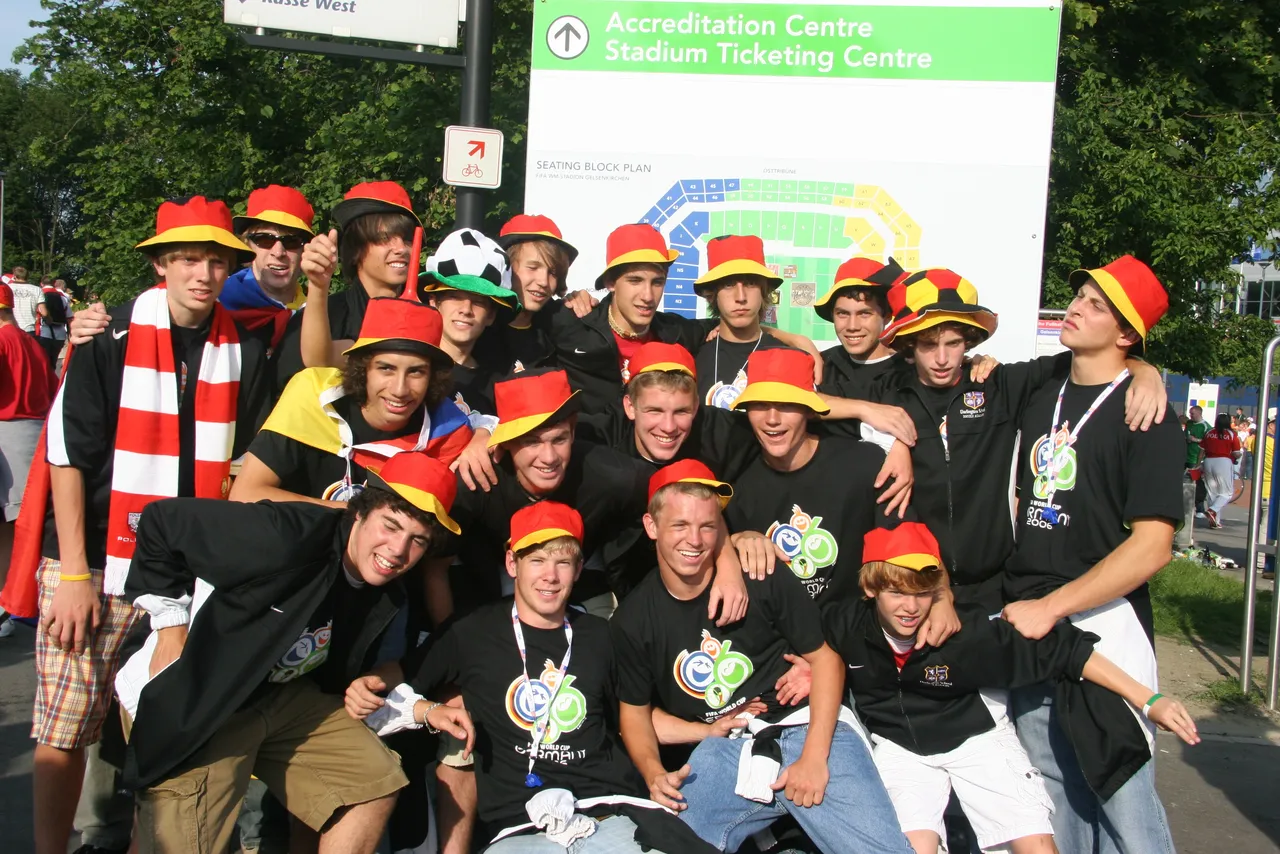
“We had our group wear sailor hats to keep track of everyone when we were out, and the Ecuador fans and our kids started trading hats and scarves and wore them throughout the game. It brought a real sense of unity,” said Newsome. “Ecuador won the game, so that certainly helped the mood of the fans. It made it a great experience. For me, a dream came true, and I’m sure it was the same for many of the others. To see the World Cup in Europe and to witness the national pride it brings out was amazing. It is important for so many of these teams that might have things at stake politically. After the game, the kids rode home grinning. It was an experience I’ll never forget. It was magnificent.”
Milhous was glad he decided to buy an Ecuador jersey and flag before the game. He chanted, “Si se puede,” which means “Yes you can” along with the Ecuador fans. “It worked out for me, though I can’t say the same about a few of our team members who supported Poland,” he said.
But the trip to Cologne was not only about watching others play soccer. The Soccer Academy also toured Hanneth Sports School, a school sponsored by the German government where athletes live and train. The group watched a training session, and then all three Darlington teams played against regional teams.
“These are professional players. The regional teams make up 25 percent of the national team,” said Newsome. “It was quite an experience for our students to compete against players of that quality who they might see playing on television one day. It was obvious who the better team was, but we hung in there. There is no shame in losing to a team like that. It was impressive just to watch the team play.”
Back to America
Tournament play at the international level, historical European landmarks, and a World Cup game made for an exciting trip and placed the Soccer Academy in the spotlight on many occasions.
“Many people think, ‘What do Americans know about soccer?’ We went over there and proved ourselves,” said Newsome. “We showed that we can play. As coaches, Chad and I were proud. These students represented the United States and Darlington very well. I’m proud of how we handled ourselves, and hopefully we were able to change some opinions of Americans.”
“Supporting the United States and Darlington was a great experience, not only for breaking stereotypes that people have about Americans, but for upholding a few as well,” said Milhous. “We were happy to illustrate the fact that Americans truly are friendly and open to trying new things. The trip was a great cultural experience for all of us.”
Friendly Competition
Darlington’s boys competed in the Maastricht Trophy Tournament (in the Netherlands) against teams from nine different countries. Complete with an opening ceremony, the event was described as a “mini-Olympics.”
In the end, the younger team had a record of 4-2, placing second overall in the tournament, while the older boys went 2-2-2. Chris McClure, a guest player who traveled with the Soccer Academy, won the Most Valuable Player award for his age group.
“Our team’s performance in the tournament surpassed all expectations of how Americans can play soccer,” said senior Alex Milhous. “We played exceptionally in our games … Had the games been full length, our team would have performed even better.”
Unfortunately, the Soccer Academy girls were not eligible to participate in the tournament, but they did play “friendly” games against local teams.
“Most European countries still don’t look too fondly on girls playing soccer,” said Chad Liddle, Soccer Academy director. “The United States is just so far ahead of most everyone else in terms of girls’ soccer.”
The coaches said they were proud of Darlington’s finish in the tournament, especially since some of the opposing teams had European professional players.
“We were fast and played a good brand of soccer,” said Liddle.
Parents and coaches enjoyed seeing the interaction between Darlington students and international players.
“Getting to play against teams from other countries was a great learning experience for the Soccer Academy,” said Gwen Bullock, a chaperone. “I believe they played their hearts out and wanted to win every game. Such hard work comes from good leadership and dedication. Darlington’s Soccer Academy should be proud of their leaders and players.”
By the end of the week, teams were trading team hats and pennants. Darlington’s boys even attempted to show the French team how to play American football.
“It was neat to see our kids trying to interact and exchanging things,” said Liddle. “It was a good show of fair play and friendly competition.”
Bullock agreed, “The swapping of shirts and hats was fun for them, and seeing them mingling with other young folks with smiles on their faces was great.”
The team also bonded with Ronald, their bus driver from the Netherlands. Though he spoke broken English, the players adopted him as part of their team. Ronald even cheered for them during their games.
“Ronald had a way to spark humor in whatever was going on,” said Milhous. “We were stretching before one game, and Ronald took over the coach’s position by telling us to do 30 pushups. He was quickly fired from the coach’s position by a unanimous decision by the players.”
At the end of the trip, the students bought Ronald a Netherlands national team jersey and gave him a Darlington School photo book. This would become a favorite memory for many.
“He started to cry a little, and you could tell he was really touched,” said Liddle.
Bullock called Ronald an added bonus of the trip. “He was so good with all the kids and adults,” she said. “It was such a pleasure to have someone like him to be with us during the entire trip. I truly believe he felt like one of us. Seeing him playing and having a good time with the kids was so rewarding.”
A Bit of History
One highlight of the team’s stay in Maastricht was visiting a castle built during medieval times. The castle was located atop a large hill with tunnels carved into it. While touring the tunnels, the group learned that American soldiers hid from Nazi forces in these tunnels during World War II. After the war ended, artists visited the caves and created charcoal portraits of the soldiers who had died in the tunnels.
After leaving Maastricht for Cologne, the group was able to visit another historical landmark – Netherlands American Cemetery and Memorial, the burial site for World War II soldiers. At the cemetery, a guide told stories about some of the soldiers.
“Our trip to the cemetery was an almost eerie experience as we walked through it,” said Milhous. “In every direction I looked, there was a cross marking a grave. The crosses weren’t organized in a straight line, but had a slight curve to them. When we were on the pathway, it looked like a never ending line that blurred into itself.”
Assistant Soccer Academy Director Jamey Newsome said this was a special moment for his wife, who also chaperoned the trip.
“Her uncle is buried in the cemetery, and she was able to take pictures and share them with her family when she arrived at home,” he said. “It was great to see these historical places and for the students to have that experience as well.”
World Cup Fever
Upon arriving in Cologne, it was evident that World Cup fever had taken over. Several large screens were set up around town for public viewing of the games, and street vendors had set up booths and painted the sidewalks.
“This event brings people together from all over the world,” said Milhous. “Before games, people from both teams were talking together at cafes on the street, not even about soccer sometimes … We saw street TV showings of the games that could hold up to 20,000 people or more.”
According to Liddle, the viewing area next to the Dom Cathedral was almost majestic. “The national pride you see during the World Cup is huge,” he said. “Everyone was walking down the streets, chanting and wearing team colors. The yards were decorated like we do for Christmas. One car was even painted with Portugal’s colors and had balloons all over it.”
The following day, the group set out to watch Ecuador play Poland in the World Cup. On the train to the city, passengers were packed in shoulder to shoulder, and a group of Polish fans began blowing horns and chanting for their team.
“Some of our kids began chanting and along with them,” said Newsome. “At first the fans were curious, but once they understood we were cheering for their team, they got really excited.”
Upon arrival at the stadium, they were seated in the Ecuador section and decided to cheer for them. Surrounding Ecuador fans took notice and adopted Darlington’s group.
“We had our group wear sailor hats to keep track of everyone when we were out, and the Ecuador fans and our kids started trading hats and scarves and wore them throughout the game. It brought a real sense of unity,” said Newsome. “Ecuador won the game, so that certainly helped the mood of the fans. It made it a great experience. For me, a dream came true, and I’m sure it was the same for many of the others. To see the World Cup in Europe and to witness the national pride it brings out was amazing. It is important for so many of these teams that might have things at stake politically. After the game, the kids rode home grinning. It was an experience I’ll never forget. It was magnificent.”
Milhous was glad he decided to buy an Ecuador jersey and flag before the game. He chanted, “Si se puede,” which means “Yes you can” along with the Ecuador fans. “It worked out for me, though I can’t say the same about a few of our team members who supported Poland,” he said.
But the trip to Cologne was not only about watching others play soccer. The Soccer Academy also toured Hanneth Sports School, a school sponsored by the German government where athletes live and train. The group watched a training session, and then all three Darlington teams played against regional teams.
“These are professional players. The regional teams make up 25 percent of the national team,” said Newsome. “It was quite an experience for our students to compete against players of that quality who they might see playing on television one day. It was obvious who the better team was, but we hung in there. There is no shame in losing to a team like that. It was impressive just to watch the team play.”
Back to America
Tournament play at the international level, historical European landmarks, and a World Cup game made for an exciting trip and placed the Soccer Academy in the spotlight on many occasions.
“Many people think, ‘What do Americans know about soccer?’ We went over there and proved ourselves,” said Newsome. “We showed that we can play. As coaches, Chad and I were proud. These students represented the United States and Darlington very well. I’m proud of how we handled ourselves, and hopefully we were able to change some opinions of Americans.”
“Supporting the United States and Darlington was a great experience, not only for breaking stereotypes that people have about Americans, but for upholding a few as well,” said Milhous. “We were happy to illustrate the fact that Americans truly are friendly and open to trying new things. The trip was a great cultural experience for all of us.”