NewsPre-K to 8Parents
Reading specialist encourages home support
Sep 12, 2007 12:00 AM
By Tannika King - Faculty

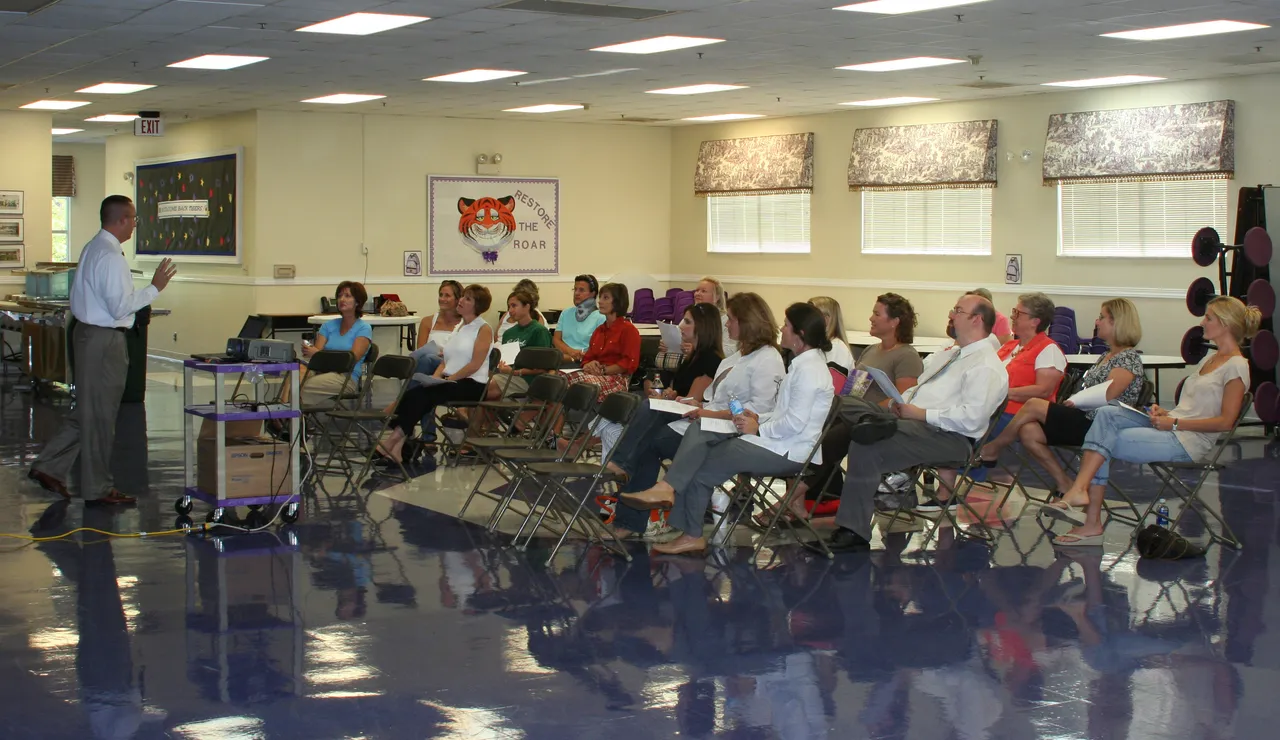
Reading Specialist Rob Hall met with Lower School parents on Tuesday to talk about independent reading and ways to support children when reading at home.
“One of my main responsibilities is to provide both teachers and parents with resources and strategies to help children improve their reading skills,” said Hall. “If there is a student who is struggling at Darlington – no matter what grade level – it is my responsibility to help them. If we work together, we can do the best for your child.”
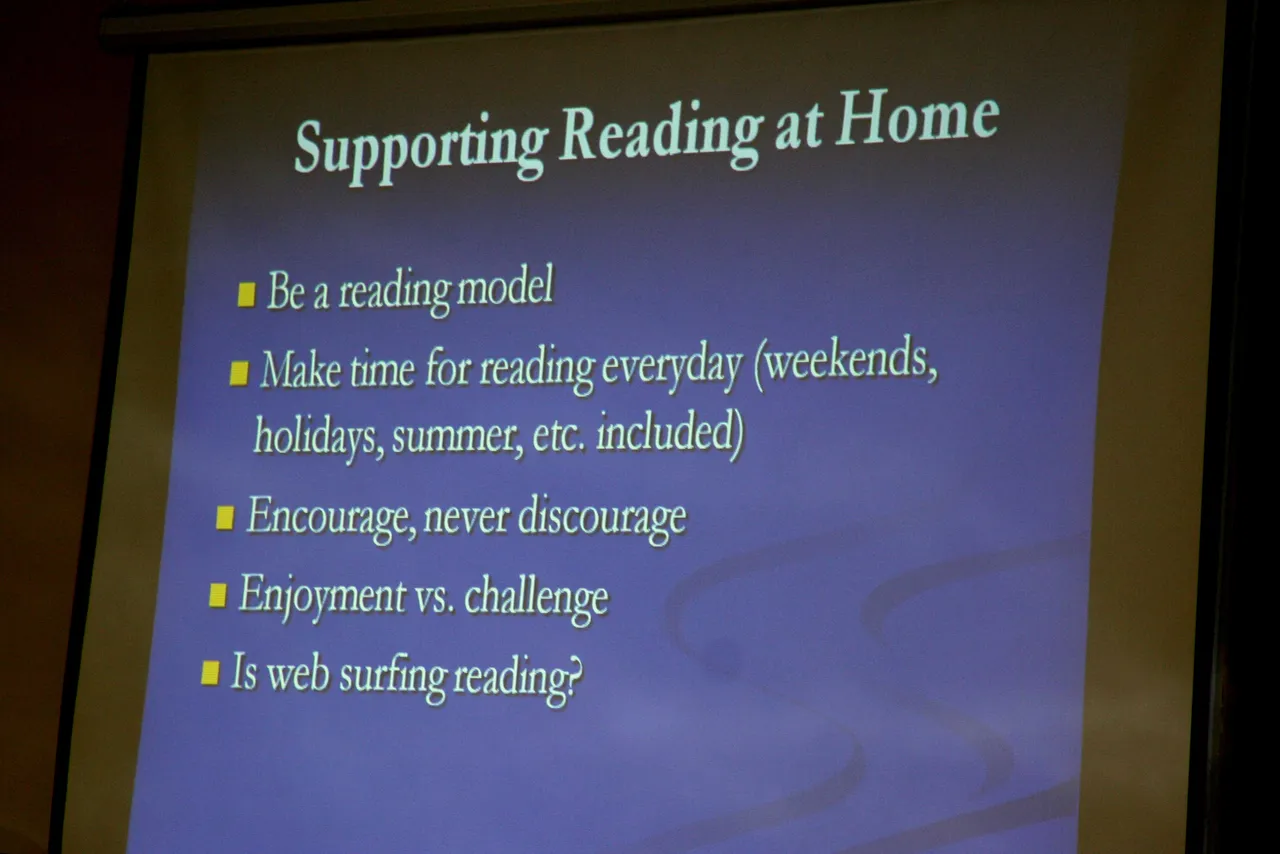
According to Hall, parents should make time for reading every day and encourage their children to read books that are entertaining and at their reading level.
“As soon as you break your child’s love for reading [by pressuring them or challenging them too much], you’ll probably never get it back,” he said. “Above all else, make reading fun. Look at reading as a time to escape from homework, a time for the child to get lost in his or her own world.”
Home support is one of the best ways to improve a child’s reading ability. It is important for parents to be model readers for their children, Hall explained. Students should see their parents reading for fun, and parents should read to their children daily in order to help with comprehension. Additionally, parents should have book discussions with their children in order to get them thinking, predicting, summarizing and inferring.
“When helping your child read at home, be careful to make corrections appropriately. Don’t break their fluency; let them get through it by decoding the problem words,” said Hall. “Fluency is the number one predictor of reader success, so let the child realize he or she is making a mistake and try to fix it. Do not stop the child mid-sentence, and don’t correct insertions and non-meaning changing miscues.”
Hall also talked about the importance of independent reading and choosing books students can comprehend on an appropriate developmental and interest level. This year, each student was assigned a Lexile based on the Gates-MacGinitie assessment last spring. The Lower School library has color-coded books in accordance with the Lexile framework, making it easier for students, teachers and parents to reference which books students should be reading.
“Independent reading is not a competition or comparison to others. In fact, challenging reading should only occur in the classroom with adequate teacher assistance,” Hall explained. “One of my goals for this year is to form a committee to evaluate the Lower School’s independent reading program. We need to look critically at this program as a school and as a community to make sure it is aligned with Darlington’s mission.”
For more information, please contact Rob Hall at RHall@darlingtonschool.org. He works with students in grades pre-K to 12.
“One of my main responsibilities is to provide both teachers and parents with resources and strategies to help children improve their reading skills,” said Hall. “If there is a student who is struggling at Darlington – no matter what grade level – it is my responsibility to help them. If we work together, we can do the best for your child.”
According to Hall, parents should make time for reading every day and encourage their children to read books that are entertaining and at their reading level.
“As soon as you break your child’s love for reading [by pressuring them or challenging them too much], you’ll probably never get it back,” he said. “Above all else, make reading fun. Look at reading as a time to escape from homework, a time for the child to get lost in his or her own world.”
Home support is one of the best ways to improve a child’s reading ability. It is important for parents to be model readers for their children, Hall explained. Students should see their parents reading for fun, and parents should read to their children daily in order to help with comprehension. Additionally, parents should have book discussions with their children in order to get them thinking, predicting, summarizing and inferring.
“When helping your child read at home, be careful to make corrections appropriately. Don’t break their fluency; let them get through it by decoding the problem words,” said Hall. “Fluency is the number one predictor of reader success, so let the child realize he or she is making a mistake and try to fix it. Do not stop the child mid-sentence, and don’t correct insertions and non-meaning changing miscues.”
Hall also talked about the importance of independent reading and choosing books students can comprehend on an appropriate developmental and interest level. This year, each student was assigned a Lexile based on the Gates-MacGinitie assessment last spring. The Lower School library has color-coded books in accordance with the Lexile framework, making it easier for students, teachers and parents to reference which books students should be reading.
“Independent reading is not a competition or comparison to others. In fact, challenging reading should only occur in the classroom with adequate teacher assistance,” Hall explained. “One of my goals for this year is to form a committee to evaluate the Lower School’s independent reading program. We need to look critically at this program as a school and as a community to make sure it is aligned with Darlington’s mission.”
For more information, please contact Rob Hall at RHall@darlingtonschool.org. He works with students in grades pre-K to 12.