NewsUpper SchoolStudent LifePre-K to 8
No trick: Teens warming up to bridge
Aug 23, 2004 8:00 AM
By Tannika King - Faculty
After a foot injury prematurely ended her high school tennis season last year, Abigail McGraw found an unusual way to spend her sudden surfeit of free time: bridge.
“Most kids think of it as an old person’s game, but it’s a lot of fun,” said the 18-year-old who graduated from Darlington last spring. “You have to think about it to play. It’s more interesting than other games.”
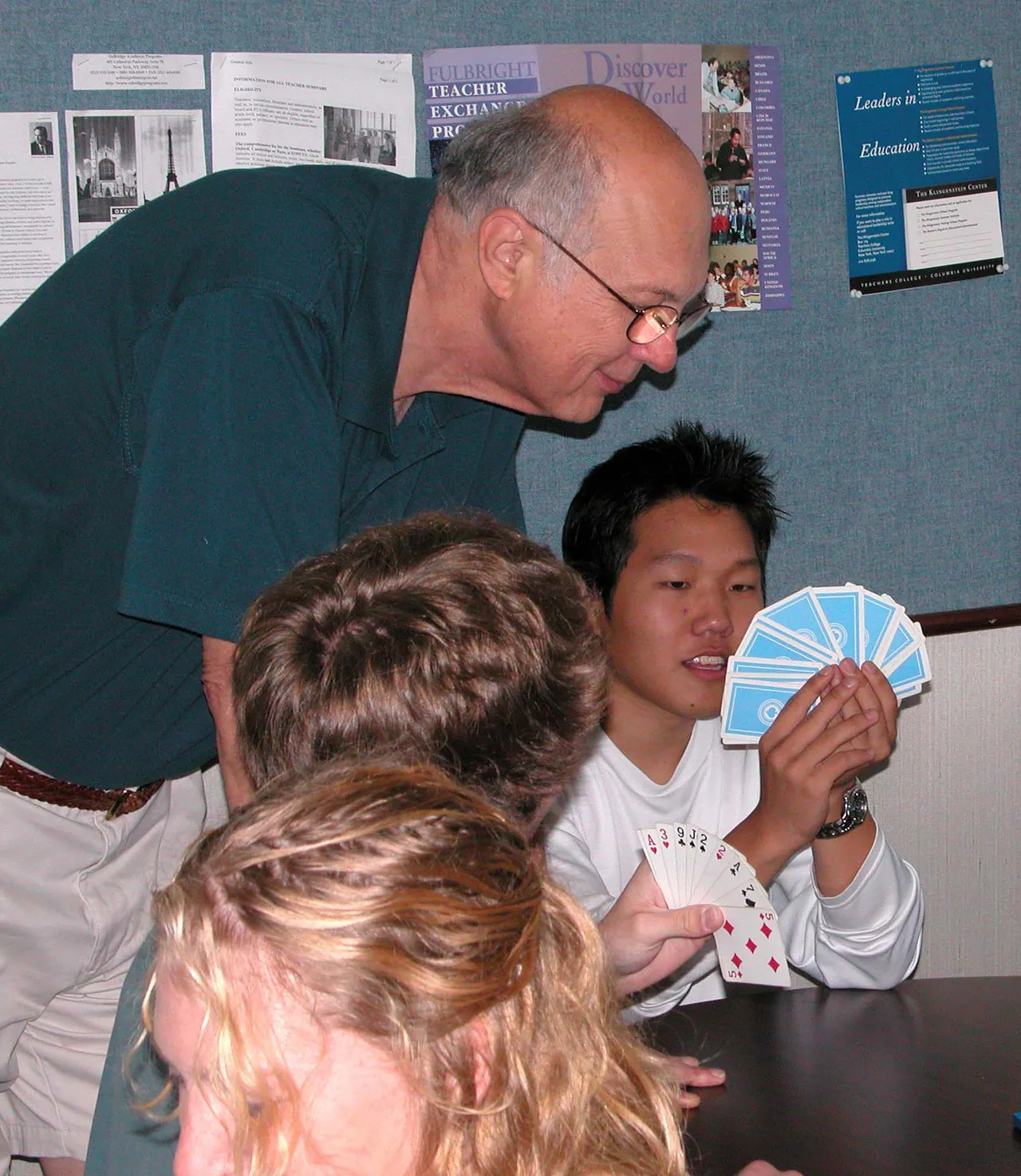
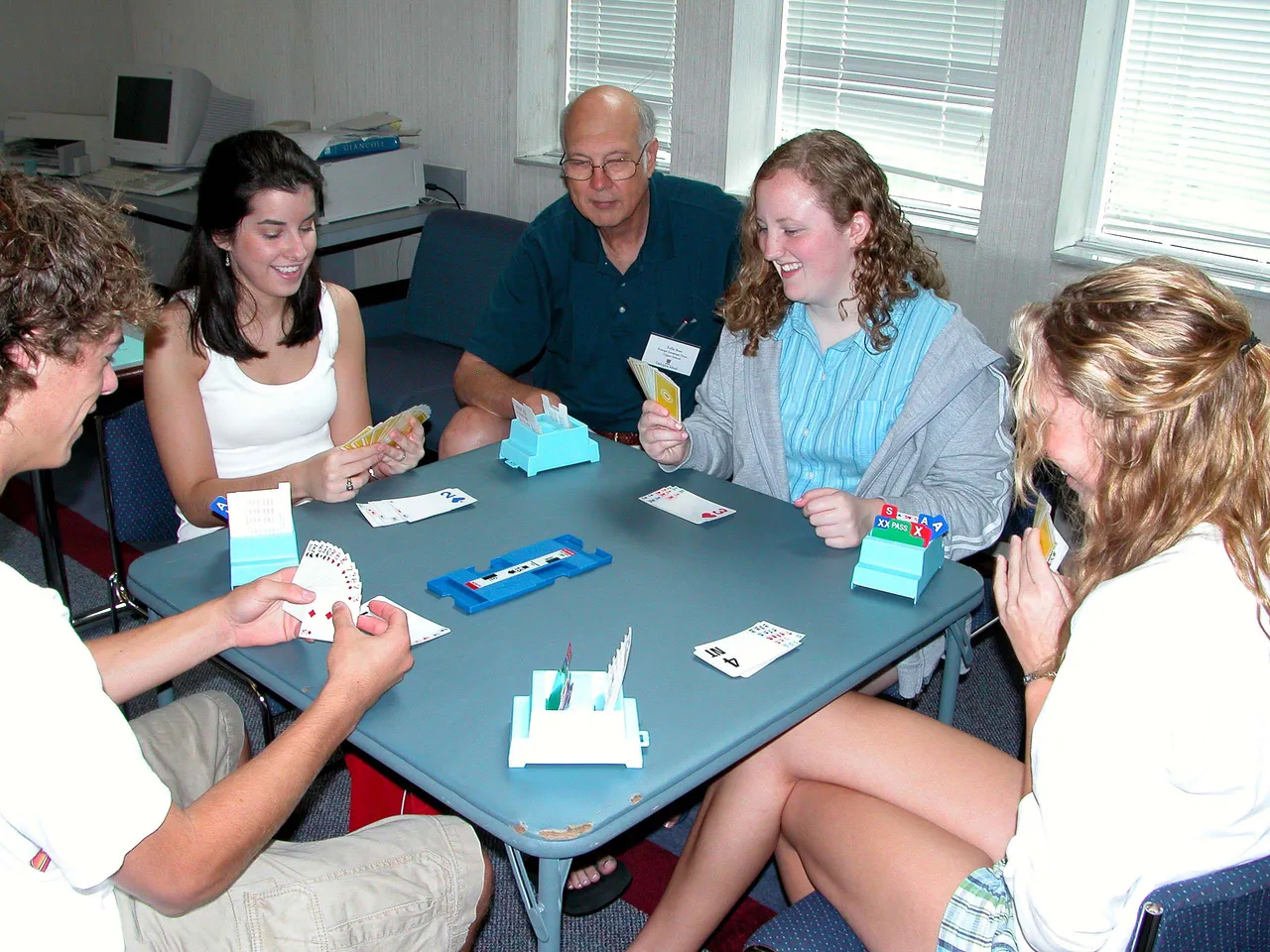
Debunking the common perception that bridge is best reserved for curmudgeonly seniors in rocking chairs, many local teenagers are proving that tricks are indeed for kids in a bridge club founded by a Darlington teacher.
“It’s a very easy game to learn to play, but a difficult game to play well. That’s part of the reason why it’s so interesting,” said Tollie Ross, a German and Spanish teacher at Darlington and a certified bridge instructor.
Ross has been slowly building the bridge club during the past three years to last year’s total of about 20 members, which included players from public high schools as well as Darlington, he said.
A member of the American Contract Bridge League of Memphis, Ross said the organization started an education fund to recruit younger players as it started seeing its membership slip.
“Young people are too busy playing computer games, and the older players were basically starting to die off,” Ross said. “They wanted to attract more young people, and I started thinking I could do that.”
He started recruiting students by asking colleagues, especially math teachers, to mention the club during class. Slowly but surely students began showing up, he said, and while some quickly lost interest, others found a passion for the card game.
“I just give them a basic idea of the rules, and then I let them go,” Ross said. “It’s not fun, and it’s harder to learn, when you have someone watching your every move.”
The game isn’t simply a leisurely diversion, Ross added. It requires strategic thinking, simple math abilities and even strong social skills, he said.
“You have to get along with your partner,” he said. “It’s a social game and a competitive game. It teaches them logic.”
Bridge typically pits two teams of two against each other, and teammates must communicate surreptitiously to help win each trick or round. Whichever pair wins the most tricks wins the game.
The club, which is open to all county middle and high schoolers, will have its first meeting from 1 to 4 p.m. Sept. 11 in the Darlington library.
Darlington student Peter Hjort, 16, said he was intrigued by the club after watching his parents play the card game. “I always wanted to learn how to play,” he said. “I like to play cards, and I like bridge because it’s a mind game.”
And it’s a game that Ross hopes will soon grow in popularity throughout the county, perhaps even leading to some scholarly competition.
“I would really like to see the high schools have bridge teams and play against each other,” he said. “A junior bridge league.”
Now that would be quite a trick.
*Written by Marc Dadigan, Rome News-Tribune Staff Writer, published 8/23/04
“Most kids think of it as an old person’s game, but it’s a lot of fun,” said the 18-year-old who graduated from Darlington last spring. “You have to think about it to play. It’s more interesting than other games.”
Debunking the common perception that bridge is best reserved for curmudgeonly seniors in rocking chairs, many local teenagers are proving that tricks are indeed for kids in a bridge club founded by a Darlington teacher.
“It’s a very easy game to learn to play, but a difficult game to play well. That’s part of the reason why it’s so interesting,” said Tollie Ross, a German and Spanish teacher at Darlington and a certified bridge instructor.
Ross has been slowly building the bridge club during the past three years to last year’s total of about 20 members, which included players from public high schools as well as Darlington, he said.
A member of the American Contract Bridge League of Memphis, Ross said the organization started an education fund to recruit younger players as it started seeing its membership slip.
“Young people are too busy playing computer games, and the older players were basically starting to die off,” Ross said. “They wanted to attract more young people, and I started thinking I could do that.”
He started recruiting students by asking colleagues, especially math teachers, to mention the club during class. Slowly but surely students began showing up, he said, and while some quickly lost interest, others found a passion for the card game.
“I just give them a basic idea of the rules, and then I let them go,” Ross said. “It’s not fun, and it’s harder to learn, when you have someone watching your every move.”
The game isn’t simply a leisurely diversion, Ross added. It requires strategic thinking, simple math abilities and even strong social skills, he said.
“You have to get along with your partner,” he said. “It’s a social game and a competitive game. It teaches them logic.”
Bridge typically pits two teams of two against each other, and teammates must communicate surreptitiously to help win each trick or round. Whichever pair wins the most tricks wins the game.
The club, which is open to all county middle and high schoolers, will have its first meeting from 1 to 4 p.m. Sept. 11 in the Darlington library.
Darlington student Peter Hjort, 16, said he was intrigued by the club after watching his parents play the card game. “I always wanted to learn how to play,” he said. “I like to play cards, and I like bridge because it’s a mind game.”
And it’s a game that Ross hopes will soon grow in popularity throughout the county, perhaps even leading to some scholarly competition.
“I would really like to see the high schools have bridge teams and play against each other,” he said. “A junior bridge league.”
Now that would be quite a trick.
*Written by Marc Dadigan, Rome News-Tribune Staff Writer, published 8/23/04