NewsPre-K to 8
Hurley visits historical sites honoring ancestor
Jul 10, 2006 12:27 PM
By Tannika King - Faculty
Rising sixth-grader Allie Hurley first learned about her ancestor William Dawes in second grade. A Patriot and a historic figure in the Revolutionary War, Dawes was the first messenger sent from Boston, Mass., to Lexington, Va., to warn of the coming of British troops.
“I first learned about William Dawes while I was doing a report about his great-grandson and my uncle, Charles G. Dawes, who was vice president of the United States under Calvin Coolidge,” said Allie. “My dad has a picture and an autograph from Charles G. Dawes [and a book about the family] … When I brought the book in, Mrs. Babcock told me the story about William Dawes.”
On April 18, 1775, Dawes was assigned by Dr. Joseph Warren to warn John Hancock and Samuel Adams that they were in danger of arrest by British troops. Also acting under Dr. Warren, Paul Revere set off on the same mission, but by different route.
Both arrived at the Hancock-Clarke House shortly after midnight. After delivering the message, the two proceeded to Concord, Mass., with local physician, Dr. Samuel Prescott. A squad of British officers met them on the road between Lexington and Concord, and the three men rode in different directions, hoping one would escape.
Only Prescott managed to warn Concord; additional riders were sent from there. Revere and Dawes triggered a flexible command, control and communication system that had been carefully developed months before. In addition to other express riders, bells, drums, alarm guns and a trumpet were used for rapid communication from town to town, notifying the Patriots in dozens of eastern Massachusetts villages that they should muster their militias. Dawes and his companions’ warning allowed the town militias to muster a sufficient force for the first open battle of the Revolutionary War and the first colonial victory. The British troops did not find most of the weapons they had marched to destroy, and sustained serious losses during their retreat to Boston under guerilla fire.
“It’s kind of neat to have a family that has been involved in American history,” said Allie. “When I was little, my parents took me to the Dawes Arboretum in Newark, Ohio … I also remember seeing pictures of one of my cousins dressed up as Brig. Gen. Rufus Dawes, who served in the Civil War.”
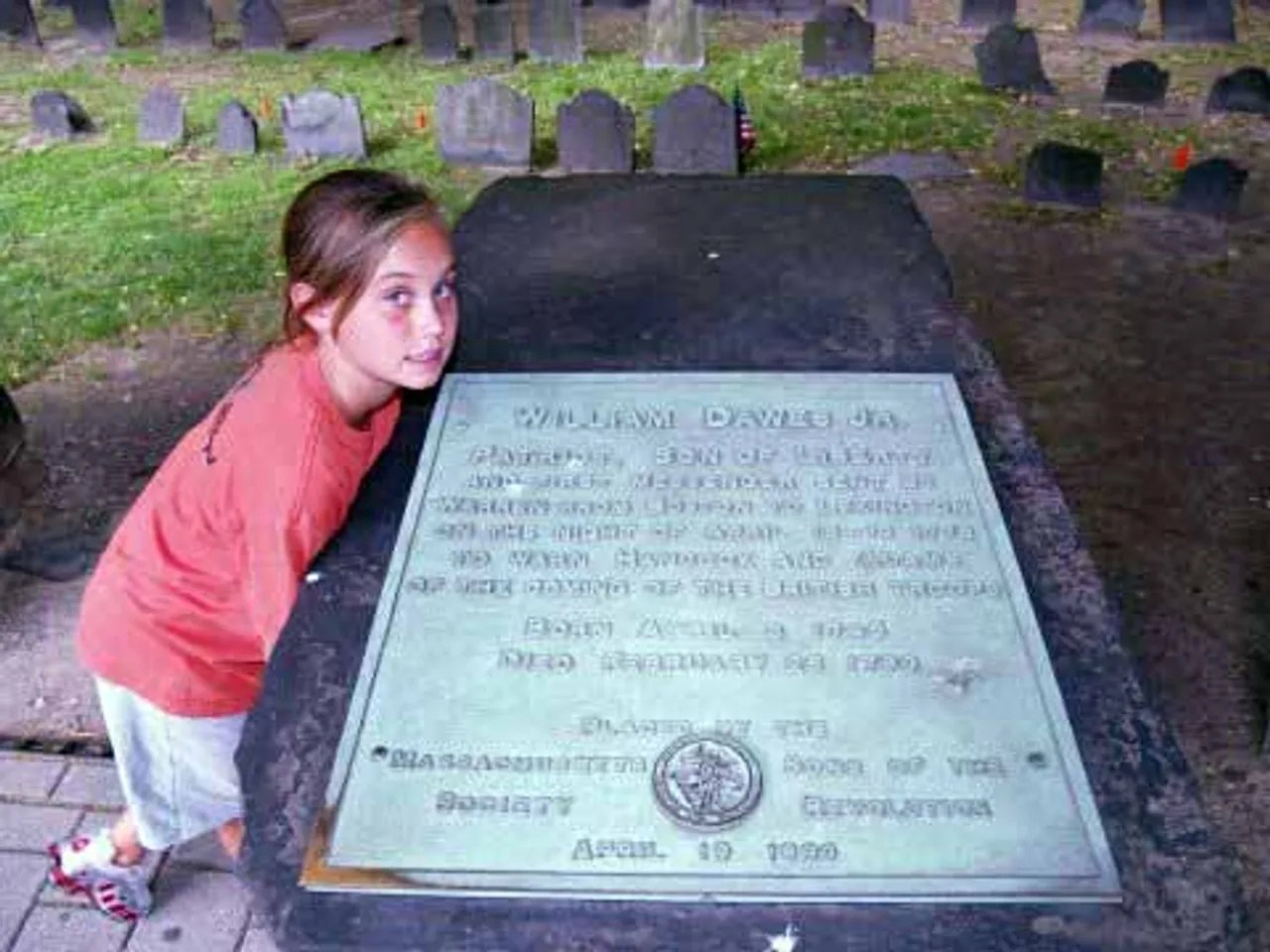
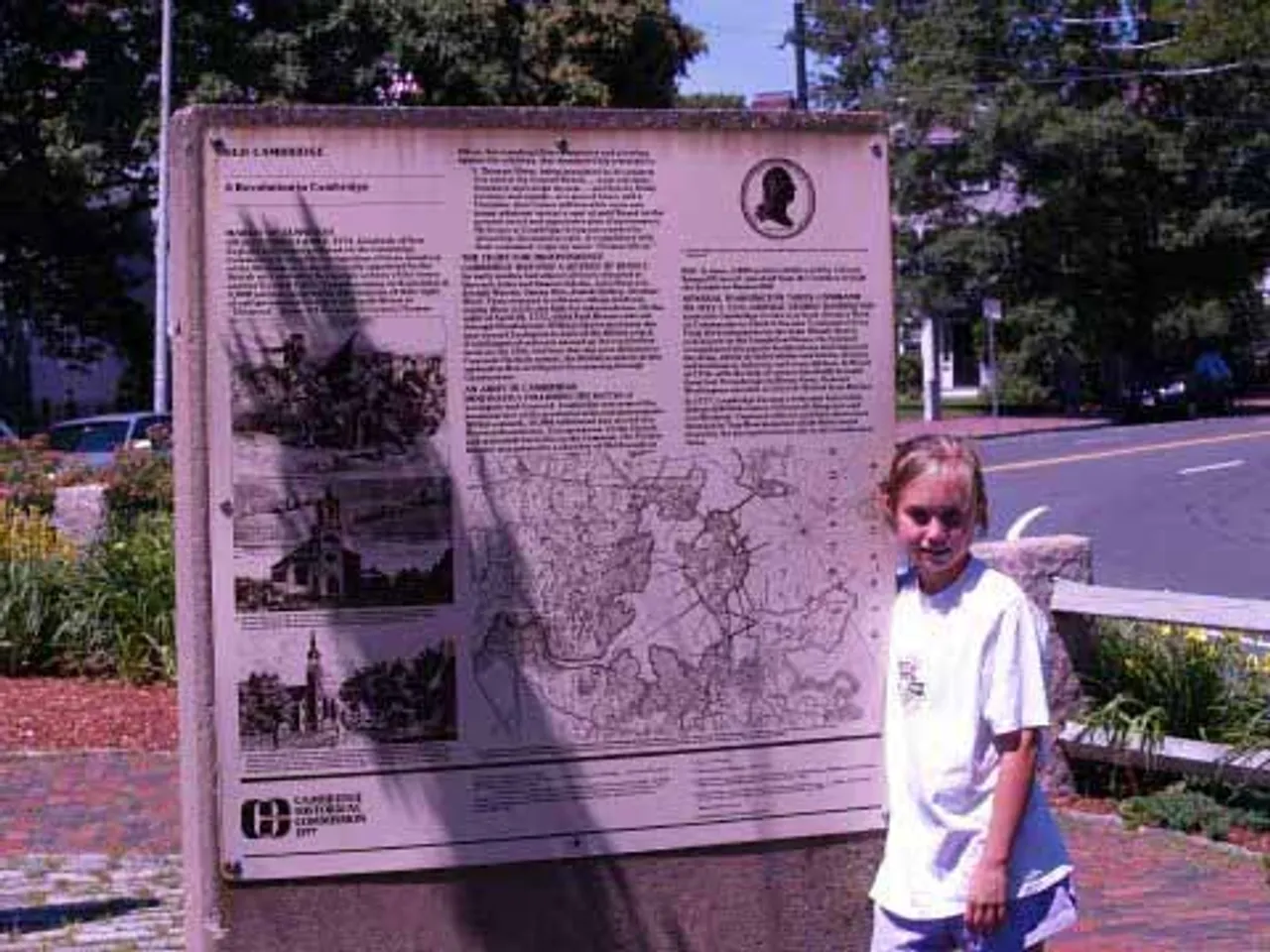
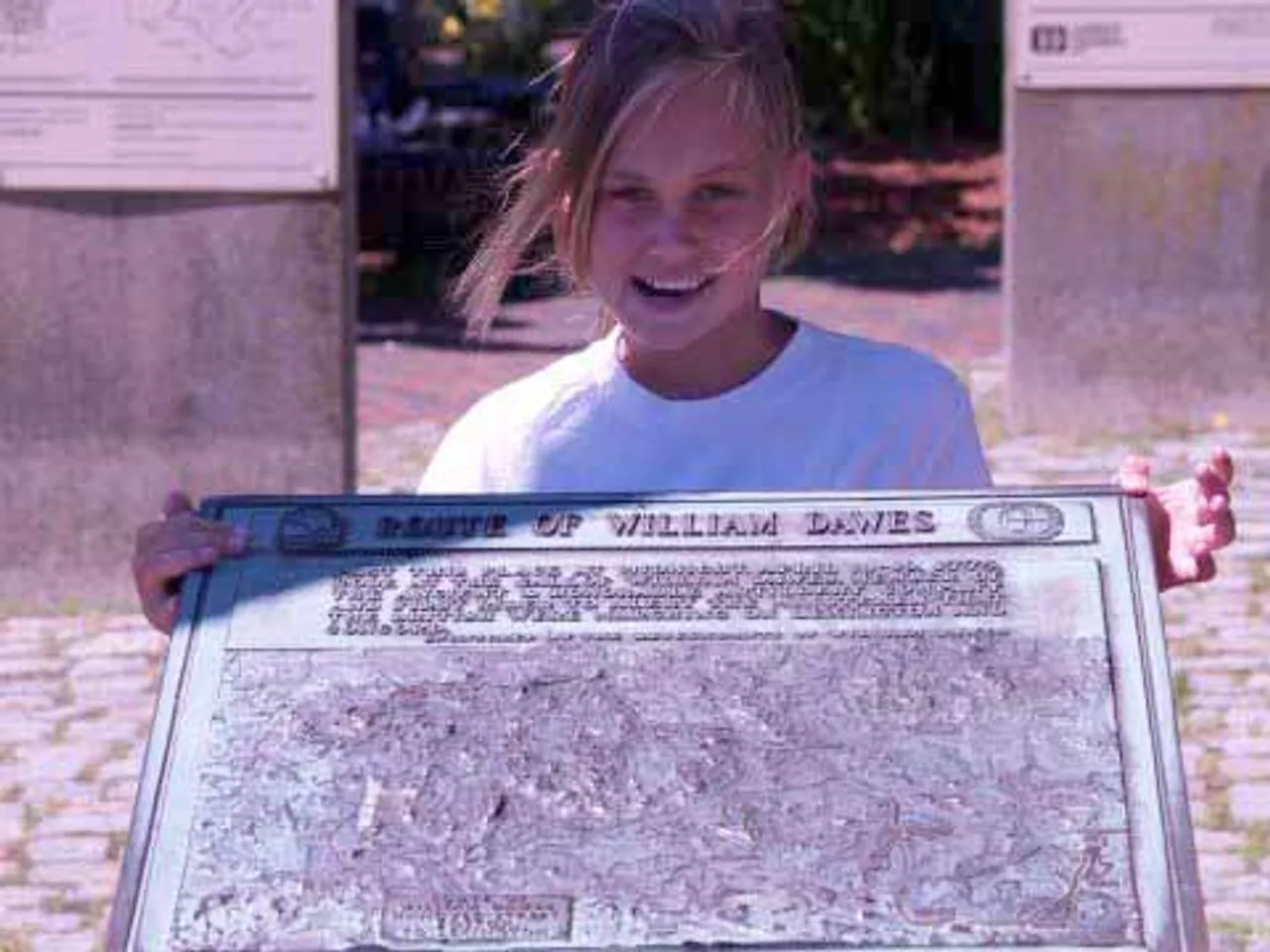
This summer, Allie and her father, Barry, visited Boston to see several historic sites that celebrate William Dawes. They visited Dawes Park and Dawes’ gravesite at King’s Chapel.
“This is the third time I have been to Boston with the girls, and the first time that just Allie and I have been. It is probably the first time that Allie has been old enough to really comprehend all of the history in the city of Boston,” said Barry. “I think it is important for our children to see that anything is possible and perhaps realize that possibility based upon what some of their other family members have accomplished.”
“I first learned about William Dawes while I was doing a report about his great-grandson and my uncle, Charles G. Dawes, who was vice president of the United States under Calvin Coolidge,” said Allie. “My dad has a picture and an autograph from Charles G. Dawes [and a book about the family] … When I brought the book in, Mrs. Babcock told me the story about William Dawes.”
On April 18, 1775, Dawes was assigned by Dr. Joseph Warren to warn John Hancock and Samuel Adams that they were in danger of arrest by British troops. Also acting under Dr. Warren, Paul Revere set off on the same mission, but by different route.
Both arrived at the Hancock-Clarke House shortly after midnight. After delivering the message, the two proceeded to Concord, Mass., with local physician, Dr. Samuel Prescott. A squad of British officers met them on the road between Lexington and Concord, and the three men rode in different directions, hoping one would escape.
Only Prescott managed to warn Concord; additional riders were sent from there. Revere and Dawes triggered a flexible command, control and communication system that had been carefully developed months before. In addition to other express riders, bells, drums, alarm guns and a trumpet were used for rapid communication from town to town, notifying the Patriots in dozens of eastern Massachusetts villages that they should muster their militias. Dawes and his companions’ warning allowed the town militias to muster a sufficient force for the first open battle of the Revolutionary War and the first colonial victory. The British troops did not find most of the weapons they had marched to destroy, and sustained serious losses during their retreat to Boston under guerilla fire.
“It’s kind of neat to have a family that has been involved in American history,” said Allie. “When I was little, my parents took me to the Dawes Arboretum in Newark, Ohio … I also remember seeing pictures of one of my cousins dressed up as Brig. Gen. Rufus Dawes, who served in the Civil War.”
This summer, Allie and her father, Barry, visited Boston to see several historic sites that celebrate William Dawes. They visited Dawes Park and Dawes’ gravesite at King’s Chapel.
“This is the third time I have been to Boston with the girls, and the first time that just Allie and I have been. It is probably the first time that Allie has been old enough to really comprehend all of the history in the city of Boston,” said Barry. “I think it is important for our children to see that anything is possible and perhaps realize that possibility based upon what some of their other family members have accomplished.”