
Honor & Ethics in the Media

By Adrienne Forgette - FF/S
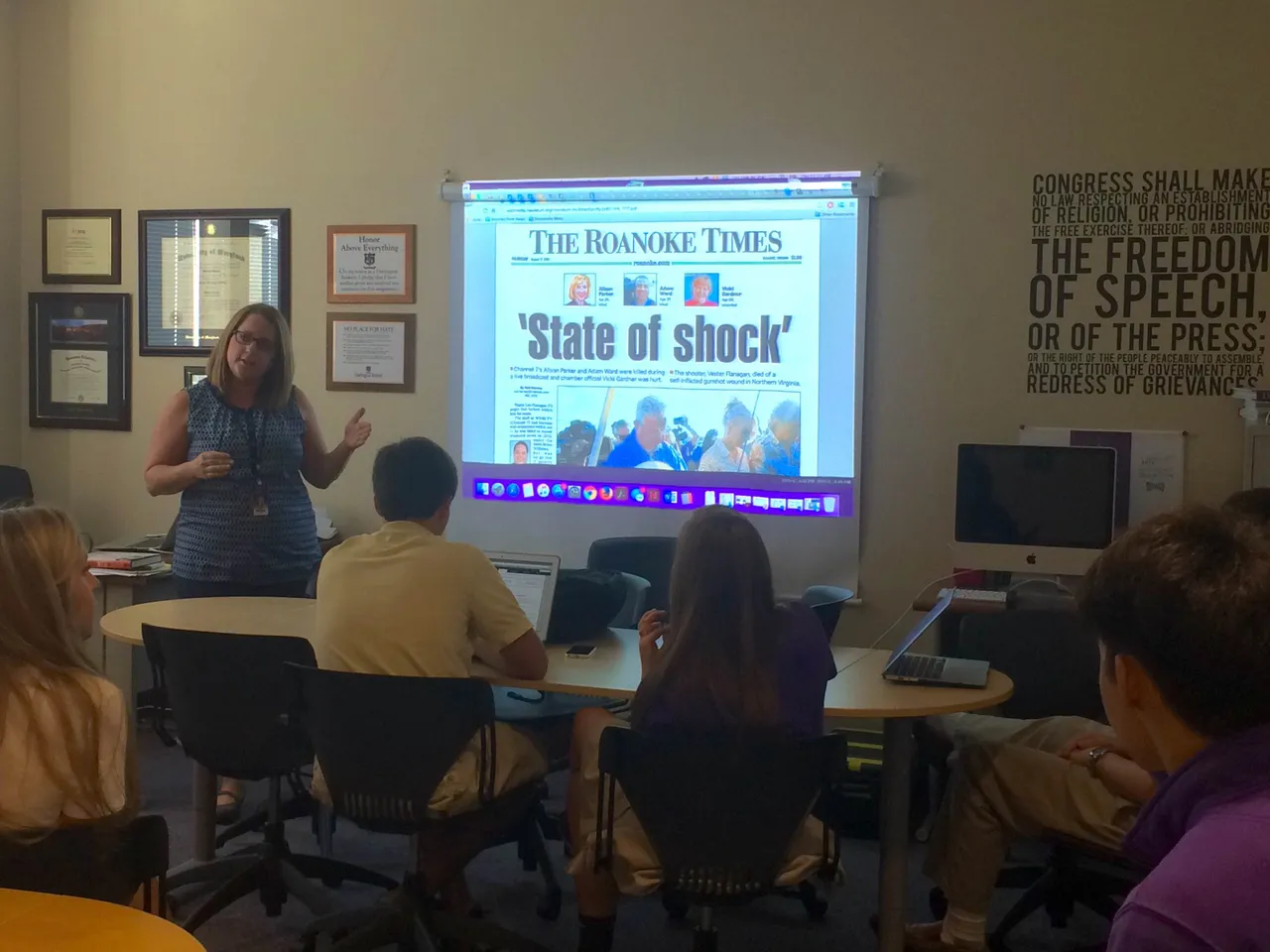
There are some class days when you drop all that you had planned to discuss something in the news.
Today was one of those days in Introduction to Media Arts.
Upon seeing how the story of slain WDBJ7 Reporter Alison Parker and Photographer Adam Ward unfolded in the media, it was a teachable moment that just because you can do something doesn’t mean you should — one very fitting on the day that students and faculty new to Darlington were to sign the Honor Book.
Most of my students hadn’t heard about how these two journalists were killed on live television today, so I asked them to imagine how would they feel if they were at school, checked social media and clicked on a viral video that showed one of their family members being killed.
We looked at the news coverage from the day, seeing how the details of the story were reported. I didn’t show them the video of the live shootings, but we did examine what news agencies decided to run the video in their coverage. They weren’t surprised that Gawker had the video up, but NBC’s inclusion of the video surprised us.
We pondered: Do the families of these two young journalists need to see their loved ones being gunned down? How does access to this video serve the public? Is the right to privacy in this aspect greater than the need to know? Everyone in the room agreed the video should not be online.
As a class, we read the Society of Professional Journalist’s Code of Ethics, analyzing the “Minimize Harm” section.
I asked, “Which of these codes did the news outlets that chose to run the full video footage violate today?” Students identified “Show compassion for those who may be affected by news coverage,” “Avoid pandering to lurid curiosity, even if others do,” and “Balance the public’s need for information against potential harm or discomfort.”
All agreed the media outlets who chose to display the video of the shootings violated these tenets of the SPJ’s Code of Ethics.
Note: Our Student Publications staff’s policies drafted by Editor-in-Chief Ethan Pender ('16) this summer outline that our student journalists will follow a similar code of ethics as they produce news stories this year. And while I hope they are never faced personally with the choices the news media had to deal with today, I hope today’s lesson encourages them to examine ethical implications as they analyze news coverage in their daily lives, seeing how Honor Above Everything applies to their consumption and creation of media.