NewsUpper SchoolStudent LifePre-K to 8Academics
Harkness Method provokes thoughtful class discussions
Jan 31, 2005 8:00 AM
By Tannika King - Faculty
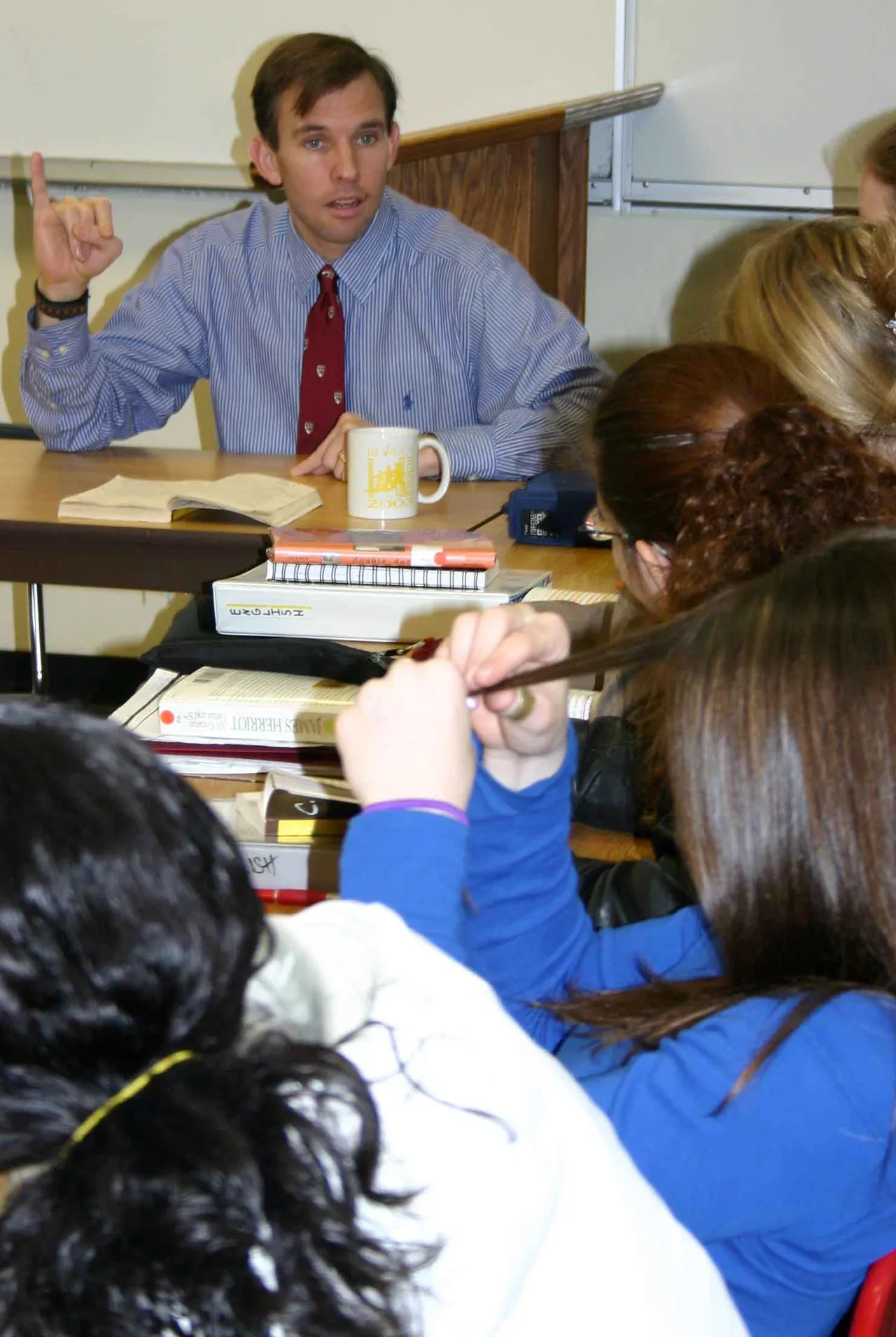
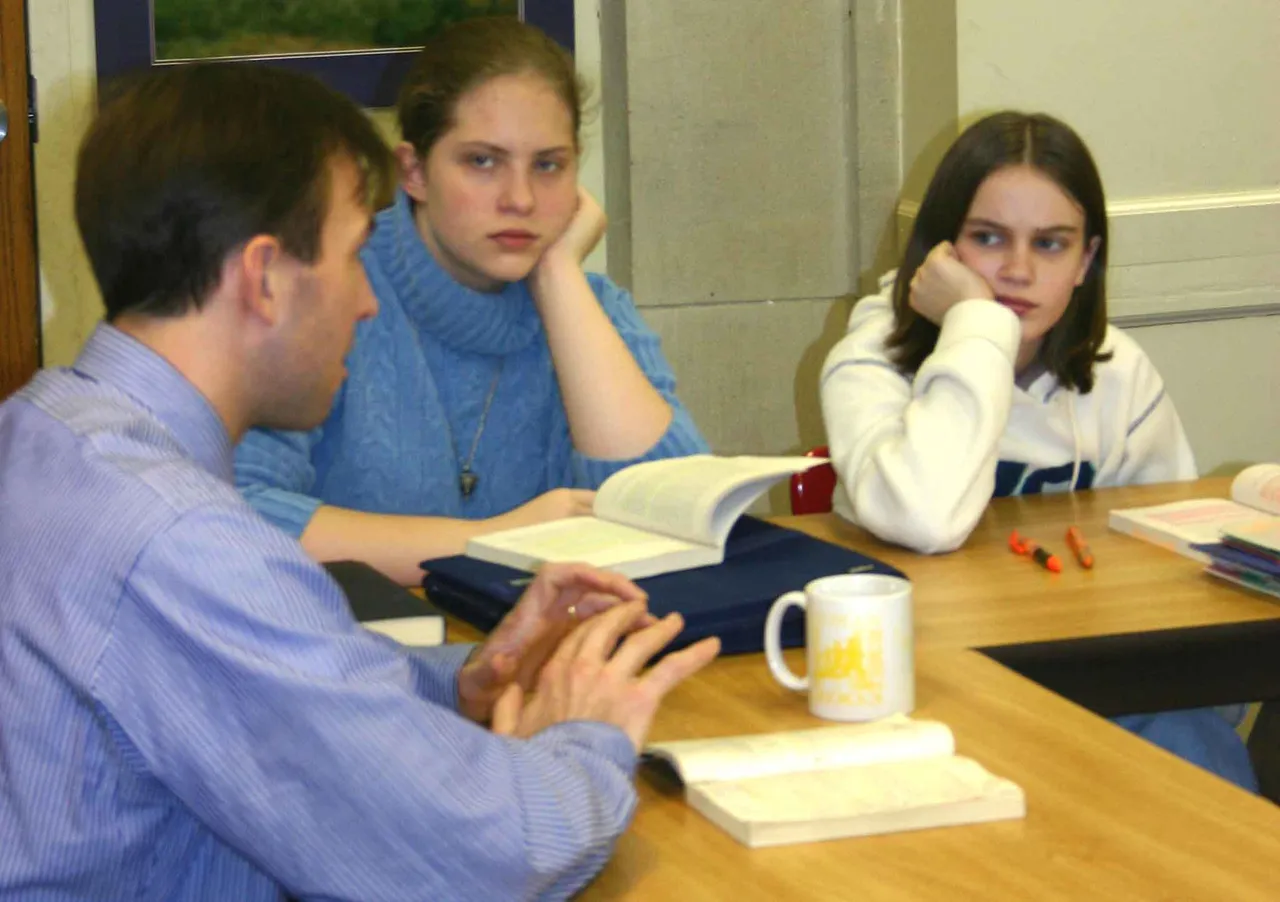
Visitors to Ken Wempe’s eighth grade English class might not spot the teacher immediately. He sits in a random spot around the table just like anyone else, and according to Wempe, this setup has encouraged more involvement and livelier discussion.
"I enjoy classes more when discussion is a bigger part than lecturing," said eighth grader Patrick Pierson. "The atmosphere is better because the teacher can provide structure, yet the students get to interact and share their opinions with one another."
It was after attending a summer conference at Phillips Exeter Academy (New Hampshire) in 2001 that Wempe decided to incorporate the Harkness Method into his teaching.
“I have never heard of any other middle schools using it as a primary teaching method,” he said. “Exeter uses [it] exclusively … They have grand, Harry Potter-like long, oval tables that all students in a class sit at with the instructor. I have one large table, too, although it is made of several smaller tables which can be separated to use for tests or other classroom activities.”
By putting the entire class, including the teacher, around a table, there is no longer a “back of the room” where students can hide. Eighth grader Jett Puckett thinks Wempe’s English class has been a positive part of his preparation for high school and that the Harkness Method especially benefits the quieter students.
“It helps them to learn to express their opinions openly to other students, as well as to the teacher. Discussion has also taught us to think before we speak,” said Puckett. “I like this method of learning because it allows students to help one another to understand, as opposed to just learning from the teacher. There is an advantage in the fact that students think more like one another than they do the teacher.”
Wempe said he has been gradually using discussion as my method of instruction for years. “I had evolved from using lecture primarily to a mix of methods based on whatever was best for the learning of the student,” he said.
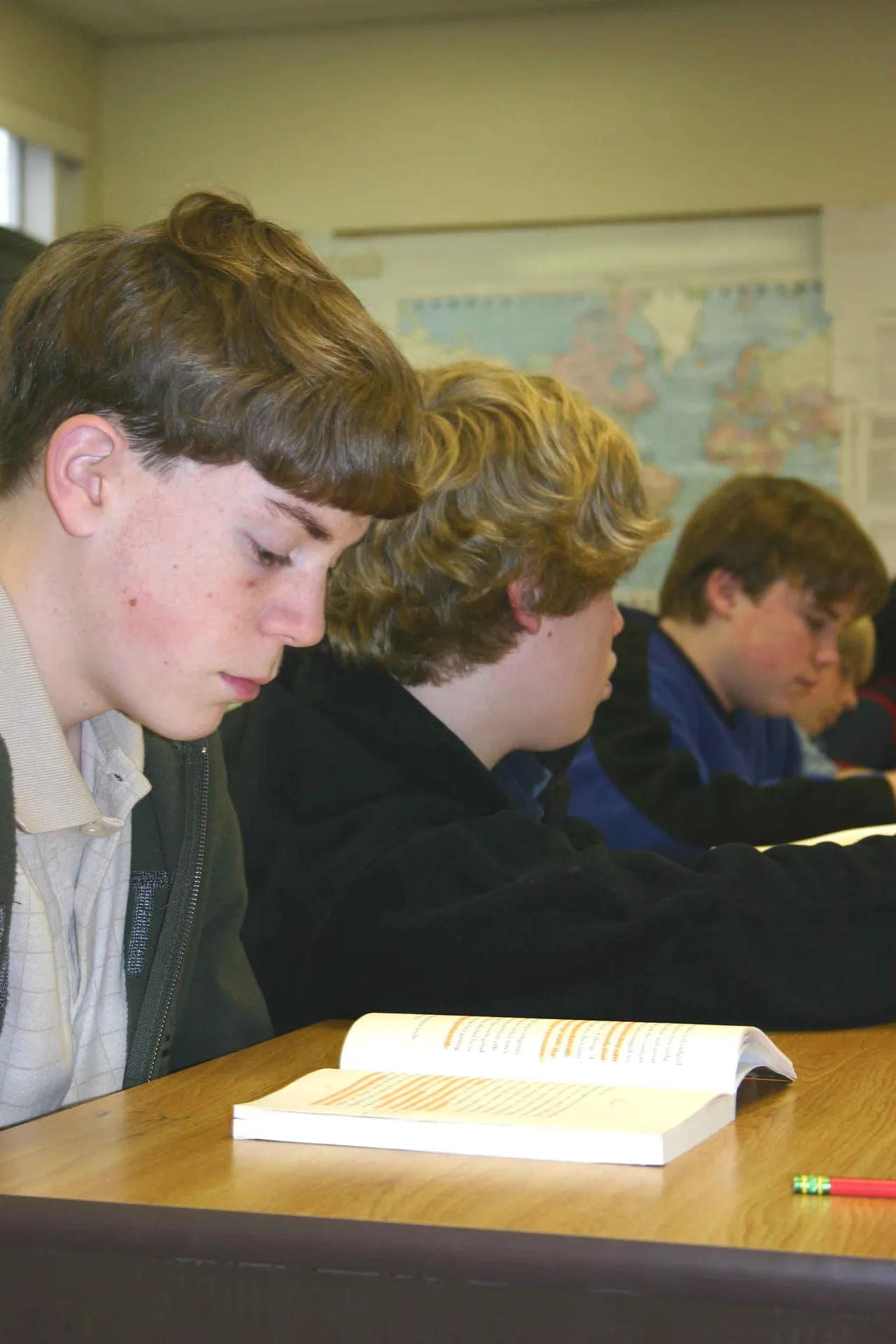
On a typical day, students are met by Mr. Wempe at the door, where he collects their textbooks and skims last night’s reading assignment for proof of thought – notes, highlighting marks, questions in the margins, etc. He then returns to the books to their owners and the class does one of three things: takes a five-question pop quiz, writes a five-minute reflection over the reading or launches directly into a discussion.
“The discussion might begin with the questions students have as they roll into class, or I might direct the conversation with one or two ‘big’ questions,” said Wempe. “Typically, I ask all students for proof for their points and ask them to be either logical or cite from the book. Students often give an opinion and back it up by reading a quotation.”
The Harkness Method has inspired student accountability, Wempe said. “Since I require on reading assignments for students to read, highlight and take notes carefully, they know that when they sit down to the table they’re going to get grilled,” he explained. “They know they have to be on their toes.”
As the instructor, Wempe practices “aerobic listening” during class discussions. “[It’s] a fancy way of saying that I pay attention closely to what everyone says (and how they say it), so the effect is generally motivating for the student because he knows somebody is listening and somebody cares,” he said. “I think students learn more when they actively participate in class; they are forced to think, articulate, challenge and reflect, and that yields long-term memory results. No one can hide at the Harkness table, and there’s never a dull moment.”
"I enjoy classes more when discussion is a bigger part than lecturing," said eighth grader Patrick Pierson. "The atmosphere is better because the teacher can provide structure, yet the students get to interact and share their opinions with one another."
It was after attending a summer conference at Phillips Exeter Academy (New Hampshire) in 2001 that Wempe decided to incorporate the Harkness Method into his teaching.
“I have never heard of any other middle schools using it as a primary teaching method,” he said. “Exeter uses [it] exclusively … They have grand, Harry Potter-like long, oval tables that all students in a class sit at with the instructor. I have one large table, too, although it is made of several smaller tables which can be separated to use for tests or other classroom activities.”
By putting the entire class, including the teacher, around a table, there is no longer a “back of the room” where students can hide. Eighth grader Jett Puckett thinks Wempe’s English class has been a positive part of his preparation for high school and that the Harkness Method especially benefits the quieter students.
“It helps them to learn to express their opinions openly to other students, as well as to the teacher. Discussion has also taught us to think before we speak,” said Puckett. “I like this method of learning because it allows students to help one another to understand, as opposed to just learning from the teacher. There is an advantage in the fact that students think more like one another than they do the teacher.”
Wempe said he has been gradually using discussion as my method of instruction for years. “I had evolved from using lecture primarily to a mix of methods based on whatever was best for the learning of the student,” he said.
On a typical day, students are met by Mr. Wempe at the door, where he collects their textbooks and skims last night’s reading assignment for proof of thought – notes, highlighting marks, questions in the margins, etc. He then returns to the books to their owners and the class does one of three things: takes a five-question pop quiz, writes a five-minute reflection over the reading or launches directly into a discussion.
“The discussion might begin with the questions students have as they roll into class, or I might direct the conversation with one or two ‘big’ questions,” said Wempe. “Typically, I ask all students for proof for their points and ask them to be either logical or cite from the book. Students often give an opinion and back it up by reading a quotation.”
The Harkness Method has inspired student accountability, Wempe said. “Since I require on reading assignments for students to read, highlight and take notes carefully, they know that when they sit down to the table they’re going to get grilled,” he explained. “They know they have to be on their toes.”
As the instructor, Wempe practices “aerobic listening” during class discussions. “[It’s] a fancy way of saying that I pay attention closely to what everyone says (and how they say it), so the effect is generally motivating for the student because he knows somebody is listening and somebody cares,” he said. “I think students learn more when they actively participate in class; they are forced to think, articulate, challenge and reflect, and that yields long-term memory results. No one can hide at the Harkness table, and there’s never a dull moment.”