
Growing Beyond the Classroom: Georgia’s World Language Mentorship Program

By Veeka Malanchuk ('20) - Faculty
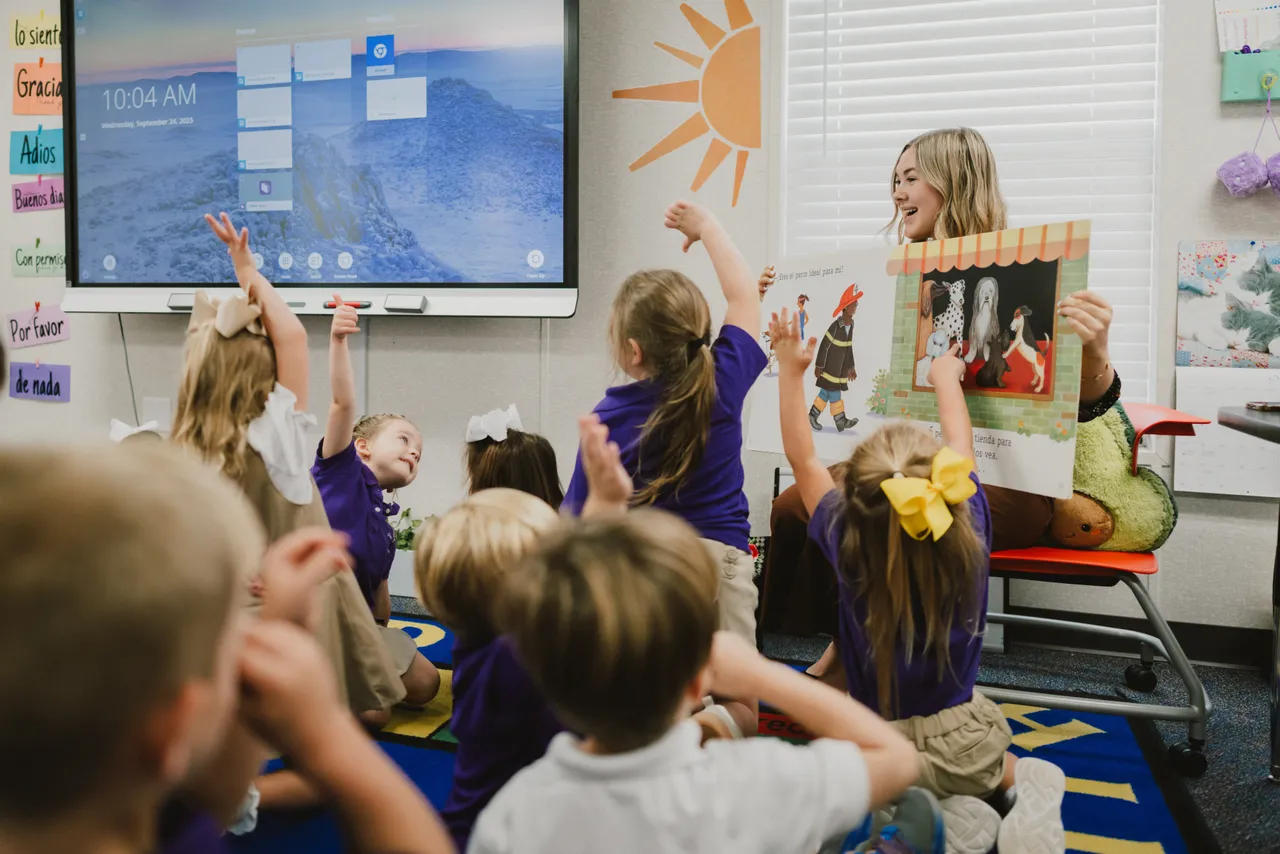
As a second-year Spanish teacher at Darlington School, I have quickly learned that becoming a good language educator is a process that extends far beyond the walls of the classroom. Each year brings new questions, ideas, and opportunities to rethink how I can help my students use Spanish to communicate and connect with the world around them. That mindset is what led me to the Georgia World Language Peer Mentoring Program.
Last year, with the support of Darlington School, I had the opportunity to attend the American Council on the Teaching of Foreign Languages (ACTFL) annual conference, where I first learned about the program. This conference allowed me to attend educational workshops tailored for language teachers, one of which focused solely on a new opportunity for teachers in the state of Georgia: The Small Town and Rural Language Teachers’ (STaRLT) World Language Mentorship Program, which is part of Project Advance Teachers of Languages (ATOL) and supported by the Foreign Language Association of Georgia (FLAG).
Research has consistently demonstrated that high-quality, structured peer mentoring can benefit both mentees and mentors alike. To that end, the program is designed to support novice world language teachers while also developing teacher leadership among experienced Georgia educators. Throughout the year, mentor-mentee pairs work collaboratively to establish strategic, observable, and measurable goals focused on developing effective and sustainable communicative teaching practices.
As a relatively new world language teacher, I was immediately drawn to the opportunity to learn from established educators who have more experience navigating the questions I am currently asking in the classroom. Darlington has given me the opportunity to help shape and develop its Pre-K-5 Spanish program, allowing me to explore what works best for students at different stages of their language learning journey. I saw the mentorship program as an opportunity to build on that work by learning from educators with different experiences and perspectives, while also developing my own teaching practice and professional network throughout the state of Georgia.
Now that I have been selected to join the 2026-27 mentee cohort, I am looking forward to turning those goals into action. I hope this experience will help me bring new ideas and approaches into my classroom that will positively impact my students’ language learning experiences and growth, and ultimately become a more thoughtful and effective teacher while giving me the tools and connections to continue growing as an educator.