
NewsUpper SchoolFaculty/StaffAlumniPre-K to 8Advancement
Friday Night Lights: a school, a team, a common ground
Jan 23, 2002 8:00 AM
By Stefan Eady - Faculty
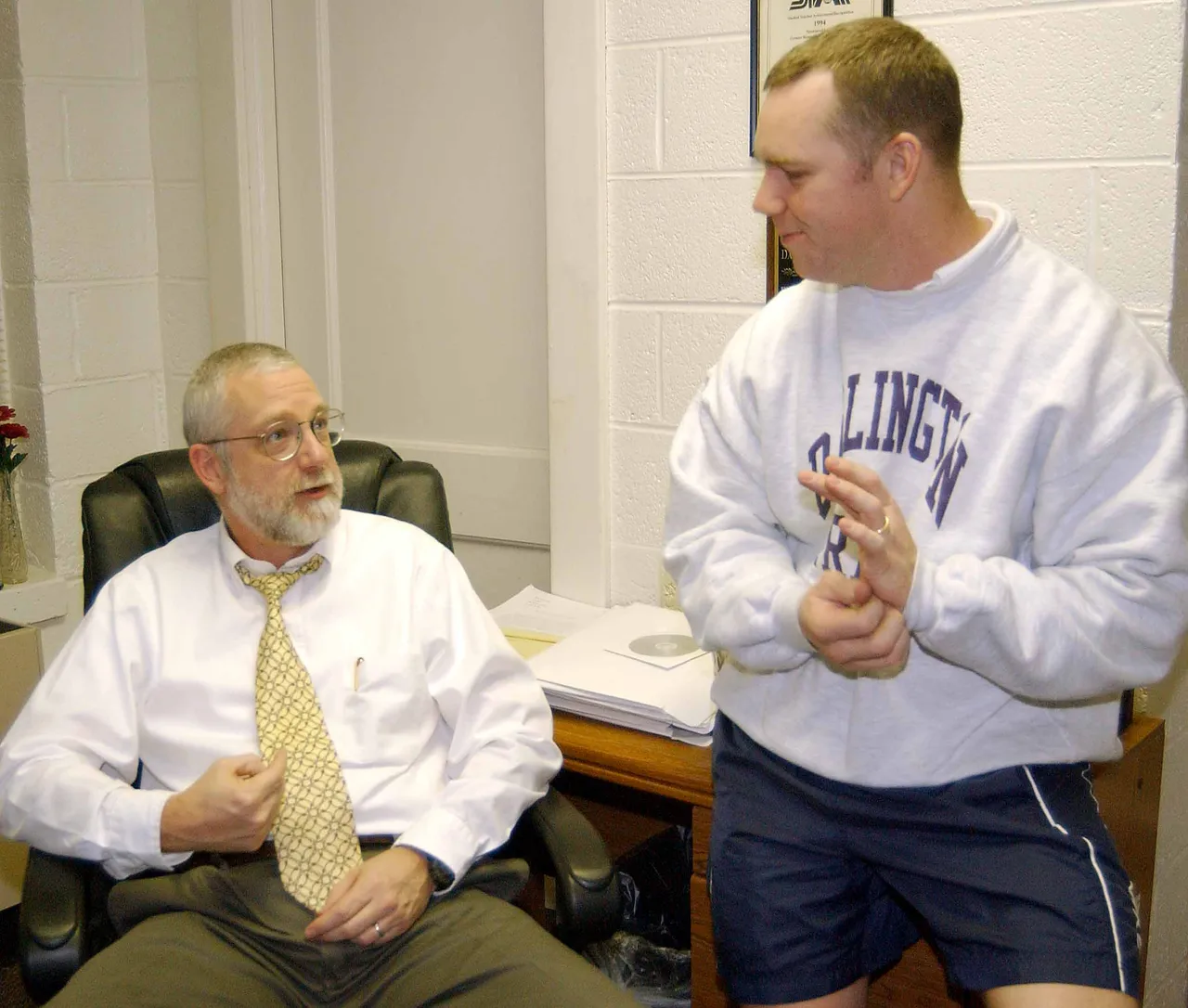
Students, faculty, parents, and alumni have been invited to read the same book this year, Friday Night Lights, by Buzz Bissinger, who will visit the campus on April 19. Rather than writing about how much they are looking forward to discussion of the book when Bissinger arrives, Glenn Getchell, physical education department chair, and David Powell, Thatcher chair of English, decided to start the discussion a little early. By sharing their dialogue with you, they hope that it spurs interest so that a lot of helpful and interesting talk will take place in the Darlington community about this book and its implications.
Glenn: I’m excited about the number of people who are talking about the book already. Since I’ve been here I’ve never heard a common ground academically that everybody talks about, so it’s been a lot of fun to participate.
David: Yes, I’ve heard lots of people talking about it all year.
Glenn: From my perspective, too, as a football coach, it’s been neat to hear that people don’t think of it just as a football book. They are amazed that there is so much more to it. What I liked when I read the book in the first place was the social aspect—the different socio-economic classes and what else went on in that community as opposed to just football.
David: What I liked was how it saw football as one part of the whole experience of that town. It focused on the team and stayed with them, but it was really about everything else going on. Football wasn’t cut out and seen apart from all the rest.
Glenn: I think that Darlington, having such a huge range of people, from all different socio-economic classes and cultures—this book will appeal to so many people.
David: Was football a big deal where you went to high school?
Glenn: Not in Massachusetts. Football was important at my school, but there really wasn’t one sport that dominated there. When I came here it was a totally different experience—you see the way that so many people rally around the football team. But I think this book will help people to realize that it’s a lot worse in a lot of places. (They laugh.)
David: Hockey seems to be the bigger sport in the northeast.
Glenn: Hockey was big, basketball was big—soccer was actually bigger at my school. We had a football team, but it was terrible. People came to the games, but the entire community didn’t stop to rally behind you. In fact, it was the opposite. The team was constantly berated, the coaches were always under the gun. I’d hate to coach in a situation like that.
David: Where I went to school, in a really small town in Tennessee, it was a football town. Football, baseball, and basketball were the only sports they really knew about. It was a big football culture. I didn’t play. I’d sit around with my friends on Saturday, they’d be nursing their wounds, and I’d say “Why do you do that to yourselves?” They’d always say, “Until you’re out there doing it, you couldn’t understand why.” It took me some time to see what they had invested in it. I think this book opened up, for so many people, the tradition of it—the sense of doing something really strenuous as a team on behalf of the town. It rang true to my experience growing up.
Glenn: One of my friends who coaches in college—we used to laugh because we work year round for 10 to 15 days. Only on those game days are you actually doing the job. You live or die on those 10 days. In that Odessa community, if they don’t go 13 or 14 games to the playoffs, the coach is liable to get fired. How many jobs are like that? People don’t understand, but the kids—they’ve got to be in the weight room. They’ve got to get stronger or they could get hurt, or not be able to compete. The truth is that the people who come to see a football game want to see a good product. To get that product, you have to train properly year round. That’s what the book shows. It’s a life event, not just one Saturday in the fall.
David: One of the things that surprised me when I started working at Darlington was how much research goes into a single game. You know, guys would know who their man was for that week—I’d go into the weight room and guys would be watching the tapes, making notes—such intense preparation for each game.
Glenn: Each game is almost a mini-season; each week is something different. You prepare the best you can for what you think they’re going to do, but being able to change on the fly is the name of the game.
David: Darlington is known for being able to make those mid-game adjustments, right?
Glenn: That’s one of the reasons we’ve been able to be successful. (pause) But imagine living in a community like Odessa where, if you’re not successful, kids are berated—coaches are berated. If you get hurt, you’re not even part of the culture anymore. They can train all they want, all year long, and get hurt in the first ball game—and they’re done. Just like it happened to Booby Miles in the book.
David: That was one of the worst stories, to me.
Glenn: They’ve interviewed him on ESPN, and years later he’s still haunted by that—what could have been. The one thing about Darlington is there aren’t a whole lot of what-could-have-beens. You get injured, or for some reason football doesn’t work out—
David: --you do something else.
Glenn: There’s something else. Most of the students here are so well-rounded. Some may think life revolves around football at Darlington, but the proof is that if you get injured, there are still a million things to do. Your friends are going to rally around you, whereas in a culture like they’re in (Odessa), it’s “What have you done for me lately?”
David: One of the things that makes Darlington different from where I grew up, is that coaches here are really interested in what’s good for the kid.
Glenn: My friends who coach up North, who realize that football is so important to life and culture here, they ask me, “What do you guys do?” And all you can say is, “Get involved in their life.” You cannot just be a football coach. You can’t just show up in August and expect guys to die for you on the field. When the kid says, “Can you be in the weight room at six?” you’ve got to say, “Yeah, I’ll be there.”
David: But everyone at Darlington—teachers and all—is expected to do that, too. We have a whole different model for doing school than Permian High.
Glenn: I’m excited about the number of people who are talking about the book already. Since I’ve been here I’ve never heard a common ground academically that everybody talks about, so it’s been a lot of fun to participate.
David: Yes, I’ve heard lots of people talking about it all year.
Glenn: From my perspective, too, as a football coach, it’s been neat to hear that people don’t think of it just as a football book. They are amazed that there is so much more to it. What I liked when I read the book in the first place was the social aspect—the different socio-economic classes and what else went on in that community as opposed to just football.
David: What I liked was how it saw football as one part of the whole experience of that town. It focused on the team and stayed with them, but it was really about everything else going on. Football wasn’t cut out and seen apart from all the rest.
Glenn: I think that Darlington, having such a huge range of people, from all different socio-economic classes and cultures—this book will appeal to so many people.
David: Was football a big deal where you went to high school?
Glenn: Not in Massachusetts. Football was important at my school, but there really wasn’t one sport that dominated there. When I came here it was a totally different experience—you see the way that so many people rally around the football team. But I think this book will help people to realize that it’s a lot worse in a lot of places. (They laugh.)
David: Hockey seems to be the bigger sport in the northeast.
Glenn: Hockey was big, basketball was big—soccer was actually bigger at my school. We had a football team, but it was terrible. People came to the games, but the entire community didn’t stop to rally behind you. In fact, it was the opposite. The team was constantly berated, the coaches were always under the gun. I’d hate to coach in a situation like that.
David: Where I went to school, in a really small town in Tennessee, it was a football town. Football, baseball, and basketball were the only sports they really knew about. It was a big football culture. I didn’t play. I’d sit around with my friends on Saturday, they’d be nursing their wounds, and I’d say “Why do you do that to yourselves?” They’d always say, “Until you’re out there doing it, you couldn’t understand why.” It took me some time to see what they had invested in it. I think this book opened up, for so many people, the tradition of it—the sense of doing something really strenuous as a team on behalf of the town. It rang true to my experience growing up.
Glenn: One of my friends who coaches in college—we used to laugh because we work year round for 10 to 15 days. Only on those game days are you actually doing the job. You live or die on those 10 days. In that Odessa community, if they don’t go 13 or 14 games to the playoffs, the coach is liable to get fired. How many jobs are like that? People don’t understand, but the kids—they’ve got to be in the weight room. They’ve got to get stronger or they could get hurt, or not be able to compete. The truth is that the people who come to see a football game want to see a good product. To get that product, you have to train properly year round. That’s what the book shows. It’s a life event, not just one Saturday in the fall.
David: One of the things that surprised me when I started working at Darlington was how much research goes into a single game. You know, guys would know who their man was for that week—I’d go into the weight room and guys would be watching the tapes, making notes—such intense preparation for each game.
Glenn: Each game is almost a mini-season; each week is something different. You prepare the best you can for what you think they’re going to do, but being able to change on the fly is the name of the game.
David: Darlington is known for being able to make those mid-game adjustments, right?
Glenn: That’s one of the reasons we’ve been able to be successful. (pause) But imagine living in a community like Odessa where, if you’re not successful, kids are berated—coaches are berated. If you get hurt, you’re not even part of the culture anymore. They can train all they want, all year long, and get hurt in the first ball game—and they’re done. Just like it happened to Booby Miles in the book.
David: That was one of the worst stories, to me.
Glenn: They’ve interviewed him on ESPN, and years later he’s still haunted by that—what could have been. The one thing about Darlington is there aren’t a whole lot of what-could-have-beens. You get injured, or for some reason football doesn’t work out—
David: --you do something else.
Glenn: There’s something else. Most of the students here are so well-rounded. Some may think life revolves around football at Darlington, but the proof is that if you get injured, there are still a million things to do. Your friends are going to rally around you, whereas in a culture like they’re in (Odessa), it’s “What have you done for me lately?”
David: One of the things that makes Darlington different from where I grew up, is that coaches here are really interested in what’s good for the kid.
Glenn: My friends who coach up North, who realize that football is so important to life and culture here, they ask me, “What do you guys do?” And all you can say is, “Get involved in their life.” You cannot just be a football coach. You can’t just show up in August and expect guys to die for you on the field. When the kid says, “Can you be in the weight room at six?” you’ve got to say, “Yeah, I’ll be there.”
David: But everyone at Darlington—teachers and all—is expected to do that, too. We have a whole different model for doing school than Permian High.