NewsUpper SchoolStudent LifeFaculty/StaffAlumniPre-K to 8AdvancementServiceFine Arts
Darlington’s fine arts program enriches all students’ lives
May 6, 2004 8:00 AM
By Stefan Eady - Faculty
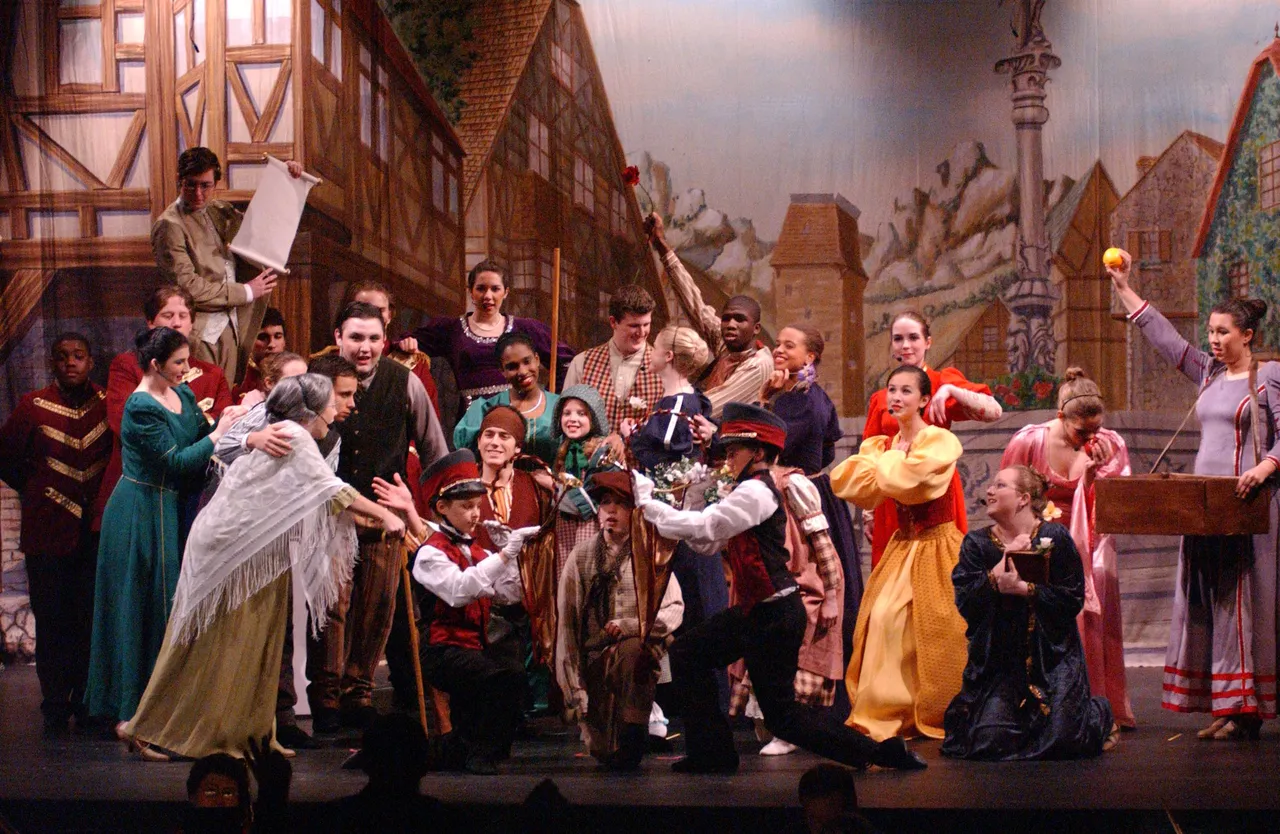
For Darlington students, learning about the fine arts is much more than an added attraction; it is an integral part of their education from pre-kindergarten through twelfth grade.
Little hands experience the arts in Lower School
“Celebrate music daily,” a philosophy that Diane Lumpkin, Lower School music and drama teacher and assistant principal, lives out. “Each child feels success in the music classroom because all students are encouraged to become actively involved in the process of learning music,” she said. The Lower School program includes choral singing, movement, instrument playing, voice technique, musical notation, dance, music terminology, and music history. Music of all types from many places and periods is studied and the lives and works of famous composers are a basic part of the curriculum.
Students in grades pre-kindergarten, kindergarten, and pre-first are physically engaged in the music process by playing a variety of rhythm instruments, dancing, moving creatively, active listening, and using their phenomenal imaginations.
In first through fifth grades, students make use of the Yamaha Music in Education, a keyboard lab that provides a contemporary focus to the musical and curricular traditions of the music classroom. The lab provides opportunities for students to increase their willingness to participate in the music-making process.
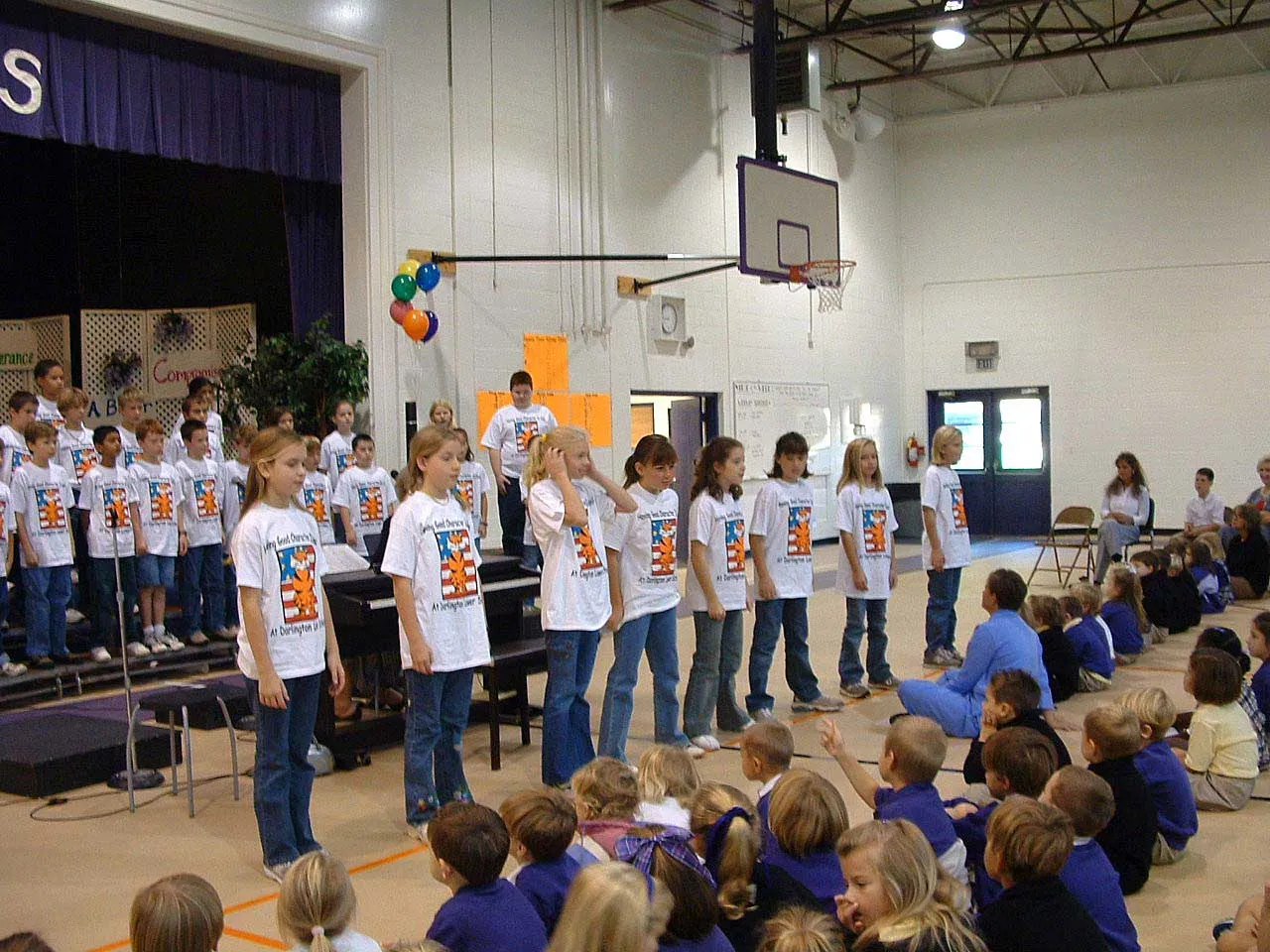
All students perform on stage before the student body at least once during the school year. Each grade level presents a musical for their parents, peers, and the community to enjoy. Preparation for a play gives students experiences in reading, speaking, creating, singing, thinking, working as a team and developing self-esteem. Through drama and music students gain confidence, poise and pride.
Students in all grade levels study composers and wonderfully written music. Students are given numerous opportunities to hear quality music within the classroom to stimulate and inspire their young minds, improve intelligence and help to develop IQ. “Music is also a time for personal reflection,” Lumpkin said.
Fifth grade students are encouraged to audition for the Seventh District Honors Chorus and the State Elementary Honor Chorus. Students are judged on the ability to match pitch, sing an ascending scale with and without the piano, and their personal vocal range.
This year 10 Lower School students auditioned at the Seventh District Honor Chorus and six students represent the school at the State Elementary Honor Chorus.
“I believe that it is my goal as a music teacher to instill in the hearts and souls of my students a love and appreciation for music that will lead to a lifelong enjoy of and participation in the arts,” Lumpkin said.
The goal of the Lower School art program is to provide children with opportunities to learn an appreciation for art and to establish a strong awareness of the world of art around them. “Every child who takes art in Darlington Lower School learns the language of art,” Katie Clotfelter, art teacher, said. “They have a strong vocabulary that helps them understand the aesthetic world around them.”
Students learn how to appreciate an artist for their depth, balance, harmony, symmetry, and other elements and principles of art. They work with a variety of mediums; for example, a variety of papers, colored pencils, pottery, and a wide range of paints. “The students even have opportunities to be involved in the Rome community through the arts by donating tile murals and other volunteer art projects,” Clotfelter said.
The Lower School instrumental music program begins in the fifth grade. Students are given the opportunity to explore each instrument they would like to try in an effort to get them matched up with the instrument for which they are best suited. Once that decision has been made the students meet at 7:50 each morning at the Lower School and learn how to properly hold and play their instruments. This class meets daily for the entire year.
Middle School students learn the academics of art
Darlington’s Middle School art program introduces the student to the academics of art; i.e., figure drawing, perspective, and color theory. “Our goal is for each student to develop an understanding of a variety of mediums such as marbleizing, bookmaking, acrylics, watercolor, ceramics, pastel, and printmaking,” Eva Marie Burns, Middle School art teacher, said. Burns also teaches Art I to Upper School students.
The Middle School choral department consists of two groups of singers. The sixth grade chorus is an 18-member treble choir that meets twice a week during study hall. The seventh and eighth grade chorus, which is composed of 42 members, also meets during study hall and lunches each weekday. This chorus is a mixed choir, which means that the group includes “changed voices.”
“Even given their very limited time to practice, the choirs have accomplished a great deal,” Kim Tunnell, Middle School chorus teacher, said. The singers have performed at the Sixth Grade Statewide and All-State choruses, have received excellent and superior ratings at choral festivals, and perform three concerts each year. Any Middle School student may join chorus without an audition.
A General Music course is offered as part of the sixth grade exploratory rotation program. Students take the course for a trimester and are introduced to all of the historical periods in music. Each student keeps a listening journal and is exposed to a variety of musical genres. Students also play Orff instruments, hand chimes, and hand bells.
“Those students who have gone through Darlington’s Lower School music program come to this course already able to read music,” Tunnell said. “We continue their music training by teaching them sight-reading and correct singing techniques to prepare them for opportunities in choral music at the Middle and Upper School.”
Speech and Drama class is part of the eighth grade exploratory rotation program. During the trimester, students become familiar with public speaking by presenting three speeches and participating in a debate. An introduction to stage terms and acting exercises prepare them for a final production in the Zelle Theater. This year, the young thespians produced two comedy-mystery productions and a collection of skits entitled “I Hate the Mall.”
“At the same time that the class is learning to perform in front of a group and their peers, we also try to educate them about proper theater etiquette, ultimately with our instruction on the goal of preparing them to participate in drama at the Upper School, if they wish,” Tunnell said.
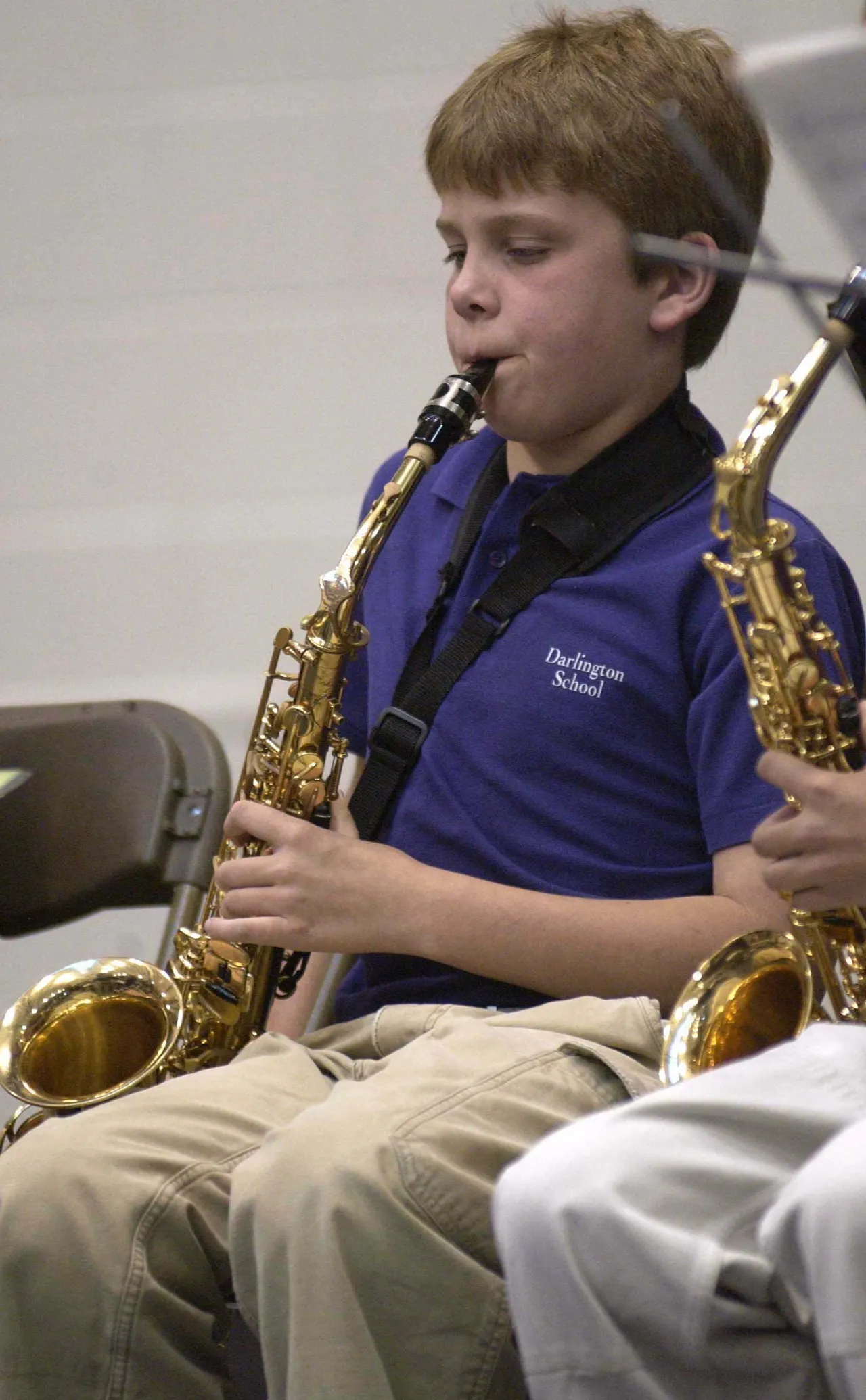
Middle School band is offered at all grade levels and beginners may start at each level. The sixth and seventh grade band is taught at fifth period and the eighth grade band is taught at sixth period. For individual enrichment the students can participate in the GMEA All District Honor Band. This band is made up of the most outstanding sixth through eighth graders who are selected by an audition basis from the 7th District. The auditions for this group take place in early December and, if selected, the event takes place in early January when all of the students selected come together and rehearse for a couple of days and then present a concert for the parents, relatives, and friends. The more ambitious students can also go on to audition for the Georgia Music Educator’s Association All State Middle School Band through basically the same audition process, one at the District Level and if they pass that one then they go on to the final audition. Should they pass that audition they are then in the All State Band and perform in March following two days of rehearsal in Savannah, Ga.
Beginning this fall, Middle School students may be selected for the Georgia Independent Schools All Select Honor Band. Membership into this organization is based on teacher recommendations. Those students selected will come together in late October or early November to perform for the Georgia Independent Schools Association (GISA) Conference. The Middle School Band also does a trip each year to perform at such places as Disney World, Universal Studios, Florida, Busch Gardens, and Sea World. Locally, the Middle School Band performs at Christmas and again in the spring for the school and parents.
Upper School focuses on proficiency and application
The Upper School art program reinforces the creativity and skills learned in the Lower and Middle School art programs while introducing new and more technical skills. The primary goal of the studio classes is to develop an understanding and proficiency in a wide variety of art experiences through the study of art principles and their applications in studio work. Students learn in Art I to apply the principles of art (line, shape, value, color, and texture) by completing a variety of projects ranging from drawing exercises to printmaking to works in clay. In the upper level classes (Art II, Art III, Art IV, AP Studio Art), students move away from tightly controlled projects to more personal projects that reflect their interests and needs.
While many of the students in the studio art classes have a strong background in art, just as many are in search of a fine arts credit and discover for the first time that they can learn to draw and paint. “The beauty of Darlington’s small class size is that there can be one-on-one instruction so that a future college art major might be in a class with a student new to Darlington whose only experience with art is in their early years,” Kathy O’Mara, Upper School art instructor, said. Having students with different abilities and experiences only enhances the program.
The most important goal of the studio art classes (or any Fine Arts Department class) is to encourage students to strive to improve while gaining confidence about their work and their potential. One of the greatest benefits of the class is that there is a wonderful relaxed feeling in the studio with music playing and the ability of the students to talk while working, a luxury not present in lecture-based classes. “You might think this would encourage a lax attitude, but if you visit the studio you will see students hard at work, often putting in extra time on more technical projects,” O’Mara said. “The program offers a perfect blend of structure and independent expression,”
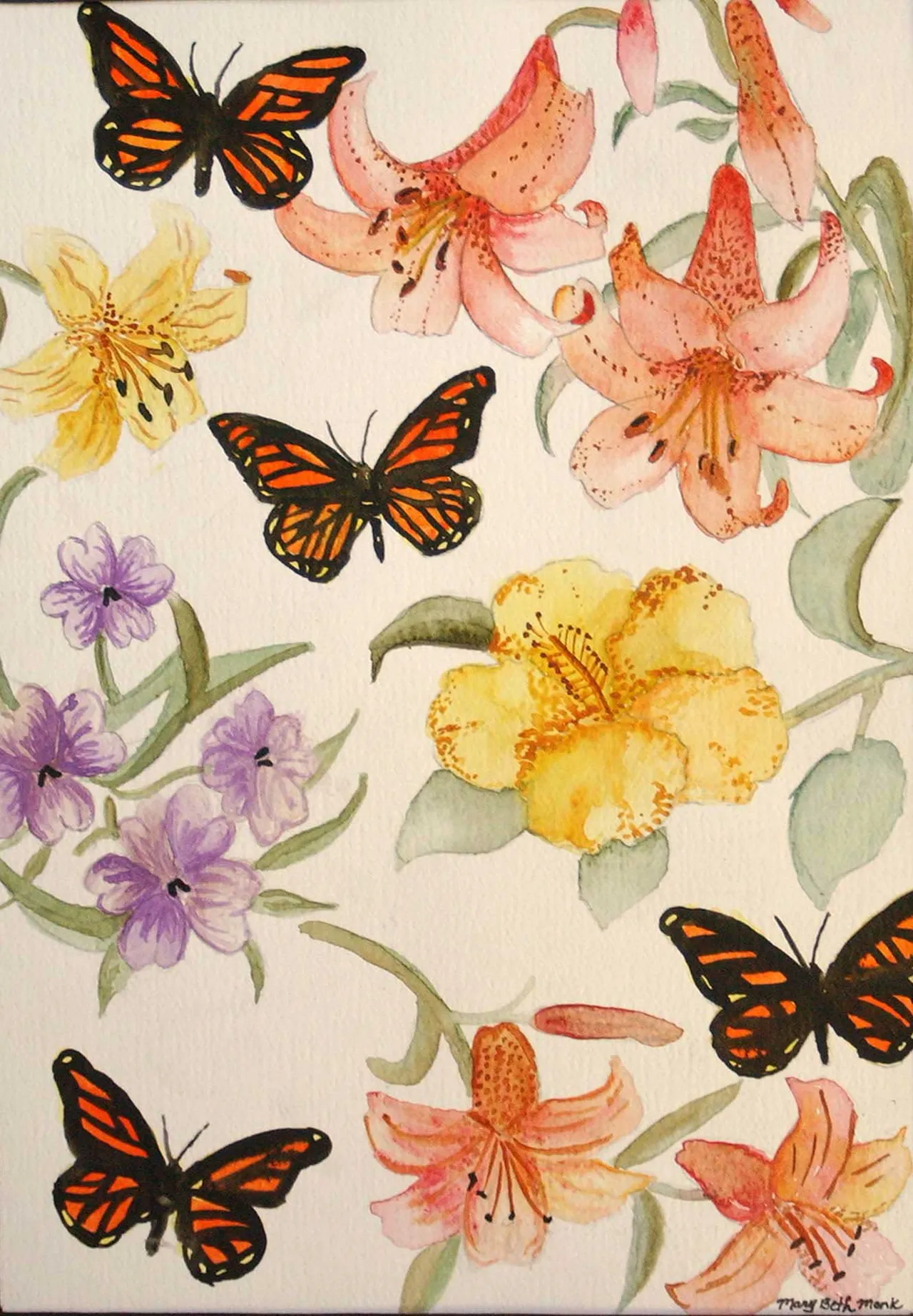
Evidence of student work is all over campus, from the Senior Art Collection hung in the gallery space between the Porter and Zelle buildings to the many linoleum block and silkscreen prints hung on all three campuses. There are future plans to expand the display space. Additionally, the galleries on the School’s Web site at www.darlingtonschool.org/arts have provided an invaluable permanent record of the student work and a teaching tool for future students.
Because of difficulties with the schedule, the Fine Arts Festival was not held this year. However, the Fine Arts Department members are in the process of reinventing this event. Although there are no firm plans, the focus of the event will be on involving the entire school in workshops, performances, and activities while including working artists and performers.
Cinema class involves the student in the technical, historical, and thematic aspects of film. Offered during each trimester, this elective presents a feature film each week, often centered on a theme or genre popular in film. This year the Cinema class has studied old and new classics by comparing films such as Casablanca, Gone With the Wind, Citizen Kane, and the new Moulin Rouge. The students also review current theatrical showings when appropriate, such as Cold Mountain and write study guides for most of the movies they watch.
Creative Writing is a one-trimester fine arts offering but can be elected for the year. The course uses journals, guided writing, and reading and clustering, with an emphasis on discovery and fresh language to develop each student’s writing power. Editing is emphasized as a major, final step in finished writing.
AP Humanities class, designed for senior honors students, analyzes and discusses the great works of art, architecture, and music representative of the main periods and intellectual movements in western civilization. Students are taught to develop critical skills in writing and oral presentation. This year class members traveled to the Atlanta Symphony to hear Beethoven’s “Leonore Overture, No. 3” and Brahms’ second symphony.
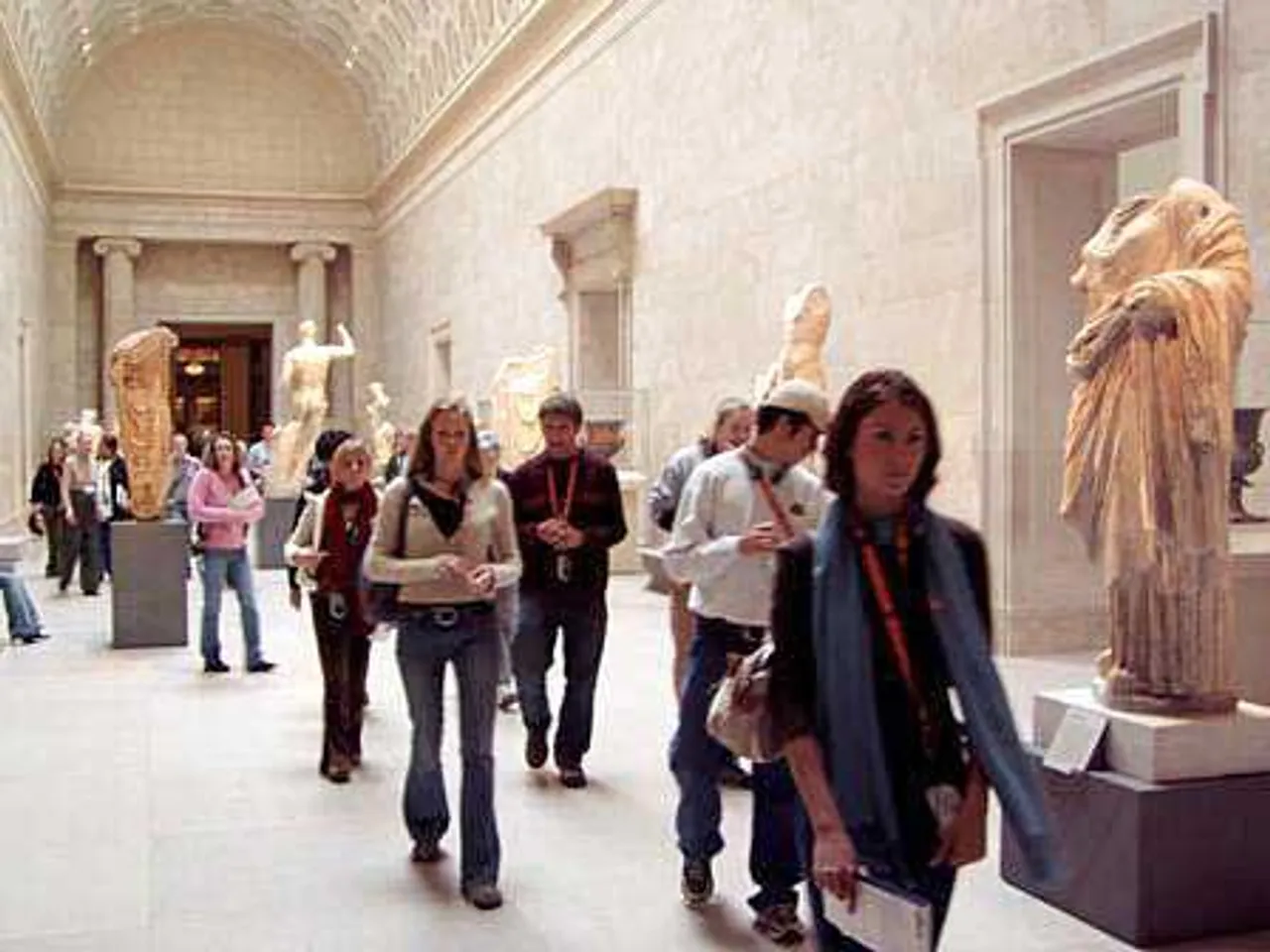
Most of the class, members of the Musical Theater class, and some parents also traveled to New York City to take in galleries, museums, and Broadway plays. The group met with Hazelle Goodman, actor and parent of senior Brandon Goodman, to discuss Broadway acting and related issues. Touring included the MET to study art from the beginning of time up to the present, where the group met with Dr. Carlos Picon to gain an understanding of what it means to be a curator and the particular challenges faced in museum work. The group also visited the Cloisters Museum to study Medieval art and architecture, the Guggenheim to study modern architecture as well as modern art, and finished with a visit to the Queens to see the Modern Museum of Art. Travelers also enjoyed Broadway shows such as Hairspray, , and Evita. The musical theater group made a special trip to The Julliard School to learn what life is like at America’s premier school for the arts.
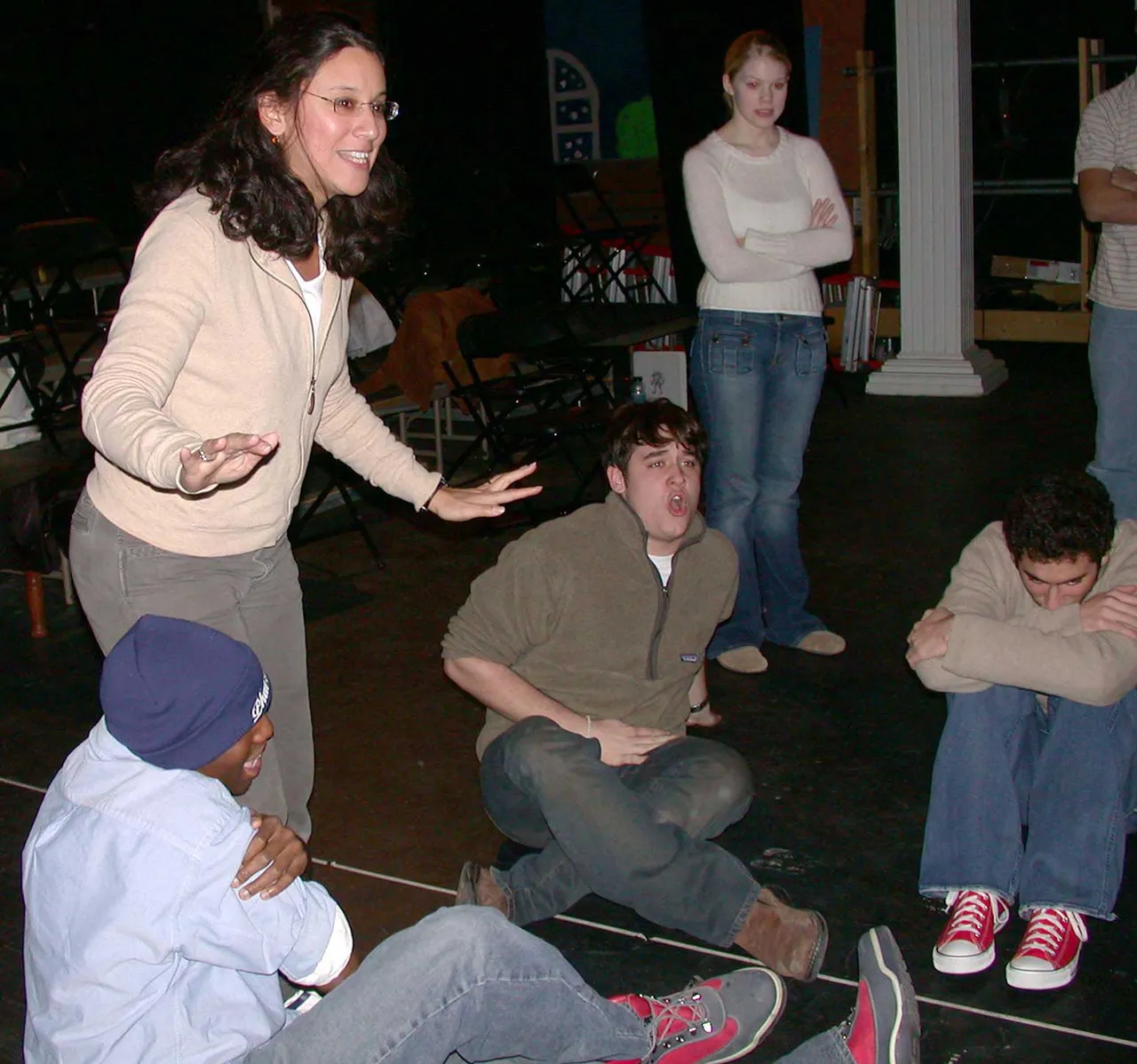
In the Drama/Musical Theater course, an elective course for juniors and seniors, students begin with two terms of intensive study of basic acting skills by playing improvisational games and progressing through a series of scenes, which culminate in a scene from an actual play. “This course is more of an ‘acting workshop’ because the focus is learning how to do real action under imaginary circumstances,” Marisa Ortega, drama instructor and Darlington Players director, said. “Students meet as fellow ‘players,’ involved with one another, ready to connect, to communicate, to experience, to respond, and to experiment and discover; ultimately, learning how to think like an actor.”
The Drama/Musical Theater part of the course, a joint endeavor of the music and theater departments, begins third trimester and immerses students in the world of the Broadway musical. Twelve weeks of instruction in voice, improvisation, script analysis, and movement culminate in a full-scale Musical Theater Variety Show. All Musical Theater students are featured in the show, directed and choreographed by faculty members. Daily sessions focus on stage direction, dance and vocal technique, bringing all the skills honed during the course to the stage for a public performance.
In addition, to the Drama/Musical Theater class, there are five other performance opportunities for students who are interested in performance. Each year, the department produces a fall play, a one-act (which travels to the Region competition), the winter musical, dramatic interpretation for the spring literary meet, and a spring production. “All shows welcome students with vast or no experience and students who are eager to learn about all aspects of the theater—performance and production,” Ortega said. “In the last two years, we have placed first in Region 6-AA in the One-Act competition and fifth in the State.
Band is offered in the Upper School during three different periods, first, sixth, and seventh, to accommodate academic schedule conflicts. The Upper School band is known as the Wind Ensemble and performs at least three concerts during the year, once in the fall, at Christmas, and again in the spring. The Wind Ensemble takes a trip each year and has performed in the past at Busch Gardens, Florida, Disney World, Universal Studios, and in Washington, D.C. There are also three opportunities for individuals to enhance their musical participation by auditioning for the 7th District Honor Band, the Georgia Music Educator’s All State Concert and Symphonic Bands, and by nomination and selection into the Georgia Independent Schools’ Association All Select Honor Band.
Woodwind and brass choirs also perform at Christmas and other small events, such as various luncheons both on and off campus.
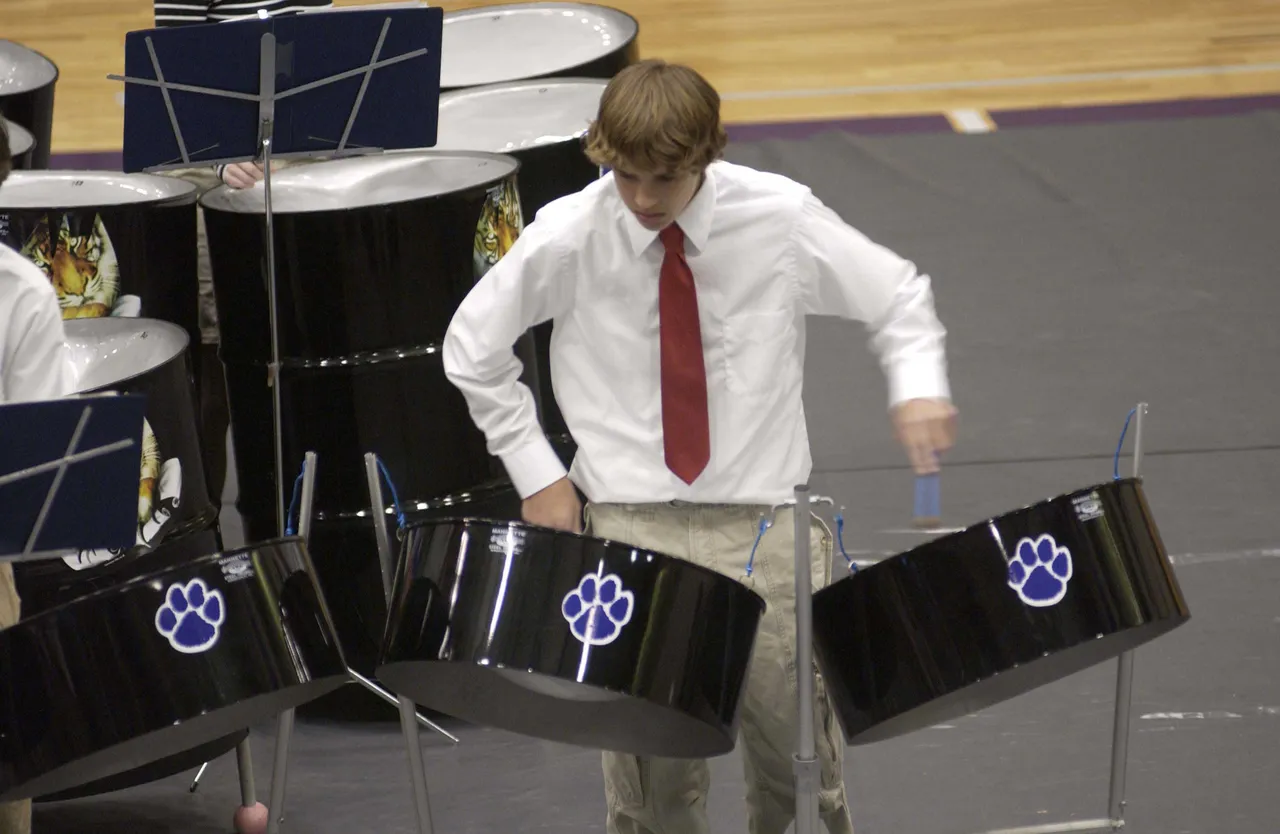
In both Middle and Upper schools, steel band is offered as a class and as an ASA. This unique group performs both on and off campus for a variety of events. “Membership in this group does not require any knowledge of music to join and is a fun way to get involved with the music program if you do not already play a musical instrument at Darlington,” Bill King, instrumental music director, said.
This year eighth grader Laura Lynch was selected for the 7th District Middle School Honor Band and performed in January. Another Middle School student, eighth grader Turner Edwards, auditioned for the Middle School All State Band, passed the first audition, and went to the finals.
Junior Beau Griffith auditioned for the All State Symphonic Band and was selected for participation. Only seven percussionists in eleventh and twelfth grades are selected for this band statewide regardless of school classification. Griffith went to Savannah April 29 - May 1 to practice and perform with this prestigious group.
Fourteen Upper School students were participated in the 2003 GISA All Select Honor Band this past October: seniors Mike Jones, Chan Woo, Paul Maxwell; juniors Kim King, Anne Montgomery, Dennis Kim, Ana Glass, Joey Graham, Jonathan Lane; sophomores Peter Hjort, Ryan Clark; freshmen Hyun Do Sung, Katherine Lynch, and Ben Pate. Only a total of 100 students were selected statewide. Sophomore Clark Coleman and junior Savannah Winn were also selected, but were unable to attend.
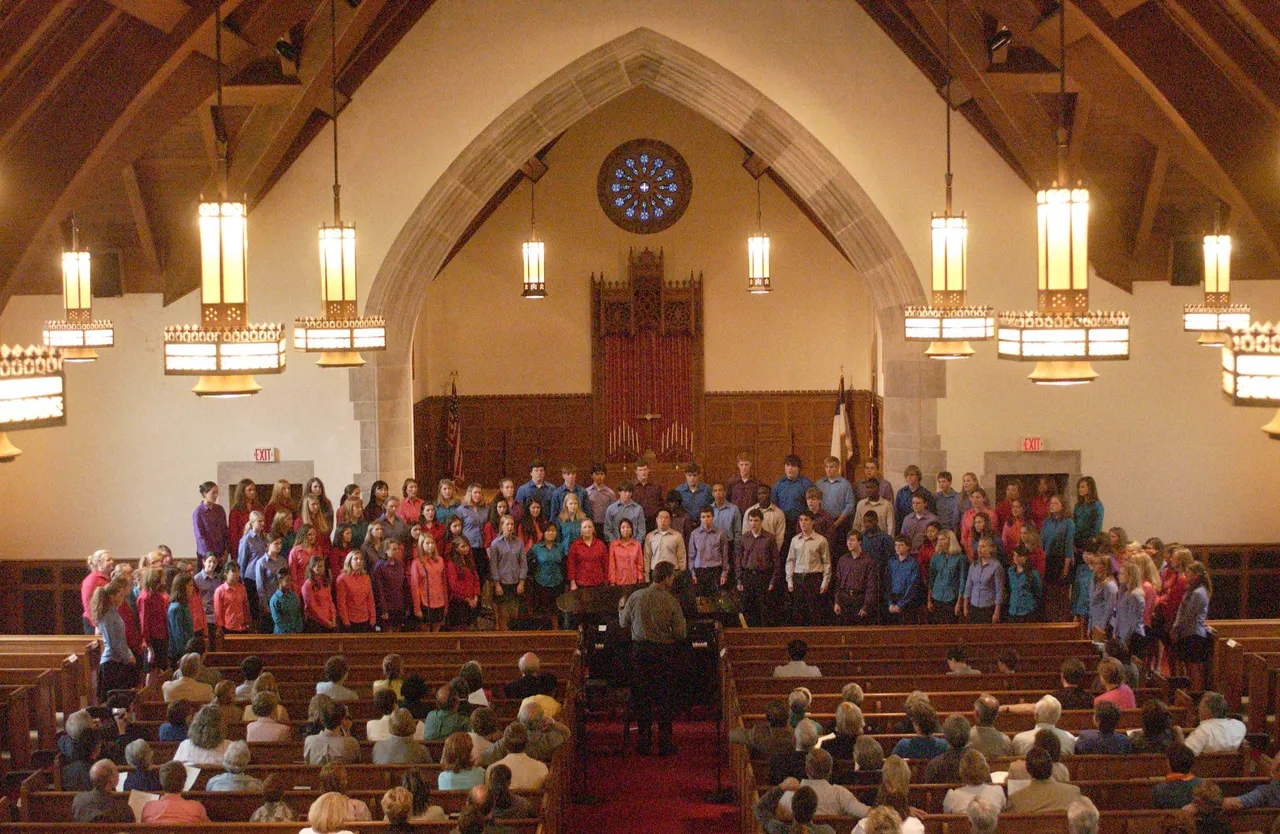
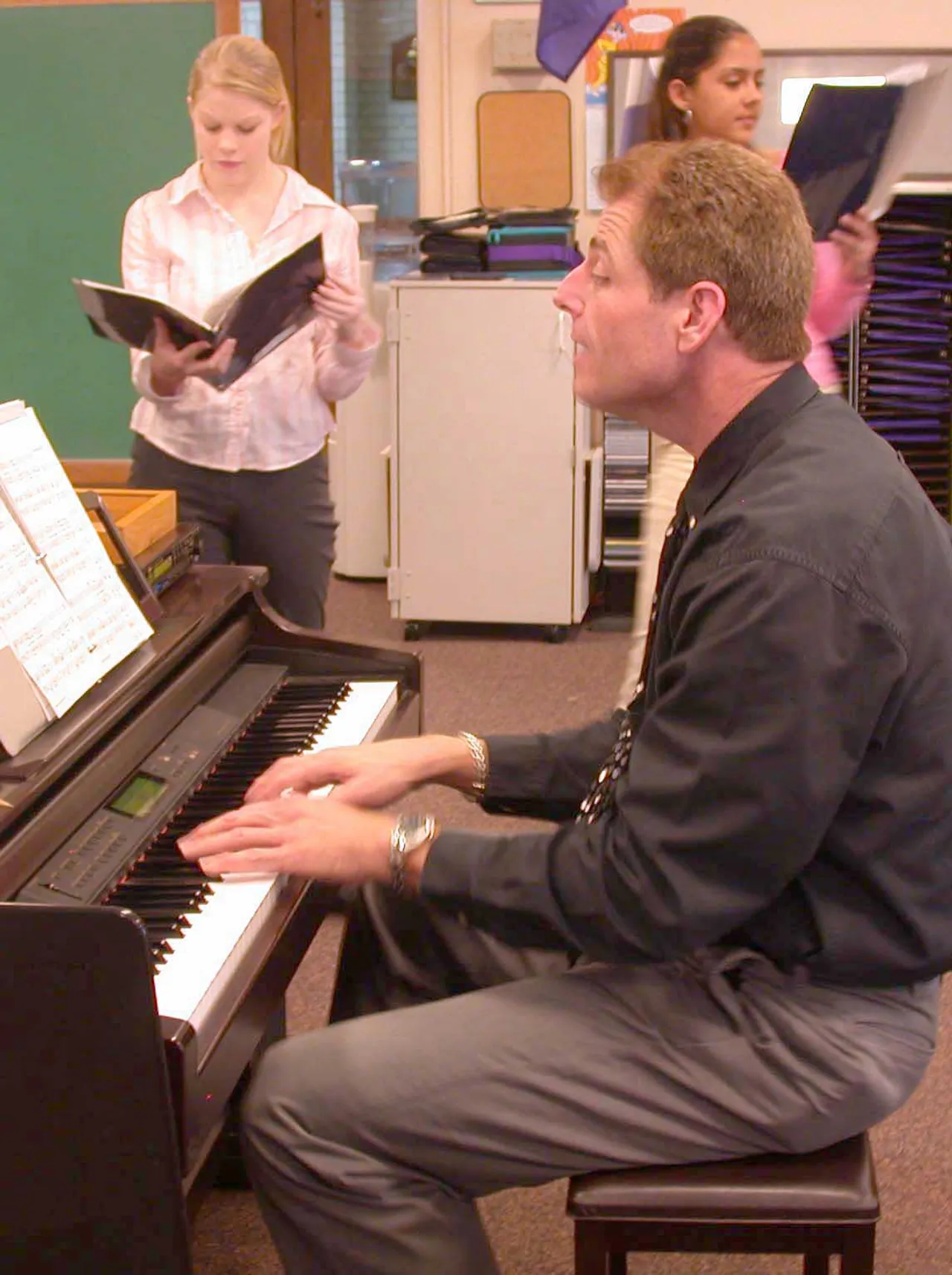
Students can participate in three choral groups in Upper School, the Ladies’ and Men’s Chorale and Concert Choir. The chorales are open to all students who enjoy singing and would like to improve their vocal skills. Currently, the Ladies’ Chorale has 58 members and the Men’s Chorale has 16. The Concert Choir is an auditioned ensemble for tenth through twelfth grade students and is generally limited to 38 students.
All members in any of the choral classes are eligible to audition for the GISA Honor Choir and the Georgia Music Educator’s sponsored District Honor Chorus and All-State Chorus. Members of the Concert Choir are also eligible to audition for the Muses girls ensemble and the Random Notes boys ensemble, along with positions on the Music Literary Team of boys and girls solo, boys quartet, and girls trio.
This year, the Music Literary Team has dominated its area in the Georgia High School Association literary competition at the Region and State levels. First place awards went to Andrew Gay, boys solo; Katie Tumlin, girls solo; Andrew Gay, Jonathan Lane, Paul Maxwell, and Benji White, boys quartet; and Lauren Bowling, Whitney Smith, and Mika Wells, girls trio. These students have moved on to State competition. The choral groups received superior ratings and overall first place trophies in various choral festivals held in the state and Southern region this year.
“Overall, Darlington’s choral department is one of the most outstanding programs in our state, especially considering the size of our student body,” Dan Bishop, fine arts department chair, said. Total enrollment in the Upper School fine arts program is over 125 students, which is well over the norm of 10 percent of the student body.
“Our biggest obstacle is the lack of adequate space for private lessons, small and large group rehearsals, and of course, the absence of a true performance hall,” Bishop said. “One of our major pluses, on the other hand, is the School’s commitment to the fine arts program, both financially and in attendance.”
Fine Arts Boosters Club enhances program
One of the most visible signs of the School’s commitment to the arts comes in the form of the Fine Arts Booster Club, started in a school parking lot in the fall of 1997, according to this year’s chair, Shelly Peller. “Bob Babcock and Jane Gray Collier were discussing starting a Band Boosters Club,” Peller recalled. “Linda Hom walked up and joined in. She suggested that the new club encompass choral and be the Music Boosters, and the rest is history.” Initially called the Darlington Music Boosters Club, the name was changed two more times to finally become the Darlington Fine Arts Boosters Club and encompasses all areas of the arts programs offered at Darlington.
The Booster Club’s mission statement, “To show appreciation and provide support for all areas of the arts at Darlington School,” is brought to life by the club members who worked tirelessly every year. A yearly reception is held to provide recognition to students and faculty. The club has purchased a wide variety of extras for the program, such as electrical equipment and microphones to increase the safety and quality of drama performances, choral dresses and other items to enhance choral concert presentations, additional steel drums to enable more students to participate, and art equipment and supplies to enrich experiences in art and media classes. The club also introduced “Hugs and Kisses” candy bags delivered to students who participate in or receive honors related to performances.
The Board for the Fine Arts Boosters Club oversees fundraisers and distribution of funds to the students and faculty, and provides volunteer support for plays, performances, and trips. It plans on making the Coca-Cola sale a yearly event and to increase the sale to two times a year as sales increase.
Parents are able to stay updated on the Fine Arts Boosters Club and activities of the band, choral, drama, and art programs through the quarterly newsletter. Anyone interested in becoming an active volunteer may attend a monthly meeting or contact any member of the board. Check out the master calendar on the Web for upcoming meetings.
Little hands experience the arts in Lower School
“Celebrate music daily,” a philosophy that Diane Lumpkin, Lower School music and drama teacher and assistant principal, lives out. “Each child feels success in the music classroom because all students are encouraged to become actively involved in the process of learning music,” she said. The Lower School program includes choral singing, movement, instrument playing, voice technique, musical notation, dance, music terminology, and music history. Music of all types from many places and periods is studied and the lives and works of famous composers are a basic part of the curriculum.
Students in grades pre-kindergarten, kindergarten, and pre-first are physically engaged in the music process by playing a variety of rhythm instruments, dancing, moving creatively, active listening, and using their phenomenal imaginations.
In first through fifth grades, students make use of the Yamaha Music in Education, a keyboard lab that provides a contemporary focus to the musical and curricular traditions of the music classroom. The lab provides opportunities for students to increase their willingness to participate in the music-making process.
All students perform on stage before the student body at least once during the school year. Each grade level presents a musical for their parents, peers, and the community to enjoy. Preparation for a play gives students experiences in reading, speaking, creating, singing, thinking, working as a team and developing self-esteem. Through drama and music students gain confidence, poise and pride.
Students in all grade levels study composers and wonderfully written music. Students are given numerous opportunities to hear quality music within the classroom to stimulate and inspire their young minds, improve intelligence and help to develop IQ. “Music is also a time for personal reflection,” Lumpkin said.
Fifth grade students are encouraged to audition for the Seventh District Honors Chorus and the State Elementary Honor Chorus. Students are judged on the ability to match pitch, sing an ascending scale with and without the piano, and their personal vocal range.
This year 10 Lower School students auditioned at the Seventh District Honor Chorus and six students represent the school at the State Elementary Honor Chorus.
“I believe that it is my goal as a music teacher to instill in the hearts and souls of my students a love and appreciation for music that will lead to a lifelong enjoy of and participation in the arts,” Lumpkin said.
The goal of the Lower School art program is to provide children with opportunities to learn an appreciation for art and to establish a strong awareness of the world of art around them. “Every child who takes art in Darlington Lower School learns the language of art,” Katie Clotfelter, art teacher, said. “They have a strong vocabulary that helps them understand the aesthetic world around them.”
Students learn how to appreciate an artist for their depth, balance, harmony, symmetry, and other elements and principles of art. They work with a variety of mediums; for example, a variety of papers, colored pencils, pottery, and a wide range of paints. “The students even have opportunities to be involved in the Rome community through the arts by donating tile murals and other volunteer art projects,” Clotfelter said.
The Lower School instrumental music program begins in the fifth grade. Students are given the opportunity to explore each instrument they would like to try in an effort to get them matched up with the instrument for which they are best suited. Once that decision has been made the students meet at 7:50 each morning at the Lower School and learn how to properly hold and play their instruments. This class meets daily for the entire year.
Middle School students learn the academics of art
Darlington’s Middle School art program introduces the student to the academics of art; i.e., figure drawing, perspective, and color theory. “Our goal is for each student to develop an understanding of a variety of mediums such as marbleizing, bookmaking, acrylics, watercolor, ceramics, pastel, and printmaking,” Eva Marie Burns, Middle School art teacher, said. Burns also teaches Art I to Upper School students.
The Middle School choral department consists of two groups of singers. The sixth grade chorus is an 18-member treble choir that meets twice a week during study hall. The seventh and eighth grade chorus, which is composed of 42 members, also meets during study hall and lunches each weekday. This chorus is a mixed choir, which means that the group includes “changed voices.”
“Even given their very limited time to practice, the choirs have accomplished a great deal,” Kim Tunnell, Middle School chorus teacher, said. The singers have performed at the Sixth Grade Statewide and All-State choruses, have received excellent and superior ratings at choral festivals, and perform three concerts each year. Any Middle School student may join chorus without an audition.
A General Music course is offered as part of the sixth grade exploratory rotation program. Students take the course for a trimester and are introduced to all of the historical periods in music. Each student keeps a listening journal and is exposed to a variety of musical genres. Students also play Orff instruments, hand chimes, and hand bells.
“Those students who have gone through Darlington’s Lower School music program come to this course already able to read music,” Tunnell said. “We continue their music training by teaching them sight-reading and correct singing techniques to prepare them for opportunities in choral music at the Middle and Upper School.”
Speech and Drama class is part of the eighth grade exploratory rotation program. During the trimester, students become familiar with public speaking by presenting three speeches and participating in a debate. An introduction to stage terms and acting exercises prepare them for a final production in the Zelle Theater. This year, the young thespians produced two comedy-mystery productions and a collection of skits entitled “I Hate the Mall.”
“At the same time that the class is learning to perform in front of a group and their peers, we also try to educate them about proper theater etiquette, ultimately with our instruction on the goal of preparing them to participate in drama at the Upper School, if they wish,” Tunnell said.
Middle School band is offered at all grade levels and beginners may start at each level. The sixth and seventh grade band is taught at fifth period and the eighth grade band is taught at sixth period. For individual enrichment the students can participate in the GMEA All District Honor Band. This band is made up of the most outstanding sixth through eighth graders who are selected by an audition basis from the 7th District. The auditions for this group take place in early December and, if selected, the event takes place in early January when all of the students selected come together and rehearse for a couple of days and then present a concert for the parents, relatives, and friends. The more ambitious students can also go on to audition for the Georgia Music Educator’s Association All State Middle School Band through basically the same audition process, one at the District Level and if they pass that one then they go on to the final audition. Should they pass that audition they are then in the All State Band and perform in March following two days of rehearsal in Savannah, Ga.
Beginning this fall, Middle School students may be selected for the Georgia Independent Schools All Select Honor Band. Membership into this organization is based on teacher recommendations. Those students selected will come together in late October or early November to perform for the Georgia Independent Schools Association (GISA) Conference. The Middle School Band also does a trip each year to perform at such places as Disney World, Universal Studios, Florida, Busch Gardens, and Sea World. Locally, the Middle School Band performs at Christmas and again in the spring for the school and parents.
Upper School focuses on proficiency and application
The Upper School art program reinforces the creativity and skills learned in the Lower and Middle School art programs while introducing new and more technical skills. The primary goal of the studio classes is to develop an understanding and proficiency in a wide variety of art experiences through the study of art principles and their applications in studio work. Students learn in Art I to apply the principles of art (line, shape, value, color, and texture) by completing a variety of projects ranging from drawing exercises to printmaking to works in clay. In the upper level classes (Art II, Art III, Art IV, AP Studio Art), students move away from tightly controlled projects to more personal projects that reflect their interests and needs.
While many of the students in the studio art classes have a strong background in art, just as many are in search of a fine arts credit and discover for the first time that they can learn to draw and paint. “The beauty of Darlington’s small class size is that there can be one-on-one instruction so that a future college art major might be in a class with a student new to Darlington whose only experience with art is in their early years,” Kathy O’Mara, Upper School art instructor, said. Having students with different abilities and experiences only enhances the program.
The most important goal of the studio art classes (or any Fine Arts Department class) is to encourage students to strive to improve while gaining confidence about their work and their potential. One of the greatest benefits of the class is that there is a wonderful relaxed feeling in the studio with music playing and the ability of the students to talk while working, a luxury not present in lecture-based classes. “You might think this would encourage a lax attitude, but if you visit the studio you will see students hard at work, often putting in extra time on more technical projects,” O’Mara said. “The program offers a perfect blend of structure and independent expression,”
Evidence of student work is all over campus, from the Senior Art Collection hung in the gallery space between the Porter and Zelle buildings to the many linoleum block and silkscreen prints hung on all three campuses. There are future plans to expand the display space. Additionally, the galleries on the School’s Web site at www.darlingtonschool.org/arts have provided an invaluable permanent record of the student work and a teaching tool for future students.
Because of difficulties with the schedule, the Fine Arts Festival was not held this year. However, the Fine Arts Department members are in the process of reinventing this event. Although there are no firm plans, the focus of the event will be on involving the entire school in workshops, performances, and activities while including working artists and performers.
Cinema class involves the student in the technical, historical, and thematic aspects of film. Offered during each trimester, this elective presents a feature film each week, often centered on a theme or genre popular in film. This year the Cinema class has studied old and new classics by comparing films such as Casablanca, Gone With the Wind, Citizen Kane, and the new Moulin Rouge. The students also review current theatrical showings when appropriate, such as Cold Mountain and write study guides for most of the movies they watch.
Creative Writing is a one-trimester fine arts offering but can be elected for the year. The course uses journals, guided writing, and reading and clustering, with an emphasis on discovery and fresh language to develop each student’s writing power. Editing is emphasized as a major, final step in finished writing.
AP Humanities class, designed for senior honors students, analyzes and discusses the great works of art, architecture, and music representative of the main periods and intellectual movements in western civilization. Students are taught to develop critical skills in writing and oral presentation. This year class members traveled to the Atlanta Symphony to hear Beethoven’s “Leonore Overture, No. 3” and Brahms’ second symphony.
Most of the class, members of the Musical Theater class, and some parents also traveled to New York City to take in galleries, museums, and Broadway plays. The group met with Hazelle Goodman, actor and parent of senior Brandon Goodman, to discuss Broadway acting and related issues. Touring included the MET to study art from the beginning of time up to the present, where the group met with Dr. Carlos Picon to gain an understanding of what it means to be a curator and the particular challenges faced in museum work. The group also visited the Cloisters Museum to study Medieval art and architecture, the Guggenheim to study modern architecture as well as modern art, and finished with a visit to the Queens to see the Modern Museum of Art. Travelers also enjoyed Broadway shows such as Hairspray, , and Evita. The musical theater group made a special trip to The Julliard School to learn what life is like at America’s premier school for the arts.
In the Drama/Musical Theater course, an elective course for juniors and seniors, students begin with two terms of intensive study of basic acting skills by playing improvisational games and progressing through a series of scenes, which culminate in a scene from an actual play. “This course is more of an ‘acting workshop’ because the focus is learning how to do real action under imaginary circumstances,” Marisa Ortega, drama instructor and Darlington Players director, said. “Students meet as fellow ‘players,’ involved with one another, ready to connect, to communicate, to experience, to respond, and to experiment and discover; ultimately, learning how to think like an actor.”
The Drama/Musical Theater part of the course, a joint endeavor of the music and theater departments, begins third trimester and immerses students in the world of the Broadway musical. Twelve weeks of instruction in voice, improvisation, script analysis, and movement culminate in a full-scale Musical Theater Variety Show. All Musical Theater students are featured in the show, directed and choreographed by faculty members. Daily sessions focus on stage direction, dance and vocal technique, bringing all the skills honed during the course to the stage for a public performance.
In addition, to the Drama/Musical Theater class, there are five other performance opportunities for students who are interested in performance. Each year, the department produces a fall play, a one-act (which travels to the Region competition), the winter musical, dramatic interpretation for the spring literary meet, and a spring production. “All shows welcome students with vast or no experience and students who are eager to learn about all aspects of the theater—performance and production,” Ortega said. “In the last two years, we have placed first in Region 6-AA in the One-Act competition and fifth in the State.
Band is offered in the Upper School during three different periods, first, sixth, and seventh, to accommodate academic schedule conflicts. The Upper School band is known as the Wind Ensemble and performs at least three concerts during the year, once in the fall, at Christmas, and again in the spring. The Wind Ensemble takes a trip each year and has performed in the past at Busch Gardens, Florida, Disney World, Universal Studios, and in Washington, D.C. There are also three opportunities for individuals to enhance their musical participation by auditioning for the 7th District Honor Band, the Georgia Music Educator’s All State Concert and Symphonic Bands, and by nomination and selection into the Georgia Independent Schools’ Association All Select Honor Band.
Woodwind and brass choirs also perform at Christmas and other small events, such as various luncheons both on and off campus.
In both Middle and Upper schools, steel band is offered as a class and as an ASA. This unique group performs both on and off campus for a variety of events. “Membership in this group does not require any knowledge of music to join and is a fun way to get involved with the music program if you do not already play a musical instrument at Darlington,” Bill King, instrumental music director, said.
This year eighth grader Laura Lynch was selected for the 7th District Middle School Honor Band and performed in January. Another Middle School student, eighth grader Turner Edwards, auditioned for the Middle School All State Band, passed the first audition, and went to the finals.
Junior Beau Griffith auditioned for the All State Symphonic Band and was selected for participation. Only seven percussionists in eleventh and twelfth grades are selected for this band statewide regardless of school classification. Griffith went to Savannah April 29 - May 1 to practice and perform with this prestigious group.
Fourteen Upper School students were participated in the 2003 GISA All Select Honor Band this past October: seniors Mike Jones, Chan Woo, Paul Maxwell; juniors Kim King, Anne Montgomery, Dennis Kim, Ana Glass, Joey Graham, Jonathan Lane; sophomores Peter Hjort, Ryan Clark; freshmen Hyun Do Sung, Katherine Lynch, and Ben Pate. Only a total of 100 students were selected statewide. Sophomore Clark Coleman and junior Savannah Winn were also selected, but were unable to attend.
Students can participate in three choral groups in Upper School, the Ladies’ and Men’s Chorale and Concert Choir. The chorales are open to all students who enjoy singing and would like to improve their vocal skills. Currently, the Ladies’ Chorale has 58 members and the Men’s Chorale has 16. The Concert Choir is an auditioned ensemble for tenth through twelfth grade students and is generally limited to 38 students.
All members in any of the choral classes are eligible to audition for the GISA Honor Choir and the Georgia Music Educator’s sponsored District Honor Chorus and All-State Chorus. Members of the Concert Choir are also eligible to audition for the Muses girls ensemble and the Random Notes boys ensemble, along with positions on the Music Literary Team of boys and girls solo, boys quartet, and girls trio.
This year, the Music Literary Team has dominated its area in the Georgia High School Association literary competition at the Region and State levels. First place awards went to Andrew Gay, boys solo; Katie Tumlin, girls solo; Andrew Gay, Jonathan Lane, Paul Maxwell, and Benji White, boys quartet; and Lauren Bowling, Whitney Smith, and Mika Wells, girls trio. These students have moved on to State competition. The choral groups received superior ratings and overall first place trophies in various choral festivals held in the state and Southern region this year.
“Overall, Darlington’s choral department is one of the most outstanding programs in our state, especially considering the size of our student body,” Dan Bishop, fine arts department chair, said. Total enrollment in the Upper School fine arts program is over 125 students, which is well over the norm of 10 percent of the student body.
“Our biggest obstacle is the lack of adequate space for private lessons, small and large group rehearsals, and of course, the absence of a true performance hall,” Bishop said. “One of our major pluses, on the other hand, is the School’s commitment to the fine arts program, both financially and in attendance.”
Fine Arts Boosters Club enhances program
One of the most visible signs of the School’s commitment to the arts comes in the form of the Fine Arts Booster Club, started in a school parking lot in the fall of 1997, according to this year’s chair, Shelly Peller. “Bob Babcock and Jane Gray Collier were discussing starting a Band Boosters Club,” Peller recalled. “Linda Hom walked up and joined in. She suggested that the new club encompass choral and be the Music Boosters, and the rest is history.” Initially called the Darlington Music Boosters Club, the name was changed two more times to finally become the Darlington Fine Arts Boosters Club and encompasses all areas of the arts programs offered at Darlington.
The Booster Club’s mission statement, “To show appreciation and provide support for all areas of the arts at Darlington School,” is brought to life by the club members who worked tirelessly every year. A yearly reception is held to provide recognition to students and faculty. The club has purchased a wide variety of extras for the program, such as electrical equipment and microphones to increase the safety and quality of drama performances, choral dresses and other items to enhance choral concert presentations, additional steel drums to enable more students to participate, and art equipment and supplies to enrich experiences in art and media classes. The club also introduced “Hugs and Kisses” candy bags delivered to students who participate in or receive honors related to performances.
The Board for the Fine Arts Boosters Club oversees fundraisers and distribution of funds to the students and faculty, and provides volunteer support for plays, performances, and trips. It plans on making the Coca-Cola sale a yearly event and to increase the sale to two times a year as sales increase.
Parents are able to stay updated on the Fine Arts Boosters Club and activities of the band, choral, drama, and art programs through the quarterly newsletter. Anyone interested in becoming an active volunteer may attend a monthly meeting or contact any member of the board. Check out the master calendar on the Web for upcoming meetings.