
NewsStudent LifeAcademics
Darlington students send holiday wishes to deployed troops
Dec 23, 2007 12:00 AM
By Tannika King - Faculty
Written by Severo Avila, Rome News-Tribune Features Editor, published 12/23/07
Far away from loved ones and friends, hunkered down in the hot, dry desert of a foreign land, many American soldiers will have to endure a rough holiday season. But even the smallest gesture of thoughtfulness from residents here can translate into heartfelt appreciation half a world away.
That's why several service men and women have been sending letters of thanks to Darlington students they don't even know. The students recently sent letters and postcards to a marine unit stationed in the Middle East and the response was overwhelming.
"It's amazing to think that with so much going on over there that these marines can take the time to send me a letter," said 17-year-old Lee Cantrell. "It's an honor to be corresponding with these brave men and women. I'm glad to know that something as simple as a letter from me could make their day a little brighter."
Cantrell is just one of 200 students at Darlington's Upper School who took part in a very special program designed to bring holiday cheer to troops stationed abroad.
"We always try to do things within the community to help others," said Reba Barnes, Head of Summerbell House at the school. "But this time I wanted to do something a little more global."
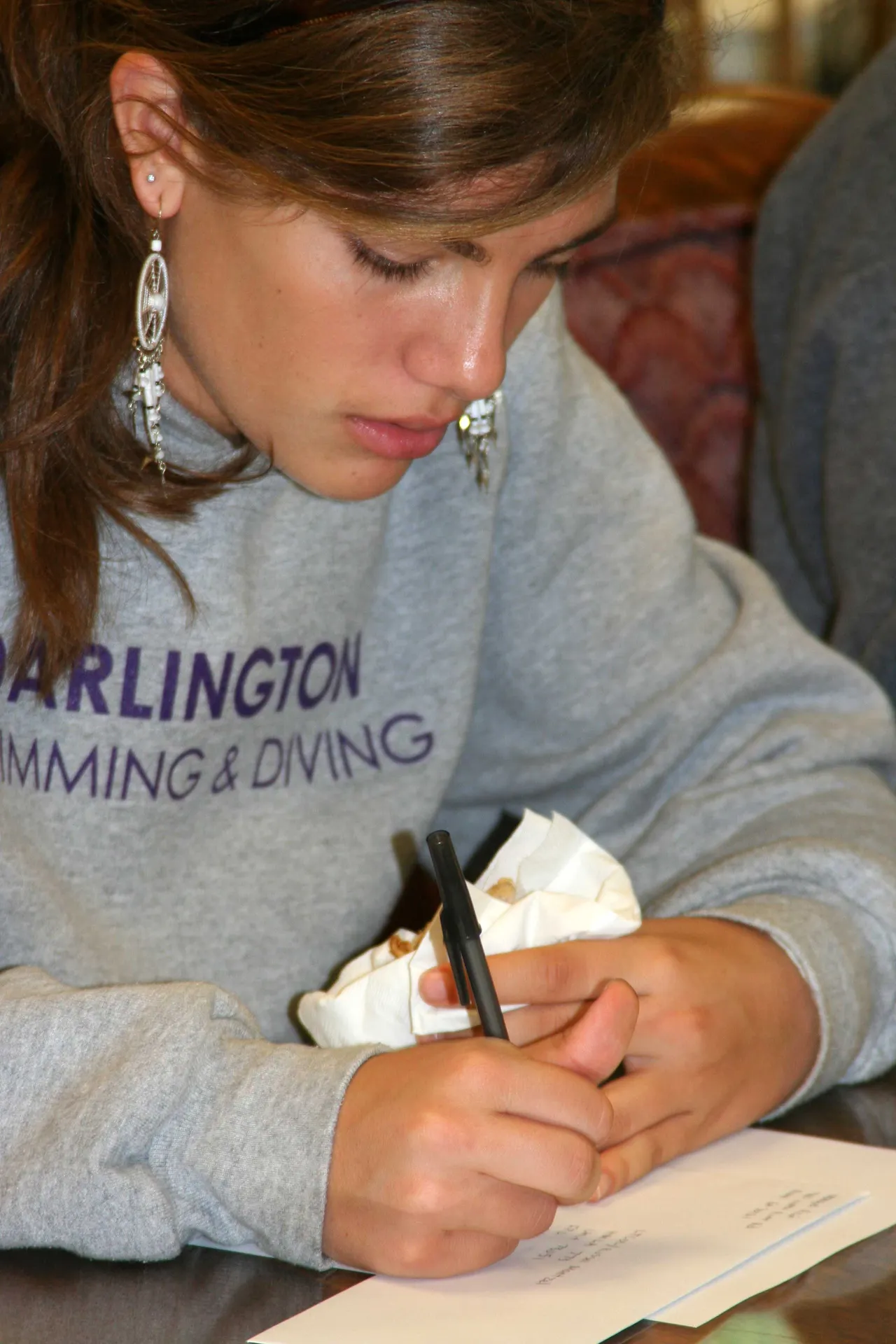
A member of Darlington's faculty asked her husband, a marine colonel, for help. He ended up getting the names of 358 marines in a single unit stationed in the Middle East. That's all Barnes needed. She sent out notices and e-mails informing all Upper School students of the opportunity to write to service men and women stationed abroad. The response was overwhelming. During the students' lunch breaks, a special section of the school's dining room was set aside for writing to the troops.
Abby Vincent was just one of the 200 students who put pen to paper and started communicating with people seh didn't even know. "Their heart goes out to you," said Vincent, an 11th grader. "They tell you things like they're proud to be an American because of you. These are men and women who put their lives on the line to protect our freedoms and they're thanking me for a letter I wrote during lunch. I can't describe what an amazing feeling that is."
Two waves of correspondence were sent out from Darlington. The first was a batch of 354 letters sent just before Thanksgiving. The other was a batch of postcards (made especially for the program, bearing the Darlington Tiger mascot holding an American flag) in which students expressed their wishes to the troops for a happy, safe Christmas.
"And everything was handwritten," Barnes said. "We could have just sent out form letters from the school or the student body as a whole, but we knew that it was important for the service men and women to get that extra special personal touch. These letters and postcards were from the heart. They're all written by the students."
Some students weren't even fluent enough in English to express everything they wanted to, but they made do. And their letters and postcards were received with as much enthusiasm as everyone else's.
Barnes and the students were happy to know that their letters were received warmly by the troops in the Middle East. But what they didn't expect was that even amid the harsh reality of life on the front lines, some of their newfound friends started responding to their letters.
"All of a sudden students started getting these letters from the soldiers," Barnes said. "It was very touching that they'd take time out of what has to be an already busy, stressful day to send touching, handwritten letters to kids they don't even know."
Perhaps it was for the very same reasons Barnes and students weren't expecting letters back that they did. Many of the letters expressed thanks for taking the troops' minds off their present situation, even for a while.
"A letter I got back was very touching," Vincent said. "The marine said that since he was so far away from his family and couldn't be with them for the holidays that he'd really appreciate it if I would give my parents a big hug and kiss since that's what he wished he could do for his."
Seventeen-year-old Monique Picon wrote letters to two marines. She was among the excited students who received correspondence back from their newfound penpals. Tony, a 20-year-old from Arkansas, told Picon that he and his fellow marines were glad to know that there are those back home who appreciate what they're fighting for.
"I wrote right before Thanksgiving," Picon said. "So I focused on the holiday season and told him how grateful I was to be spending the holidays with my family, knowing that he couldn't."
And the letters kept coming in. So while many American troops will be spending the holidays far away from their loved ones, many of them will know that there are those back home who have not forgotten them. Thanks to the efforts of Reba Barnes and hundreds of Darlington students, they'll have warm holiday wishes, accounts of life back home and endless words of thanks.
Far away from loved ones and friends, hunkered down in the hot, dry desert of a foreign land, many American soldiers will have to endure a rough holiday season. But even the smallest gesture of thoughtfulness from residents here can translate into heartfelt appreciation half a world away.
That's why several service men and women have been sending letters of thanks to Darlington students they don't even know. The students recently sent letters and postcards to a marine unit stationed in the Middle East and the response was overwhelming.
"It's amazing to think that with so much going on over there that these marines can take the time to send me a letter," said 17-year-old Lee Cantrell. "It's an honor to be corresponding with these brave men and women. I'm glad to know that something as simple as a letter from me could make their day a little brighter."
Cantrell is just one of 200 students at Darlington's Upper School who took part in a very special program designed to bring holiday cheer to troops stationed abroad.
"We always try to do things within the community to help others," said Reba Barnes, Head of Summerbell House at the school. "But this time I wanted to do something a little more global."
A member of Darlington's faculty asked her husband, a marine colonel, for help. He ended up getting the names of 358 marines in a single unit stationed in the Middle East. That's all Barnes needed. She sent out notices and e-mails informing all Upper School students of the opportunity to write to service men and women stationed abroad. The response was overwhelming. During the students' lunch breaks, a special section of the school's dining room was set aside for writing to the troops.
Abby Vincent was just one of the 200 students who put pen to paper and started communicating with people seh didn't even know. "Their heart goes out to you," said Vincent, an 11th grader. "They tell you things like they're proud to be an American because of you. These are men and women who put their lives on the line to protect our freedoms and they're thanking me for a letter I wrote during lunch. I can't describe what an amazing feeling that is."
Two waves of correspondence were sent out from Darlington. The first was a batch of 354 letters sent just before Thanksgiving. The other was a batch of postcards (made especially for the program, bearing the Darlington Tiger mascot holding an American flag) in which students expressed their wishes to the troops for a happy, safe Christmas.
"And everything was handwritten," Barnes said. "We could have just sent out form letters from the school or the student body as a whole, but we knew that it was important for the service men and women to get that extra special personal touch. These letters and postcards were from the heart. They're all written by the students."
Some students weren't even fluent enough in English to express everything they wanted to, but they made do. And their letters and postcards were received with as much enthusiasm as everyone else's.
Barnes and the students were happy to know that their letters were received warmly by the troops in the Middle East. But what they didn't expect was that even amid the harsh reality of life on the front lines, some of their newfound friends started responding to their letters.
"All of a sudden students started getting these letters from the soldiers," Barnes said. "It was very touching that they'd take time out of what has to be an already busy, stressful day to send touching, handwritten letters to kids they don't even know."
Perhaps it was for the very same reasons Barnes and students weren't expecting letters back that they did. Many of the letters expressed thanks for taking the troops' minds off their present situation, even for a while.
"A letter I got back was very touching," Vincent said. "The marine said that since he was so far away from his family and couldn't be with them for the holidays that he'd really appreciate it if I would give my parents a big hug and kiss since that's what he wished he could do for his."
Seventeen-year-old Monique Picon wrote letters to two marines. She was among the excited students who received correspondence back from their newfound penpals. Tony, a 20-year-old from Arkansas, told Picon that he and his fellow marines were glad to know that there are those back home who appreciate what they're fighting for.
"I wrote right before Thanksgiving," Picon said. "So I focused on the holiday season and told him how grateful I was to be spending the holidays with my family, knowing that he couldn't."
And the letters kept coming in. So while many American troops will be spending the holidays far away from their loved ones, many of them will know that there are those back home who have not forgotten them. Thanks to the efforts of Reba Barnes and hundreds of Darlington students, they'll have warm holiday wishes, accounts of life back home and endless words of thanks.