Culture Corner: Germany Day at Darlington

By Sophia Kalusche '18 - '18
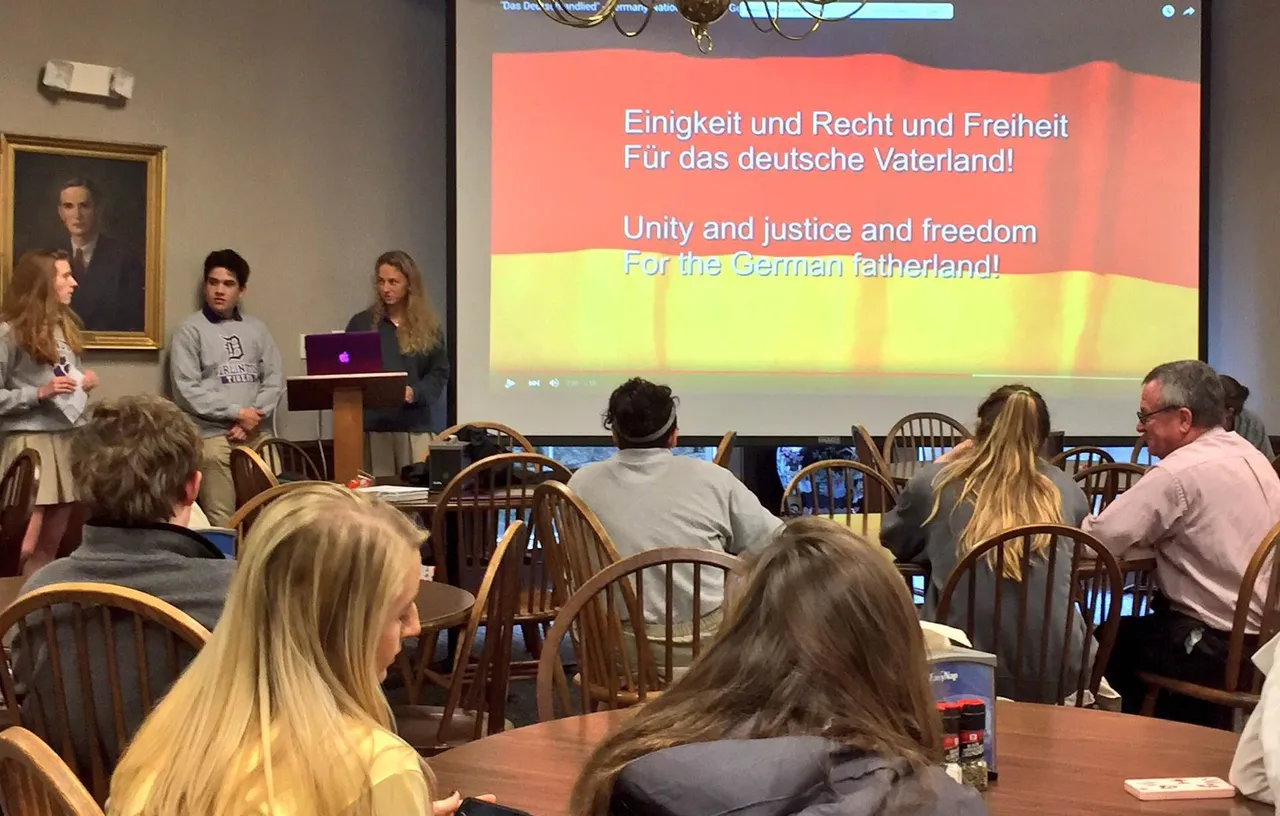
The following blog was written about a presentation that is a part of the Upper School's new Global Studies Speaker Series.
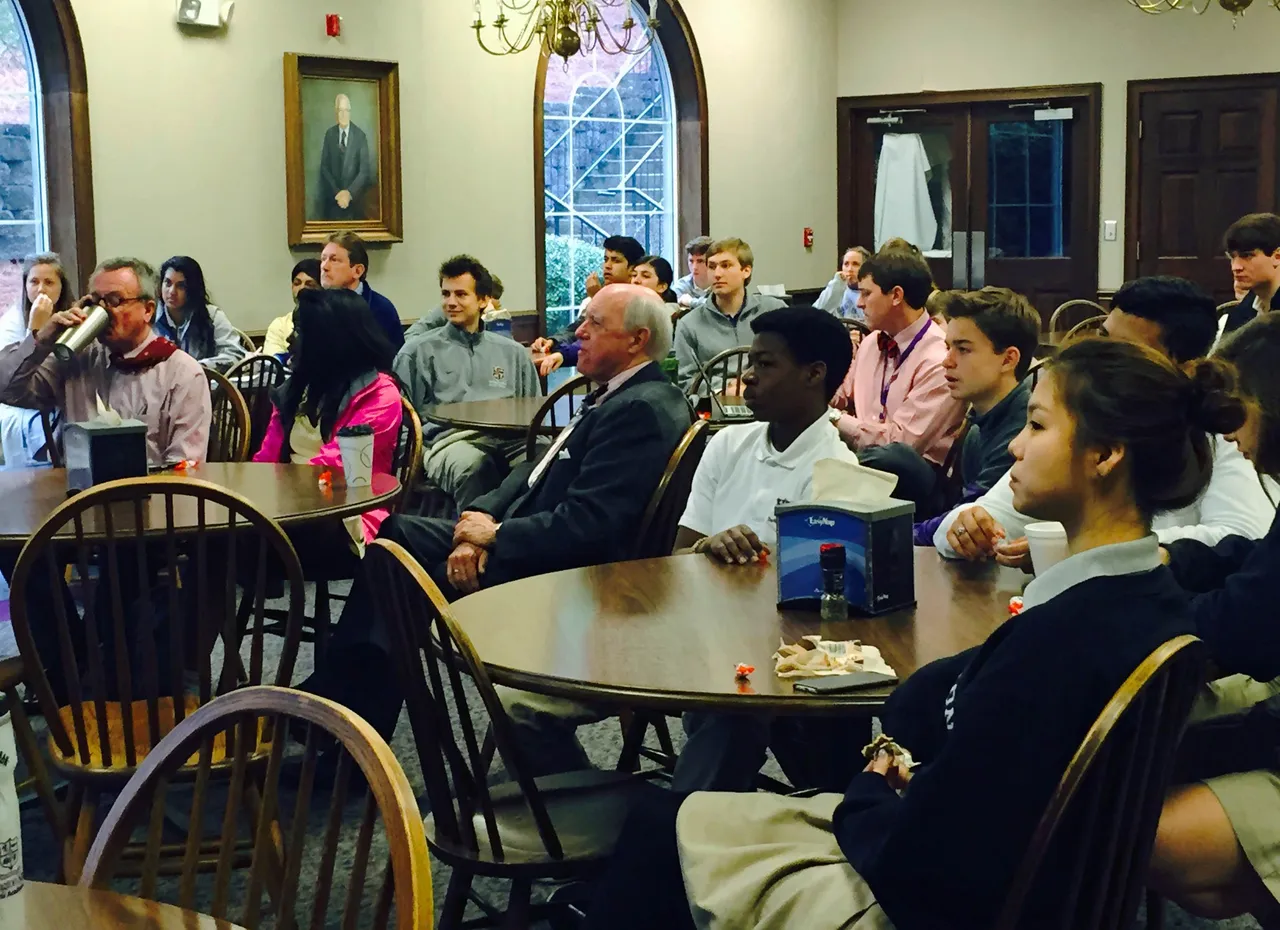
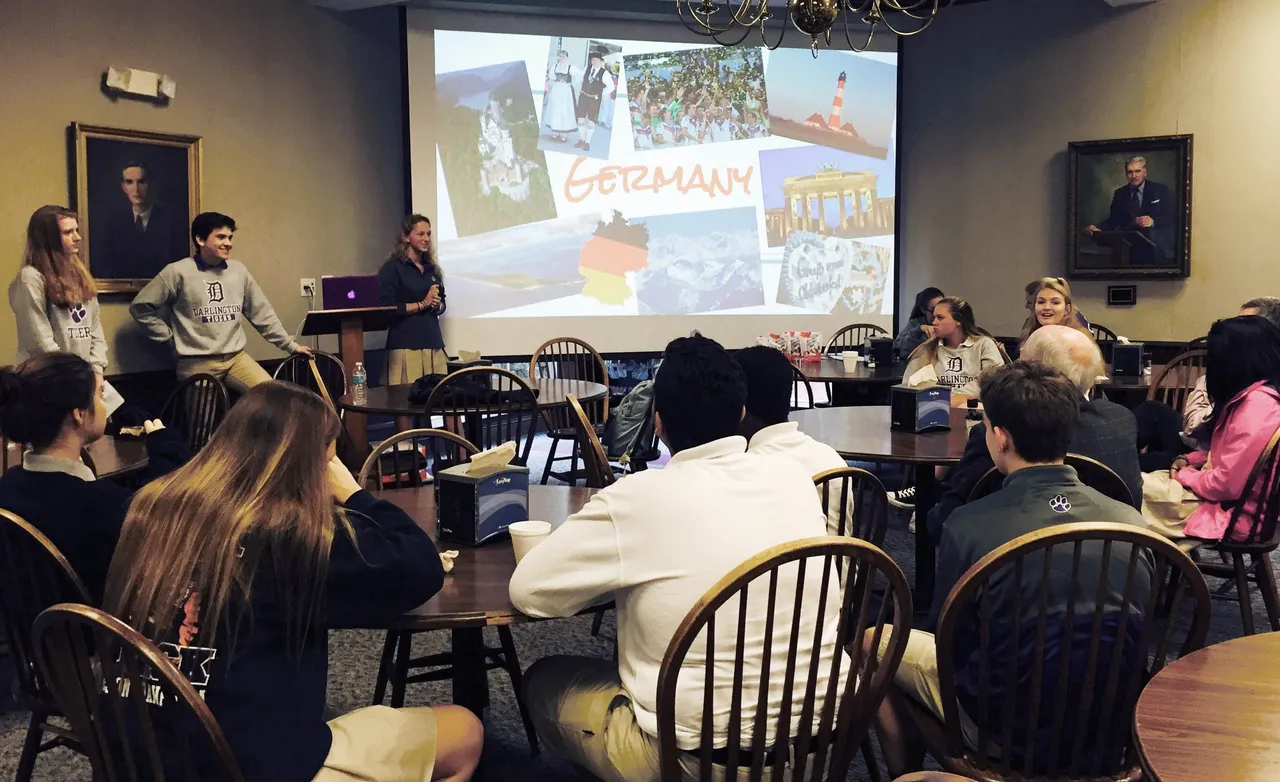
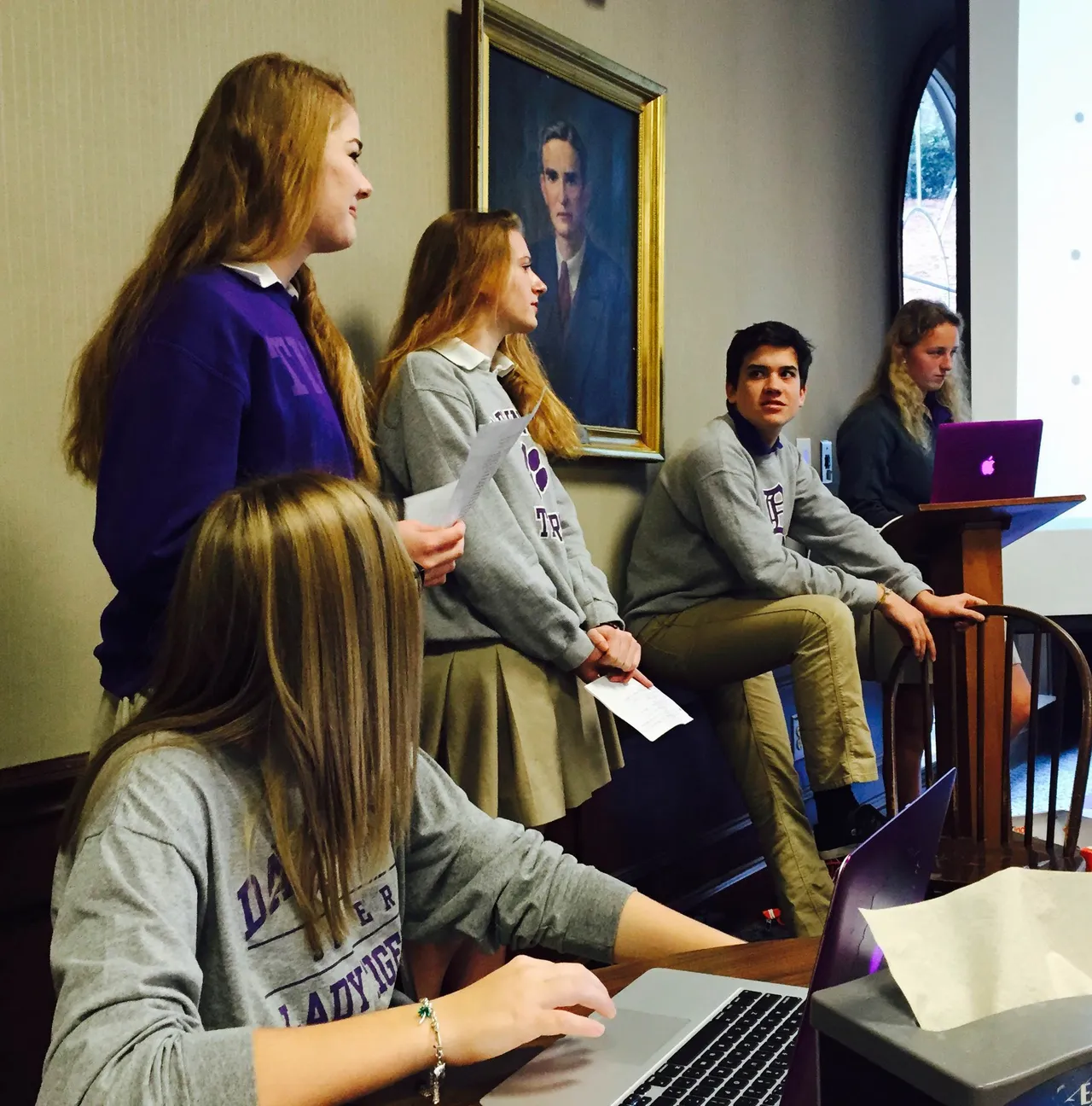
German students held a presentation for the Darlington Community about their country on Feb. 23. Multiple and different topics like government, healthcare system, and the European Union were presented. It was a great opportunity for us to talk about our country and to clarify any stereotypes and clichés other countries might have.
Freshman Leonie Lupp started with some general information. Comparing the population and the area of Germany with the U.S. gave the students a feeling for how small Germany actually is. Afterwards, sophomore Johanna Bombis explained the democratic, parliamentary political system of Germany. Another interesting topic was the topic of healthcare. Compared with the U.S., healthcare in Germany is mandatory. Hence, everyone has to be health-insured. Mark von Bismarck established a general social security system in 1883, and up to today the universal multi-payer system works pretty well and without any major deficit.
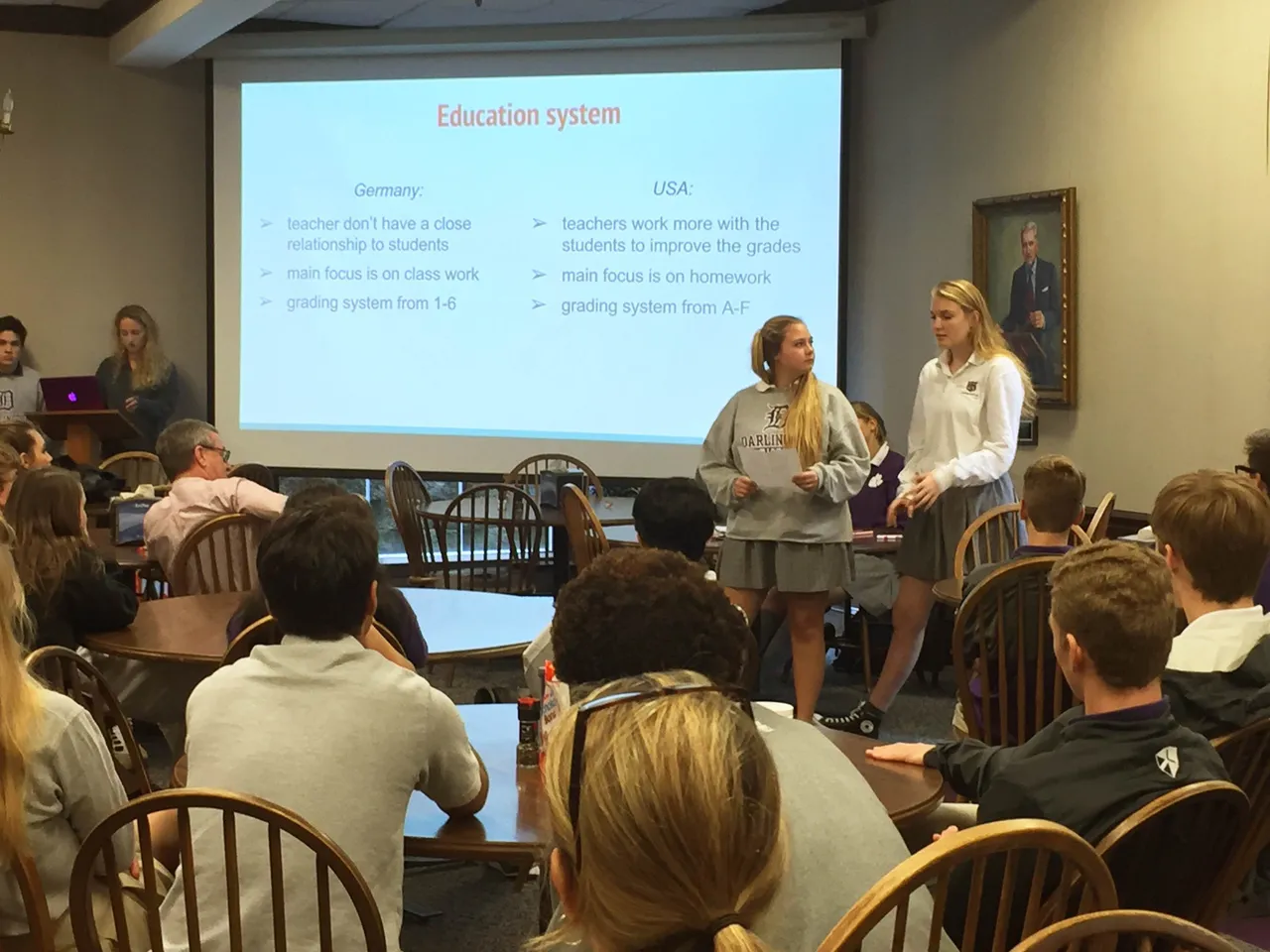
Juniors Johanna Wuensche and Julia Derfler compared the differences of the German and American educational systems. In Germany, the grade is a combination of active participation in class and the different tests and exams. The main focus is on the school and what is done during the lessons, and therefore not that much homework is assigned. Having small classes or a close relationship to your teacher is [very] rare in Germany. It was completely new for all of us that the teachers want you to succeed, and help and support you so much. A major difference is that education in Germany is largely for free due to the high taxes the citizens already have to pay.
Sophomore Lorenz Kohler talked about the most popular sports in Germany and junior Lisa van Susteren presented one of the most important parts of our presentation: World War II. She started with giving the audience some general information and showing two videos so that everyone could understand the main parts of the conflicts. Afterwards, several German students told stories of their grandparents and how they barely survived the war. It was very important for us that the attending students understood that not every German supported the war. Many Germans had to flee from the eastern areas and had to leave everything behind. The personal stories about the war gave the students an impression of how terrible the war was and how everyone who was involved, but especially how greatly the German general population suffered under the war as well. Lisa also talked about the persecution of the Jews and the Nazi concentration camps. She finished with the reunification of East and West Germany in 1989-90.
After these more difficult parts of the history, sophomore Sophia Firnhaber presented some traditions and compared the celebrations of Easter and Christmas with the U.S. She also talked about the German Carnival and the famous Oktoberfest in Munich. At the end, sophomore Annika Wuddel talked about German as a language and sophomore Julius Kroeger finished with some information about the states from where the current German students at Darlington come.
All of us enjoyed the presentation and I hope everyone who attended learned something helpful or new. I think it is a great opportunity for the international students to be able to represent the place where they are from, and I believe that the Darlington Community should take advantage of all the different countries the students are from and the different nationalities in the school. It is very special to share a classroom with people from all around the world and I think we can learn a lot from each other.
Sophia Kalusche is a tenth-grade boarding student in Cooper House from Frankfurt, Germany.