Celebrate Your Right to Read: Banned Books Week 2012

By Liz Overberg - FF/S
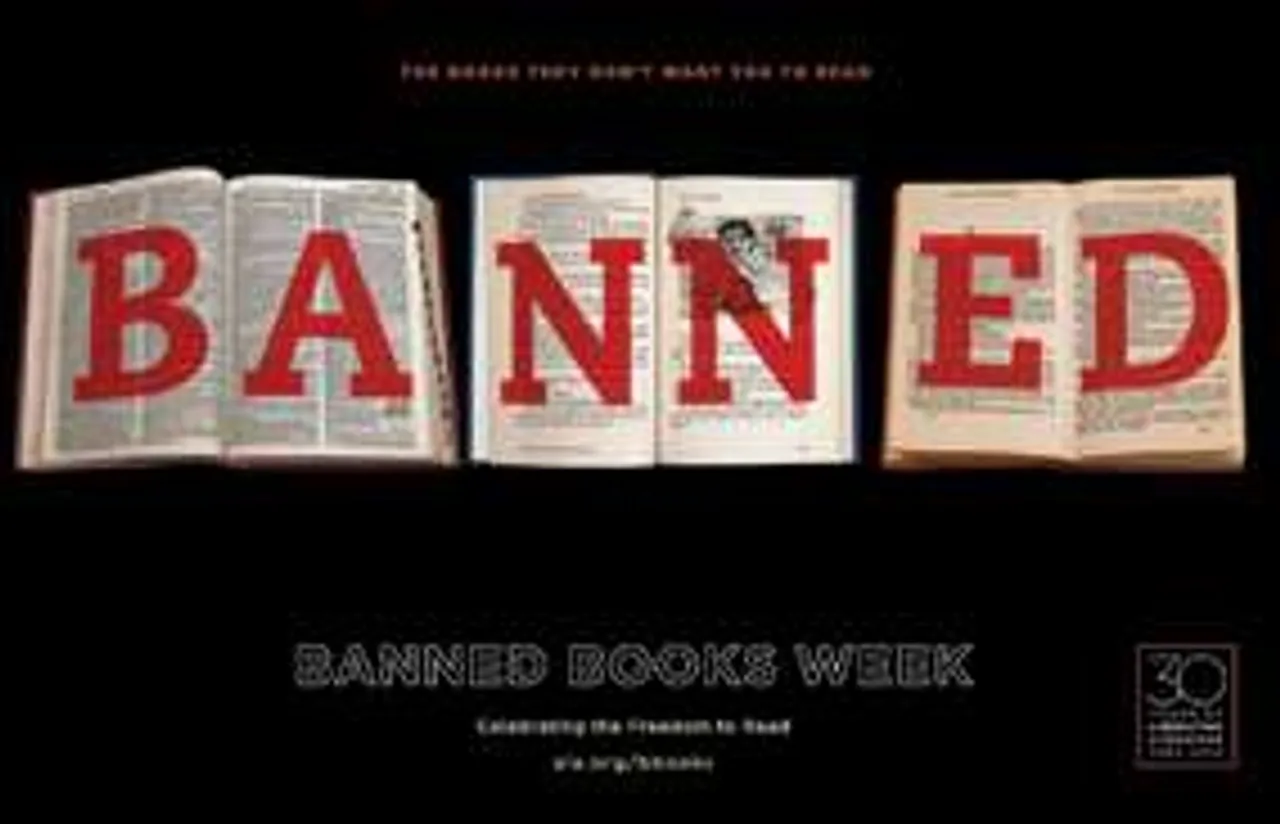
Sept. 30 to Oct. 6 marks a very important celebration in the book community. It’s Banned Books Week! This annual celebration (now in its 30th year!) draws attention to issues that are central to libraries and library service: intellectual freedom, freedom of expression, and access to information.
According to the American Library Association, Banned Books Week is the national book community’s annual celebration of the freedom to read. Hundreds of libraries and bookstores around the country celebrate this event each year to draw attention to the problem of censorship. Banned Books Week was launched in 1982 in response to a sudden surge in the number of challenges to books in schools, bookstores, and libraries. More than 11,300 books have been challenged since 1982.
You might ask, “Why are books challenged or banned?”
The American Library Association tells us that, throughout history, different kinds of people and groups of all persuasions, for all sorts of reasons, have attempted—and continued to attempt—to suppress materials that conflict with their own beliefs.
Books are usually challenged with the best intentions—to protect others, frequently children, from difficult ideas and information. Often challenges are motivated by a desire to protect children from inappropriate sexual content or offensive language.
Although this is a commendable motivation, making a rule to officially BAN a book from a school, a library, or a bookstore would mean that no one could read or access that book even if they wanted to. Challenges do not simply involve a person expressing a point of view about a book; rather, they are an attempt to remove materials from the curriculum or library, thereby restricting the access of others. This is an example of censorship, and it could open the door to more censorship of all kinds of ideas and beliefs. Freedom of ideas and beliefs is one of the core values of our country, so censorship of constitutionally protected speech, whether for protection or for any other reason, violates the First Amendment.
Think that the issue of censorship doesn’t affect you? Think again! Below is a list of just a few of the 11,000+ titles for which there are official challenges on file with the Office of Intellectual Freedom. Do any of these look familiar?
- The Hunger Games series by Suzanne Collins
- The Harry Potter series by J.K. Rowling
- The Lord of the Rings by J.R.R. Tolkien
- The Merriam-Webster Collegiate Dictionary
- The Little House on the Prairie series by Laura Ingalls Wilder
- The Adventures of Huckleberry Finn by Mark Twain
- To Kill a Mockingbird by Harper Lee
- The Giver by Lois Lowry
- Catcher in the Rye by J.D. Salinger
- Of Mice and Men by John Steinbeck
- The Grapes of Wrath by John Steinbeck
- Alice’s Adventures in Wonderland by Lewis Carroll
- The Twilight Series by Stephanie Meyer
- The Kite Runner by Khaled Hosseini
- The Curious Incident of the Dog in the Night-Time by Mark Haddon
- Diary of a Young Girl by Anne Frank
- Speak by Laurie Halse Anderson
- The Absolutely True Diary of a Part-Time Indian by Sherman Alexie
- The Call of the Wild by Jack London
- The Great Gatsby by F. Scott Fitzgerald
- The Lord of the Flies by William Golding
- 1984 by George Orwell
- Catch-22 by Joseph Heller
- The Sun Also Rises by Ernest Hemingway
- As I Lay Dying by William Faulkner
- Their Eyes Were Watching God by Zora Neale Hurston
- I Know Why the Caged Bird Sings by Maya Angelou
- Gone With the Wind by Margaret Mitchell
- Slaughterhouse Five by Kurt Vonnegut
- In Cold Blood by Truman Capote
- Sophie’s Choice by William Styron
- A Separate Peace by John Knowles
During Banned Books Week, more than ever, I am so proud to call myself a librarian, a book person, and an Intellectual Freedom Fighter!
Won’t you join me in celebrating your right to read?
If you want to know more about Banned Books Week, check out the displays and information available at both the Middle School Library and the McCallie-Kennedy Library this week, or come talk to me, Mrs. Holmes, or Ms. Hall.
You can also read more about Banned Books Week at https://www.ala.org/bbooks.