
NewsUpper SchoolPre-K to 8Academics
Building a solid foundation: Lower School success
Nov 1, 2001 8:00 AM
By Stefan Eady - Faculty
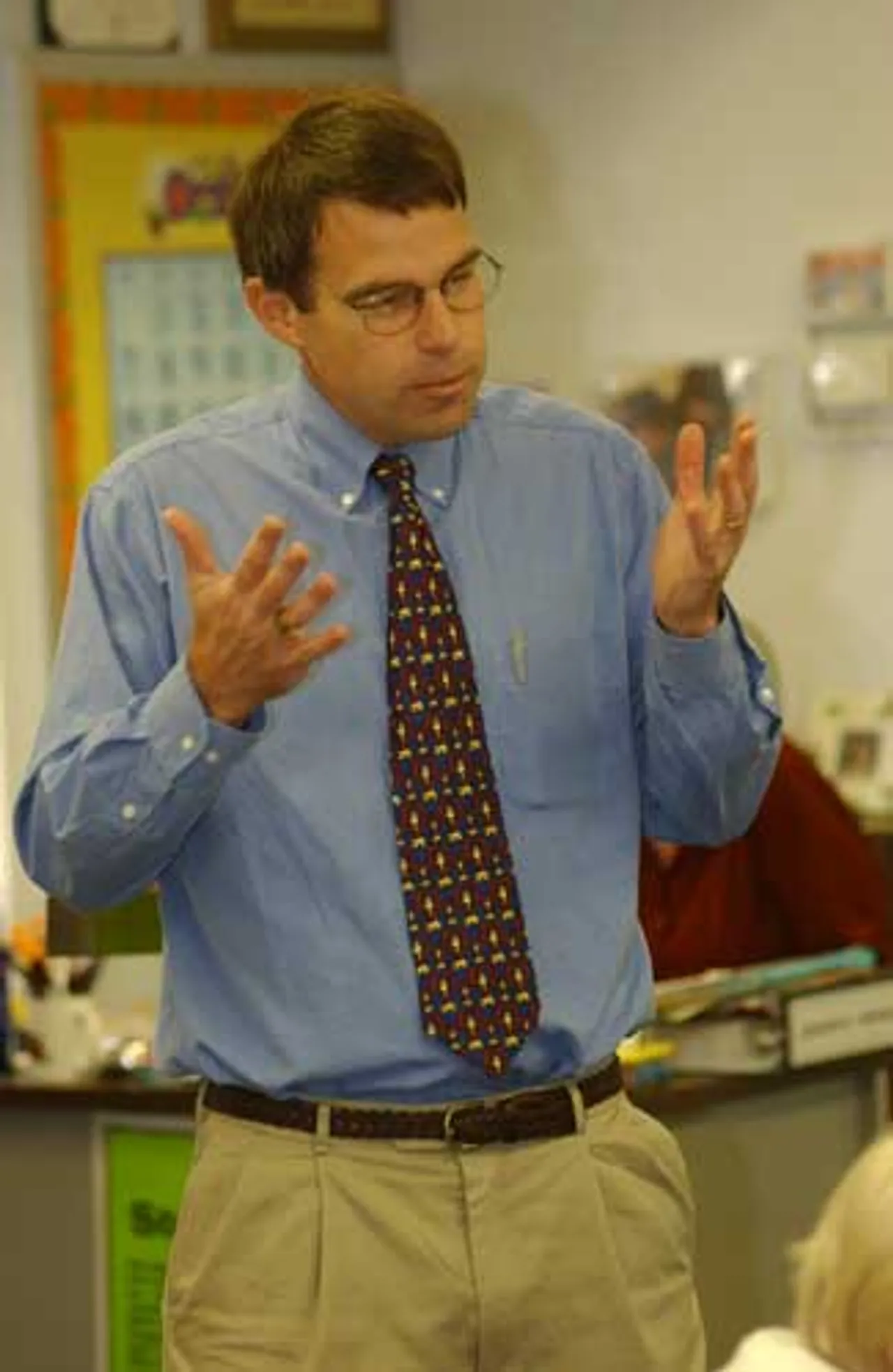
Performance tests show that the Lower School is providing its students with the building blocks necessary to achieve solid success in education, career, and life. “We have recently conducted a study comparing SAT scores of students who entered Darlington at the Lower School with those who entered Darlington at later times,” Mark Tayloe, Lower School principal, said. “ The scores for Lower School entries are significantly higher.”
SAT scores for the class of 2001 are the highest at Darlington since 1970, rising more than 60 points over last year’s average; the middle 50 percent of scores ranged from 1090 to 1290. “Seniors who attended Darlington beginning in the Lower School on average scored 59 points higher than the class averages on the SAT,” Sam Moss, associate headmaster and dean of college guidance, said.
Tayloe attributes students’ success to enthusiastic, bright teachers who he believes are the greatest assets of the School. “The biggest advantage for students attending the Lower School is that they are assured of having an outstanding teacher,” Tayloe said. “We have very little turnover; most teachers at the Lower School have been teaching for at least 15 years and many longer than that.” Familiar faces and continuity lend to a sense of community at Darlington. “The family atmosphere is everywhere. I love knowing that my daughter’s teacher nurtures her, loves her, and genuinely cares about her future,” Katie Clotfelter ’89, Lower School art teacher who also attended Darlington for 12 years, said.
The efforts of the teachers are aided by a strong, well-designed curriculum that builds on itself year after year. In fact, the curriculum is coordinated through the respective department chairs and flows from Lower School through the Upper School. The Academic Committee, a modified version of past curriculum and department chair committees, was established for the 2000-2001 school year as a result of the strategic plan’s charge for department heads to become more involved in Middle and Lower Schools and be responsible for curriculum coordination among the three Schools. “The curriculum has to be a college prep curriculum, even beginning in kindergarten,” Tayloe said. “Our responsibility is to prepare students for the Middle and Upper Schools, and we take that charge seriously.”
Part of that commitment includes teaching students to write well, beginning in pre-kindergarten. “We think it is very important for students to be able to express themselves through both writing and speaking activities,” Tayloe said.
Every Lower School student is on stage and performing for an audience at least once a year in a class play, improving confidence and security each time. “Their voices will become stronger and clearer as they project those lines to the audience and their movements will be more sure and graceful as they mature,” Patricia Ayer, kindergarten teacher, explained.
According to Ayer, on stage, students are given the opportunity to express themselves creatively, while working as part of an ensemble and also perfecting their individual roles. “Each child is encouraged to perform and even try new things, but no one is ever made to go outside their comfort zone,” Ayer said. “The applause and accolades of the audience are wonderful boosts for a child's self-esteem, and when praised by family and friends, even the smallest cameo becomes the starring role in the heart of that child.”
The Lower School provides ways for students to develop academic strengths and self-confidence. After much research the School introduced a new math program, Everyday Math, in 2000 that is already a scholastic winner. Improved ERB (Educational Research Bureau) standardized test scores show that the curriculum is making a positive impact. Scores are up.
In this program, students are introduced to some algebra even as early as the first grade. “It has been a fun and challenging program for the children as well as for the teachers,” Charla Brewster, third grade math teacher, said. The program recognizes that children have the ability to connect real-life experiences to new learning. Its curriculum follows the National Council of Teachers of Mathematics Curriculum Standards and teaches the basic facts including how to evaluate, communicate, and reason mathematically; develop confidence in their mathematics abilities; and become mathematical problem-solvers.
“The Lower School works because they focus on all six parts of the Mission Statement,” Headmaster David Rhodes, said. “They are sending us students who are developing spiritually, socially, academically, morally, physically, and culturally.”
SAT scores for the class of 2001 are the highest at Darlington since 1970, rising more than 60 points over last year’s average; the middle 50 percent of scores ranged from 1090 to 1290. “Seniors who attended Darlington beginning in the Lower School on average scored 59 points higher than the class averages on the SAT,” Sam Moss, associate headmaster and dean of college guidance, said.
Tayloe attributes students’ success to enthusiastic, bright teachers who he believes are the greatest assets of the School. “The biggest advantage for students attending the Lower School is that they are assured of having an outstanding teacher,” Tayloe said. “We have very little turnover; most teachers at the Lower School have been teaching for at least 15 years and many longer than that.” Familiar faces and continuity lend to a sense of community at Darlington. “The family atmosphere is everywhere. I love knowing that my daughter’s teacher nurtures her, loves her, and genuinely cares about her future,” Katie Clotfelter ’89, Lower School art teacher who also attended Darlington for 12 years, said.
The efforts of the teachers are aided by a strong, well-designed curriculum that builds on itself year after year. In fact, the curriculum is coordinated through the respective department chairs and flows from Lower School through the Upper School. The Academic Committee, a modified version of past curriculum and department chair committees, was established for the 2000-2001 school year as a result of the strategic plan’s charge for department heads to become more involved in Middle and Lower Schools and be responsible for curriculum coordination among the three Schools. “The curriculum has to be a college prep curriculum, even beginning in kindergarten,” Tayloe said. “Our responsibility is to prepare students for the Middle and Upper Schools, and we take that charge seriously.”
Part of that commitment includes teaching students to write well, beginning in pre-kindergarten. “We think it is very important for students to be able to express themselves through both writing and speaking activities,” Tayloe said.
Every Lower School student is on stage and performing for an audience at least once a year in a class play, improving confidence and security each time. “Their voices will become stronger and clearer as they project those lines to the audience and their movements will be more sure and graceful as they mature,” Patricia Ayer, kindergarten teacher, explained.
According to Ayer, on stage, students are given the opportunity to express themselves creatively, while working as part of an ensemble and also perfecting their individual roles. “Each child is encouraged to perform and even try new things, but no one is ever made to go outside their comfort zone,” Ayer said. “The applause and accolades of the audience are wonderful boosts for a child's self-esteem, and when praised by family and friends, even the smallest cameo becomes the starring role in the heart of that child.”
The Lower School provides ways for students to develop academic strengths and self-confidence. After much research the School introduced a new math program, Everyday Math, in 2000 that is already a scholastic winner. Improved ERB (Educational Research Bureau) standardized test scores show that the curriculum is making a positive impact. Scores are up.
In this program, students are introduced to some algebra even as early as the first grade. “It has been a fun and challenging program for the children as well as for the teachers,” Charla Brewster, third grade math teacher, said. The program recognizes that children have the ability to connect real-life experiences to new learning. Its curriculum follows the National Council of Teachers of Mathematics Curriculum Standards and teaches the basic facts including how to evaluate, communicate, and reason mathematically; develop confidence in their mathematics abilities; and become mathematical problem-solvers.
“The Lower School works because they focus on all six parts of the Mission Statement,” Headmaster David Rhodes, said. “They are sending us students who are developing spiritually, socially, academically, morally, physically, and culturally.”