NewsUpper SchoolStudent LifeFaculty/StaffPre-K to 8
“Bridging” the gap
Feb 24, 2005 8:00 AM
By Tannika King - Faculty
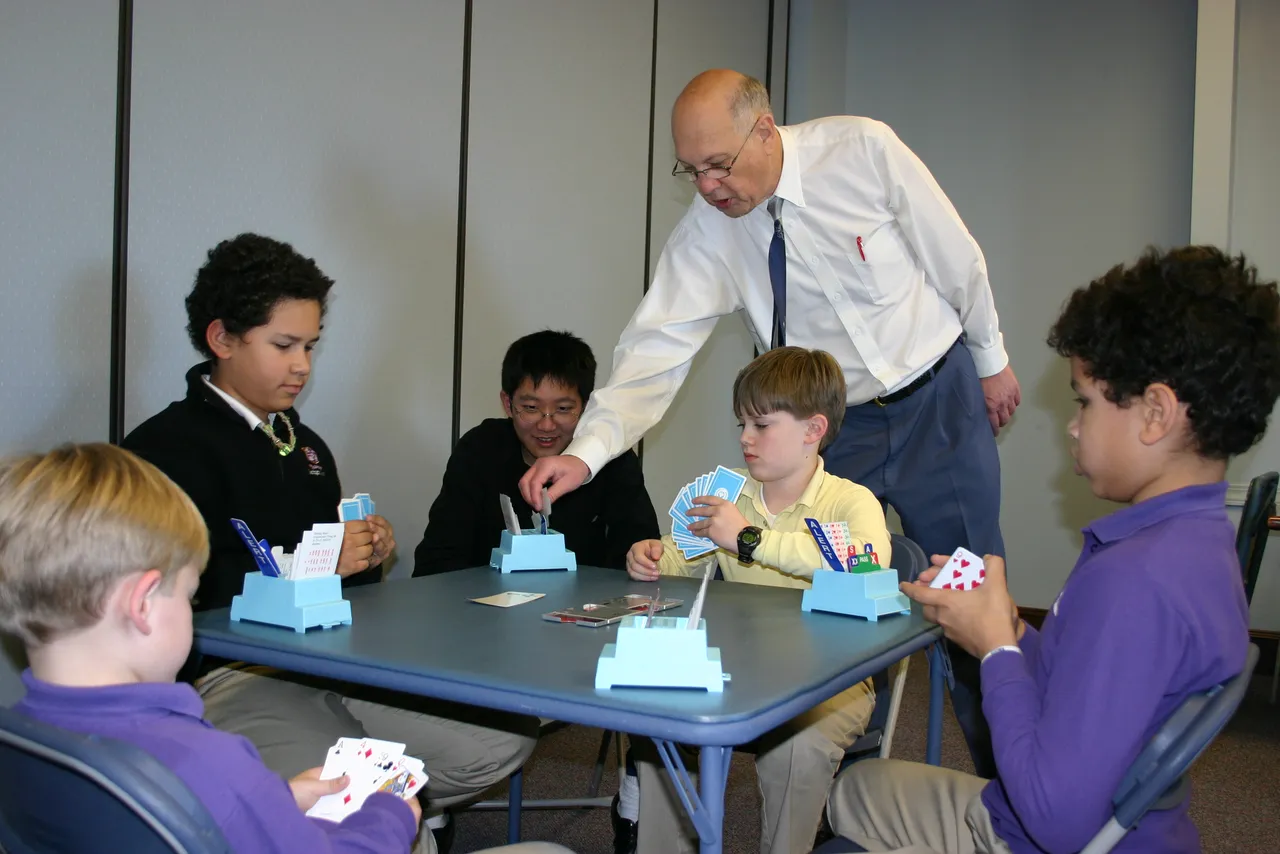
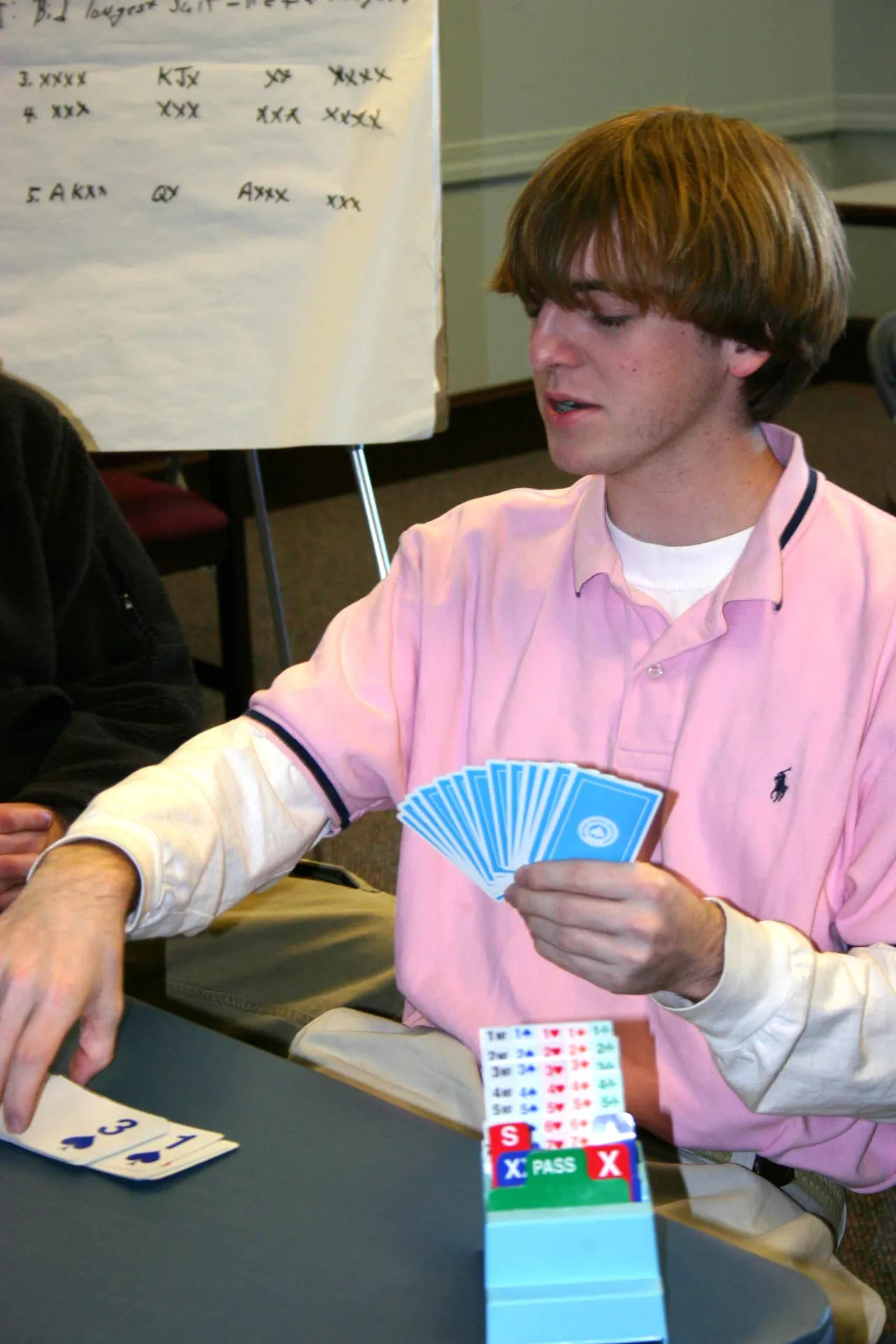
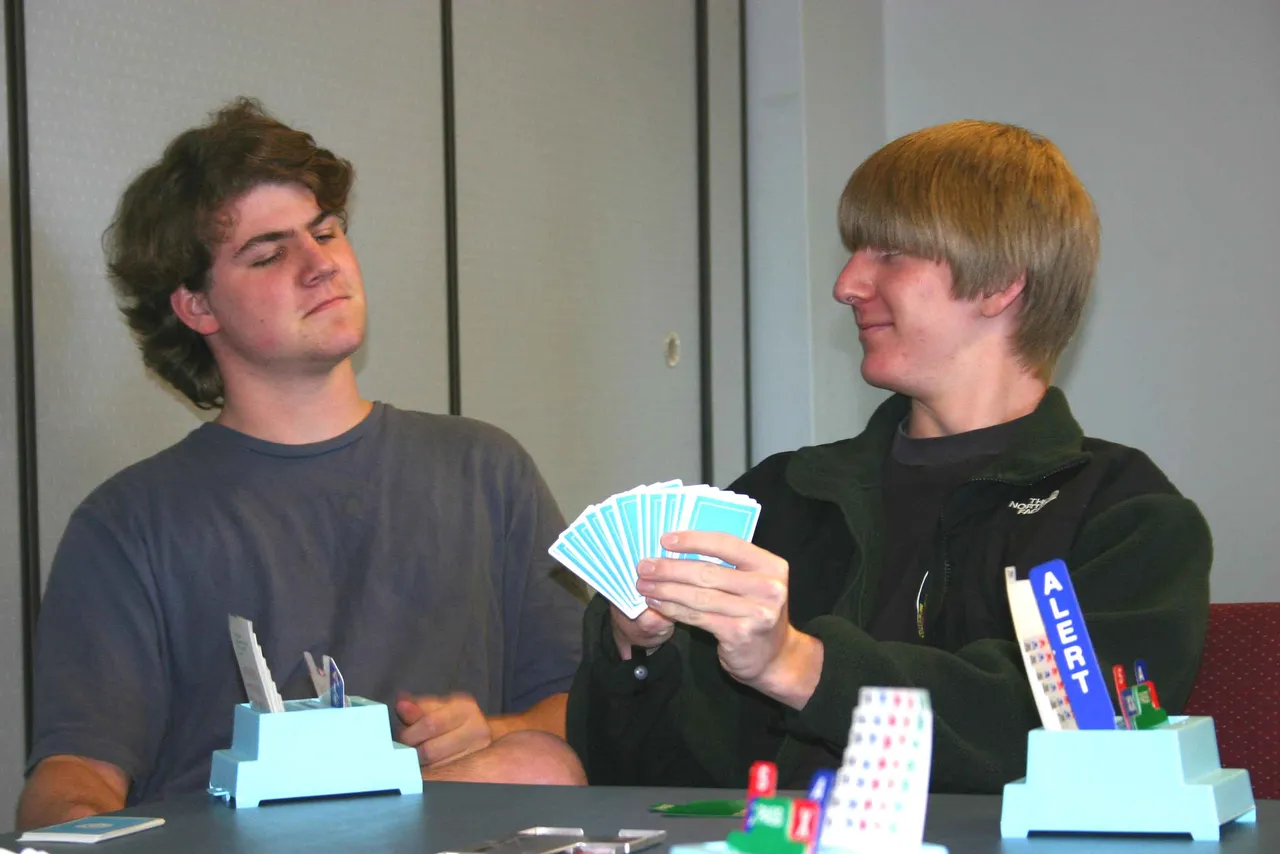
By including Lower School students in his after-school bridge club, Tollie Ross, German and Spanish teacher, is dealing the time-honored game into the hands of the next generation.
As a member of the American Contract Bridge League and a certified bridge instructor, Ross started the after-school activity in January, hoping to attract Upper School students. He was surprised when Lower students showed an interest in the game as well.
In an act of curiosity, Will and Asa Crawford, first and fourth-graders, respectively, joined Upper School students and their mentor in the bridge room after school one day. With a quick lesson, the brothers were hooked.
“One day my boys went upstairs with the invitation of Mr. Ross, and they have been playing ever since,” said Madge Crawford, librarian. “It is a thinking game that is great for their minds, and they are not afraid to jump in with the older students.”
According to Ross, who has been playing for 40 years, bridge is a game that greatly expands the mind by using math, logic, social, memory and goal-setting skills.
In no time, the Crawford boys challenged their grandparents to the age-old game, and won. “We stopped my grandfather from getting the tricks he needed,” said Will. “He was really surprised that we won.”
Theo and Xavier Welch, third and fifth-graders, respectively, can also be found at the bridge table on a regular basis. “I enjoy playing bridge every chance I get,” said Theo, who also plays speed and go fish in his spare time. “I like playing trump – when one suit beats all,” he said. “My favorite player is Mr. Ross.”
The Welch brothers’ mother, French teacher Nathalie Nicolay-Welch, said her boys are always excited to play and can’t wait to finish their homework so they can do so. “I always know that they are playing bridge after school and not going to the playground,” she said. “I think the game is great for their minds.”
Ross said the younger students have caught on very quickly. “The game is easy to learn but difficult to play well, and they are fascinated by it. I have often stayed late to play ‘just one more hand,’” he said. “We love having the Lower School students, and we encourage more to come. They get along just fine with the older students, and they are competitive as well.”
Ross has also been advising a high school bridge club for the past three years, hosting players from the Rome and Calhoun areas. Members meet in the library on Saturday afternoons to play and socialize. Darlington is the only local school to have such a program, and Ross encourages participation.
“I brought the idea of establishing a bridge club to Headmaster David Rhodes, and he gave it his blessing,” said Ross, who hopes that school-sponsored bridge leagues will develop in the area. “I would like to see competition between schools and students coming from surrounding areas to play.”
As bridge gains popularity amongst a young crowd, Darlington is leading the pack. The School has already been mentioned in “The Bridge Bulletin,” a monthly magazine produced by the ACBL, said Ross. “We are on the map because of our program,” he said. “Bridge players usually don’t go below seventh grade, and people can’t believe that I have them.”
According to Ross, bridge instructors are beginning to change their teaching methods, opting to drift away from routine drills and instructions. The new approach encourages students to have fun and learn while playing.
“Students tend to get lost when they are drilled, so I teach for only a couple minutes before I let the them play,” said Ross.
Students interested in playing bridge can meet Ross and his pupils at 3:45 p.m. Monday through Thursday on the second floor of McCallie-Kennedy Library.
“It’s not a game for Grandma anymore,” said Ross. “If a first grader can play, why not everyone else?”
*Written by Eric Molletta, PR intern from Shorter College
As a member of the American Contract Bridge League and a certified bridge instructor, Ross started the after-school activity in January, hoping to attract Upper School students. He was surprised when Lower students showed an interest in the game as well.
In an act of curiosity, Will and Asa Crawford, first and fourth-graders, respectively, joined Upper School students and their mentor in the bridge room after school one day. With a quick lesson, the brothers were hooked.
“One day my boys went upstairs with the invitation of Mr. Ross, and they have been playing ever since,” said Madge Crawford, librarian. “It is a thinking game that is great for their minds, and they are not afraid to jump in with the older students.”
According to Ross, who has been playing for 40 years, bridge is a game that greatly expands the mind by using math, logic, social, memory and goal-setting skills.
In no time, the Crawford boys challenged their grandparents to the age-old game, and won. “We stopped my grandfather from getting the tricks he needed,” said Will. “He was really surprised that we won.”
Theo and Xavier Welch, third and fifth-graders, respectively, can also be found at the bridge table on a regular basis. “I enjoy playing bridge every chance I get,” said Theo, who also plays speed and go fish in his spare time. “I like playing trump – when one suit beats all,” he said. “My favorite player is Mr. Ross.”
The Welch brothers’ mother, French teacher Nathalie Nicolay-Welch, said her boys are always excited to play and can’t wait to finish their homework so they can do so. “I always know that they are playing bridge after school and not going to the playground,” she said. “I think the game is great for their minds.”
Ross said the younger students have caught on very quickly. “The game is easy to learn but difficult to play well, and they are fascinated by it. I have often stayed late to play ‘just one more hand,’” he said. “We love having the Lower School students, and we encourage more to come. They get along just fine with the older students, and they are competitive as well.”
Ross has also been advising a high school bridge club for the past three years, hosting players from the Rome and Calhoun areas. Members meet in the library on Saturday afternoons to play and socialize. Darlington is the only local school to have such a program, and Ross encourages participation.
“I brought the idea of establishing a bridge club to Headmaster David Rhodes, and he gave it his blessing,” said Ross, who hopes that school-sponsored bridge leagues will develop in the area. “I would like to see competition between schools and students coming from surrounding areas to play.”
As bridge gains popularity amongst a young crowd, Darlington is leading the pack. The School has already been mentioned in “The Bridge Bulletin,” a monthly magazine produced by the ACBL, said Ross. “We are on the map because of our program,” he said. “Bridge players usually don’t go below seventh grade, and people can’t believe that I have them.”
According to Ross, bridge instructors are beginning to change their teaching methods, opting to drift away from routine drills and instructions. The new approach encourages students to have fun and learn while playing.
“Students tend to get lost when they are drilled, so I teach for only a couple minutes before I let the them play,” said Ross.
Students interested in playing bridge can meet Ross and his pupils at 3:45 p.m. Monday through Thursday on the second floor of McCallie-Kennedy Library.
“It’s not a game for Grandma anymore,” said Ross. “If a first grader can play, why not everyone else?”
*Written by Eric Molletta, PR intern from Shorter College