
BlogsAcademicsLibrary ServicesPre-K to 8
Book Review: 'Paperboy' by Vince Vawter
Aug 21, 2013 11:28 AM
By Liz Overberg - FF/S
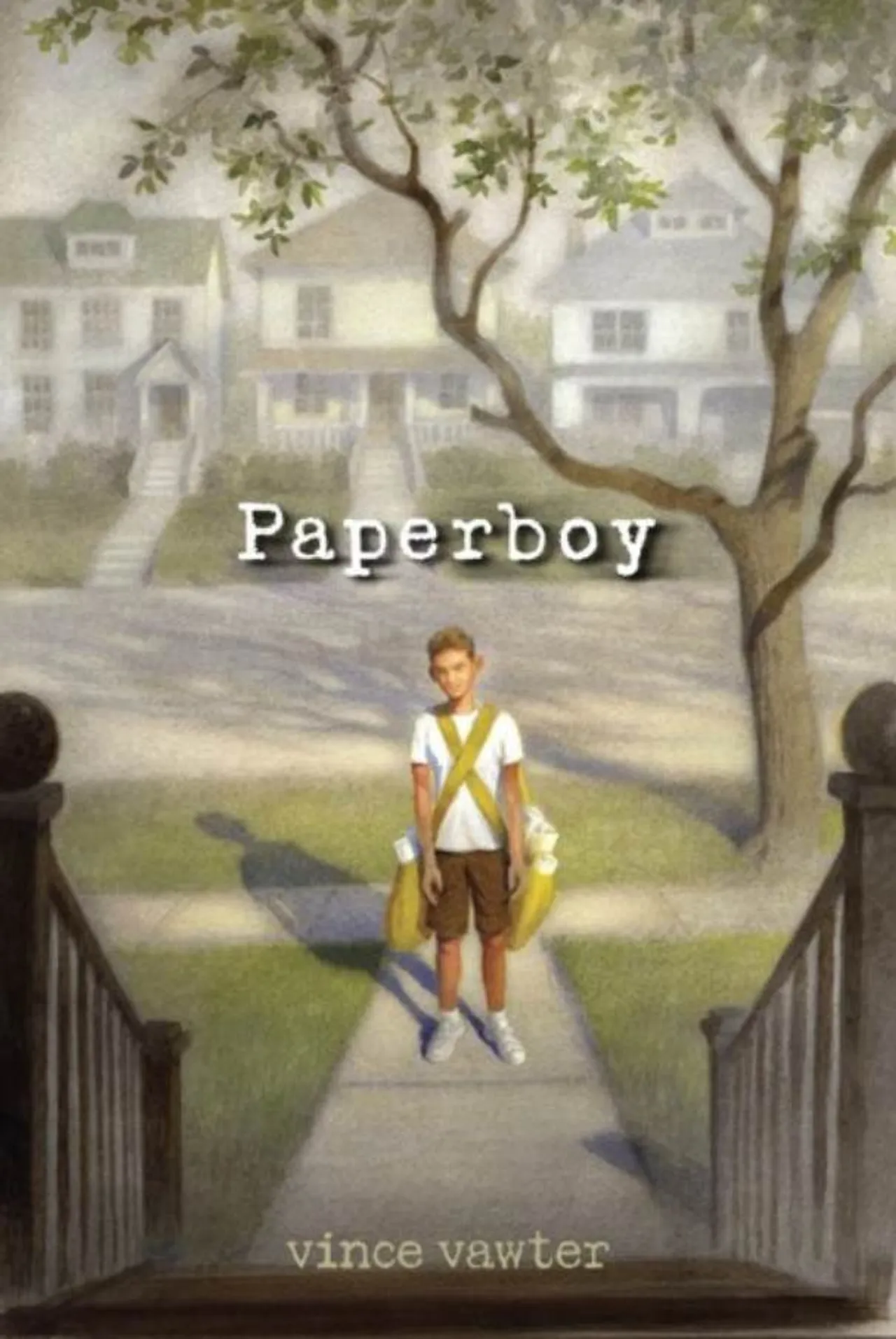
One of my favorite summer reads this year was a middle grade novel called Paperboy by Vince Vawter. Paperboy tells the story of an 11-year-old boy who agrees to take over his friend's paper route in the summer of 1959.
The boy is excited about the idea of earning money, and he knows he will be able to work hard and deliver the papers on time, but he worries about having to ask his neighbors for money on collection day. Meeting new people is uncomfortable--and sometimes even terrifying--for the paperboy, because he speaks with a stutter. His own name is almost impossible for him to say, so for most of the book he is known to his neighbors (and also to the reader) only as "the paperboy," or as "Little Man," the nickname given to him by his family's black maid.
Although speech therapy for children was not as advanced in 1959 as it is today, the paperboy does have a teacher who helps him with his speaking, and he utilizes several strategies when communicating with his paper route customers, like yelling, using extra breath, or dropping something before he speaks. Some of his neighbors assume he is unintelligent or rude, and most don't even attempt to communicate with him. But one neighbor, a kind man named Mr. Spiro, sees something in the paperboy that no one else has recognized. He sees that the paperboy is intelligent and thoughtful, and that he has something to say. He just needs a little help to find his voice.
It is difficult to believe that this compelling story is Vince Vawter's first book. He does an incredibly effective job of putting the reader inside the paperboy's mind, painting a realistic picture of what it's like not only to struggle with a speech impediment, but just to feel so much different than everyone else around you.
This is a wonderfully memorable coming of age story, which I would highly recommend to readers ages 10 and up.
The boy is excited about the idea of earning money, and he knows he will be able to work hard and deliver the papers on time, but he worries about having to ask his neighbors for money on collection day. Meeting new people is uncomfortable--and sometimes even terrifying--for the paperboy, because he speaks with a stutter. His own name is almost impossible for him to say, so for most of the book he is known to his neighbors (and also to the reader) only as "the paperboy," or as "Little Man," the nickname given to him by his family's black maid.
Although speech therapy for children was not as advanced in 1959 as it is today, the paperboy does have a teacher who helps him with his speaking, and he utilizes several strategies when communicating with his paper route customers, like yelling, using extra breath, or dropping something before he speaks. Some of his neighbors assume he is unintelligent or rude, and most don't even attempt to communicate with him. But one neighbor, a kind man named Mr. Spiro, sees something in the paperboy that no one else has recognized. He sees that the paperboy is intelligent and thoughtful, and that he has something to say. He just needs a little help to find his voice.
It is difficult to believe that this compelling story is Vince Vawter's first book. He does an incredibly effective job of putting the reader inside the paperboy's mind, painting a realistic picture of what it's like not only to struggle with a speech impediment, but just to feel so much different than everyone else around you.
This is a wonderfully memorable coming of age story, which I would highly recommend to readers ages 10 and up.