
NewsAcademics
Bird watchers get out for annual Christmas bird count
Jan 5, 2009 12:00 AM
By Tannika King - Faculty
Written by Kevin Myrick, Rome News-Tribune Staff Writer, published 12/28/08
Bird watchers around the world were counting their chickens during this holiday season as the 109th annual Christmas Bird Count made its way to Rome [Dec. 28]. The world-wide count, which helps produce population estimates of birds and studies of migratory patterns, involves thousands of people and covers thousands of species.
Darlington School science teacher Owen Kinney, who has been running the bird count in Floyd County for the past seven years, said Rome is a great place for bird watching and boasts some of the best birdwatchers around.
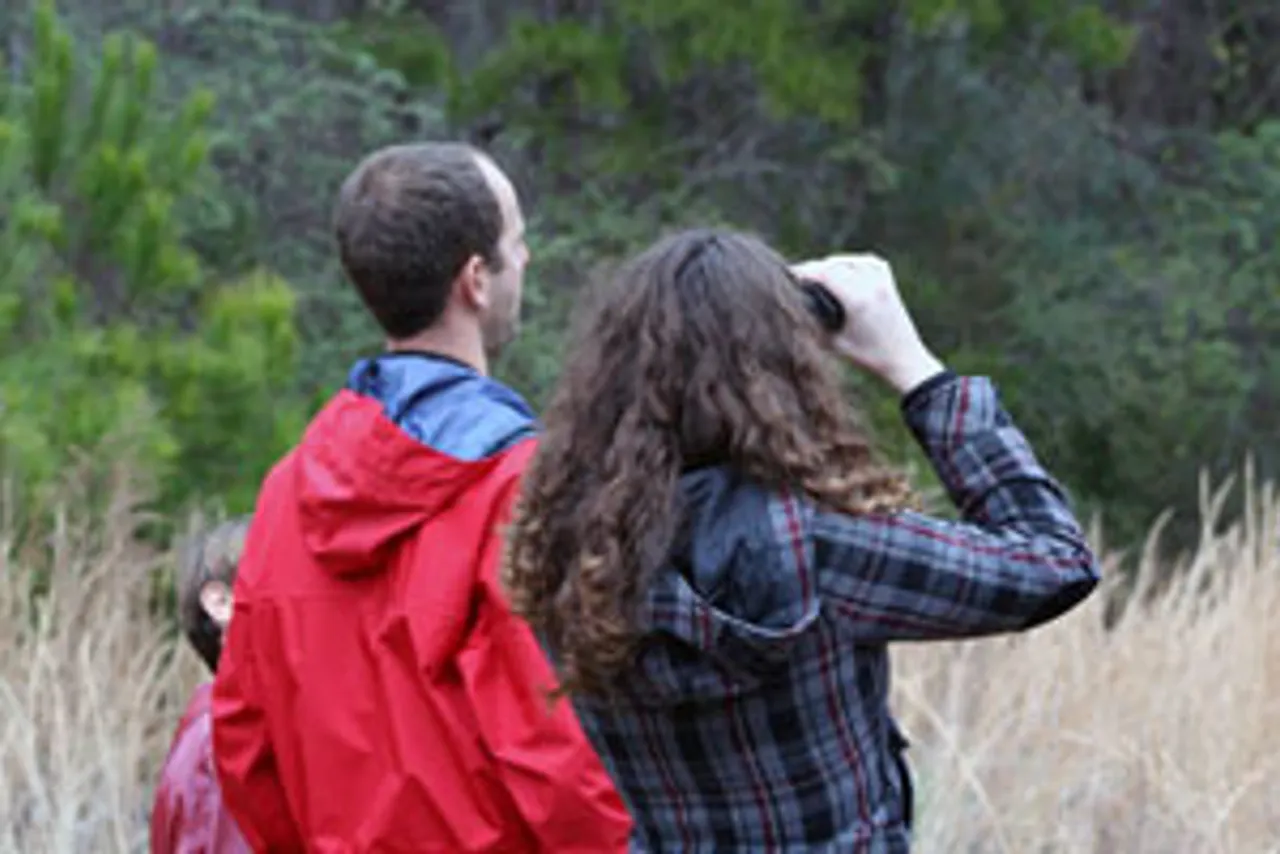
He - along with a couple of his students, his sone Ian and a few avid birdwatchers - tramped through mud and underbrush on the mountain campus of Berry College to see what species of birds they could find, from migratory visitors to the more commonplace species in Rome.
"When we do these kinds of surveys, we use the roads and the edges of fields as a route to seeing the different species of birds," Kinney explained while he pointed out both birds and poison ivy berries, which he said the birds "absolutely love to eat."
Annual bird counts might not seem useful to those unaccustomed to the environmental scieces, but Kinney knows better. He said annual bird counts are useful in determining the spread of viruses and diseases.
"When the bird flu was coming through, we looked at the crow population because we thought it was one of the carriers. And having all these sets of eyes helps with gathering information," he said.
Though Kinney and his flock of fellow volunteers weren't looking skyward for the purpose of helping to save lives Sunday, the annual count they participate in plays an important role in tracking loads of information about birds. And when the data is finally compiled, it will be added to the Audubon Society's large database of bird sightings, kept since 1899.
"This is such a huge data set over such a large area it really gives you an overall picture of what's happening to birds," Kinney said. "You get a meaningful picture of migratory patterns and of populations."
Monique Picon and her brother Hector were just two of the seven watchers who participated in the bird county with Kinney. Monique, 18, who takes Kinney's Georgia Natural History and Environmental Science class at Darlington, said it was "neat to get to come see the different species of birds we've been studying."
Hector, 13, thought it was "cool to see things I normally don't see" in the natural world.
The count wrapped up when the sun went down, but the work isn't done for Kinney. He'll still have hours of adding together all of the bird sightings from different areas in Floyd County before they can be sent off for inclusion in the larger database.
Bird watchers around the world were counting their chickens during this holiday season as the 109th annual Christmas Bird Count made its way to Rome [Dec. 28]. The world-wide count, which helps produce population estimates of birds and studies of migratory patterns, involves thousands of people and covers thousands of species.
Darlington School science teacher Owen Kinney, who has been running the bird count in Floyd County for the past seven years, said Rome is a great place for bird watching and boasts some of the best birdwatchers around.
He - along with a couple of his students, his sone Ian and a few avid birdwatchers - tramped through mud and underbrush on the mountain campus of Berry College to see what species of birds they could find, from migratory visitors to the more commonplace species in Rome.
"When we do these kinds of surveys, we use the roads and the edges of fields as a route to seeing the different species of birds," Kinney explained while he pointed out both birds and poison ivy berries, which he said the birds "absolutely love to eat."
Annual bird counts might not seem useful to those unaccustomed to the environmental scieces, but Kinney knows better. He said annual bird counts are useful in determining the spread of viruses and diseases.
"When the bird flu was coming through, we looked at the crow population because we thought it was one of the carriers. And having all these sets of eyes helps with gathering information," he said.
Though Kinney and his flock of fellow volunteers weren't looking skyward for the purpose of helping to save lives Sunday, the annual count they participate in plays an important role in tracking loads of information about birds. And when the data is finally compiled, it will be added to the Audubon Society's large database of bird sightings, kept since 1899.
"This is such a huge data set over such a large area it really gives you an overall picture of what's happening to birds," Kinney said. "You get a meaningful picture of migratory patterns and of populations."
Monique Picon and her brother Hector were just two of the seven watchers who participated in the bird county with Kinney. Monique, 18, who takes Kinney's Georgia Natural History and Environmental Science class at Darlington, said it was "neat to get to come see the different species of birds we've been studying."
Hector, 13, thought it was "cool to see things I normally don't see" in the natural world.
The count wrapped up when the sun went down, but the work isn't done for Kinney. He'll still have hours of adding together all of the bird sightings from different areas in Floyd County before they can be sent off for inclusion in the larger database.