Banned Books Week: Celebrating Our Freedom to Read

By Liz Overberg - FF/S
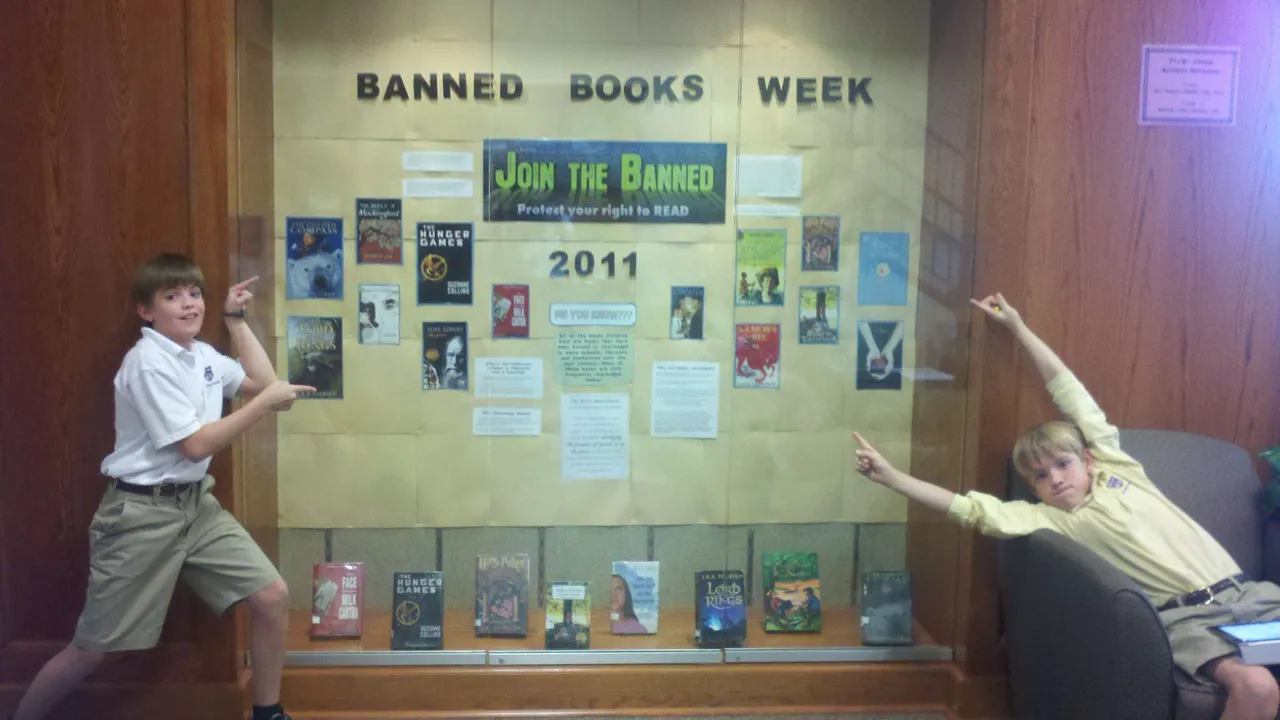
The American Library Association's Banned Books Week kicks off on Sept. 24 this year, and it's a week that those of us who work in school libraries love to celebrate and share with our students! Banned Books Week is a time for all of us--librarians, students, teachers, parents and community members--to reflect on some of the wonderful freedoms we enjoy as citizens of the United States.
The name of the celebration, Banned Books Week, can be deceiving. Rather than a time to support the banning of books, the week is actually a chance to celebrate the freedom to read and the importance of the First Amendment, which states that "Congress shall make no law...abridging the freedom of speech, or of the press."
According to the American Library Assocation's website, "Banned Books Week highlights the benefits of free and open access to information while drawing attention to the harms of censorship by spotlighting actual or attempted bannings of books across the United States."
It is not to say, of course, that every book is right for every child or that every book has value for every person. That is certainly not the case! But in an open and democratic society, every person has a right to choose what information he or she will access. In the case of children, the responsibility of that choice belongs only to the parent. According to the American Library Association's Statement on Free Access to Libraries for Minors, "Parents—and only parents—have the right and the responsibility to restrict the access of their children—and only their children—to library resources.”
The following Frequently Asked Questions further explain some of the facts about Banned Books Week. (These questions and answers are adapted from the American Library Association's webpage About Banned & Challenged Books):
What's the difference between a challenge and a banning?
- A challenge is an attempt to remove or restrict materials, based upon the objections of a person or group.
- A banning is the removal of those materials.
- Challenges do not simply involve a person expressing a point of view; rather, they are an attempt to remove material from the curriculum or library, thereby restricting the access of others.
Why are books challenged?
Books usually are challenged with the best intentions—to protect others, frequently children, from difficult ideas and information.
Often challenges are motivated by a desire to protect children from inappropriate sexual content or offensive language. The following were the top three reasons cited for challenging materials as reported to the Office of Intellectual Freedom:
1. The material was considered to be "sexually explicit."
2. The material contained "offensive language."
3. The materials was "unsuited to any age group."
Although this is a commendable motivation, challenges to library materials ask librarians to censor that material. Censorship by librarians of constitutionally protected speech, whether for protection or for any other reason, violates the First Amendment.
What Books Have Been Banned and Challenged?
Countless books have been challenged over the years, including many books that are now considered classics! Among the Banned and Challenged Classics are The Great Gatsby, To Kill a Mockingbird, The Color Purple, Huckleberry Finn, The Grapes of Wrath, Of Mice and Men, The Call of the Wild, The Lord of the Rings, and Gone With the Wind.
Many popular contemporary books have also been banned and challenged. Harry Potter was the most challenged book of the decade from 2000-09! The Hunger Games and Twilight made the list of the Top 10 Most Challenged Books in 2010. The His Dark Materials series by Phillip Pullman, The Giver by Lois Lowry, The Bridge to Terabithia by Katherine Paterson, The Face on the Milk Carton by Caroline Cooney, and The Kite Runner by Khaled Hosseini are just a few other examples of popular books that have been frequently banned and challenged in recent years.
To learn more about Banned Books Week, visit the American Library Association website or drop into your school or public library sometime this week! In the middle school library, we'll be celebrating with a display of banned books, candy, and free bookmarks about Truth, Censorship, Reason, and Tolerance.