Banned Books Week at McCallie-Kennedy Library

By Michael (Hall) Jacobs - FF/S
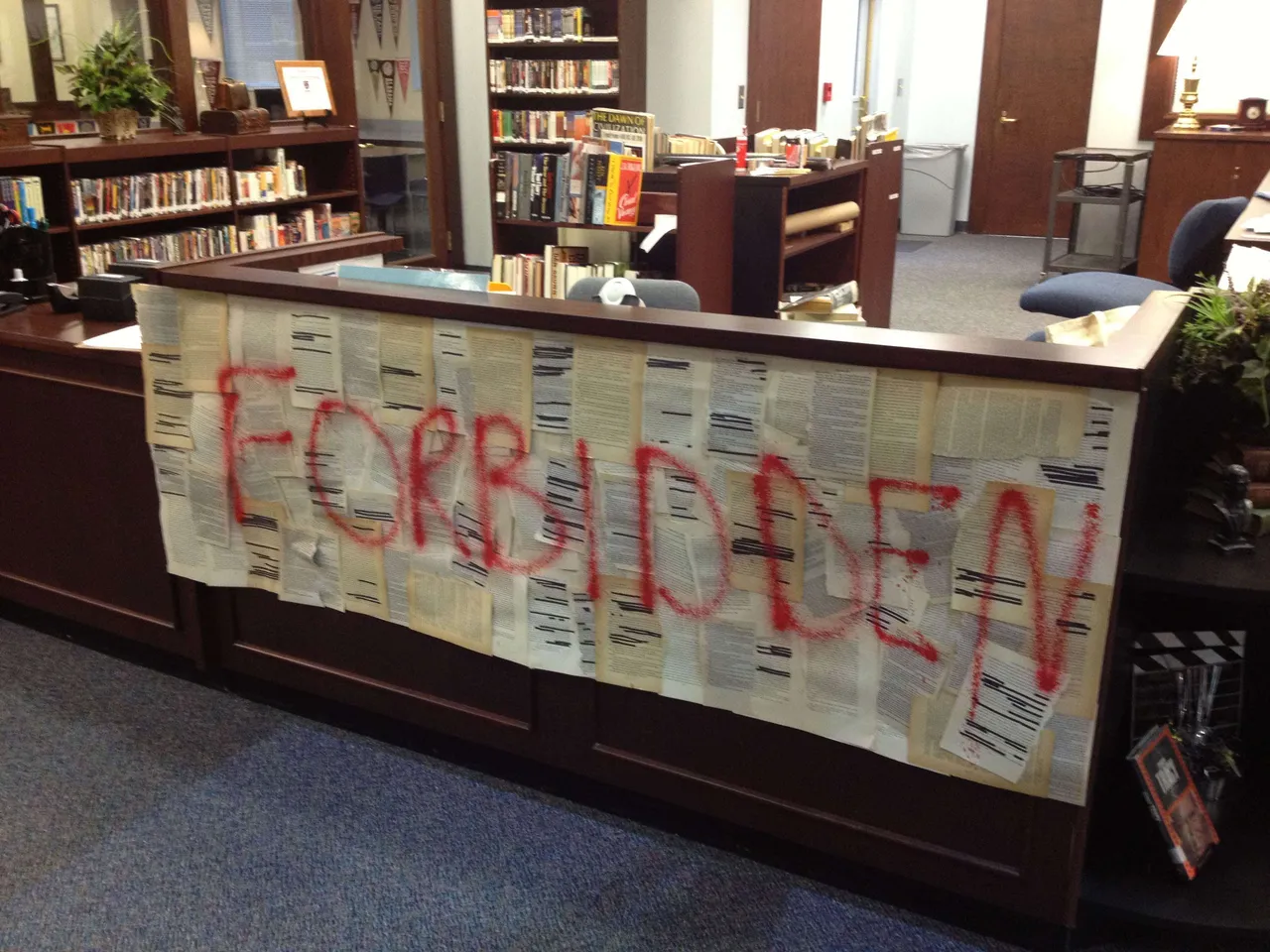
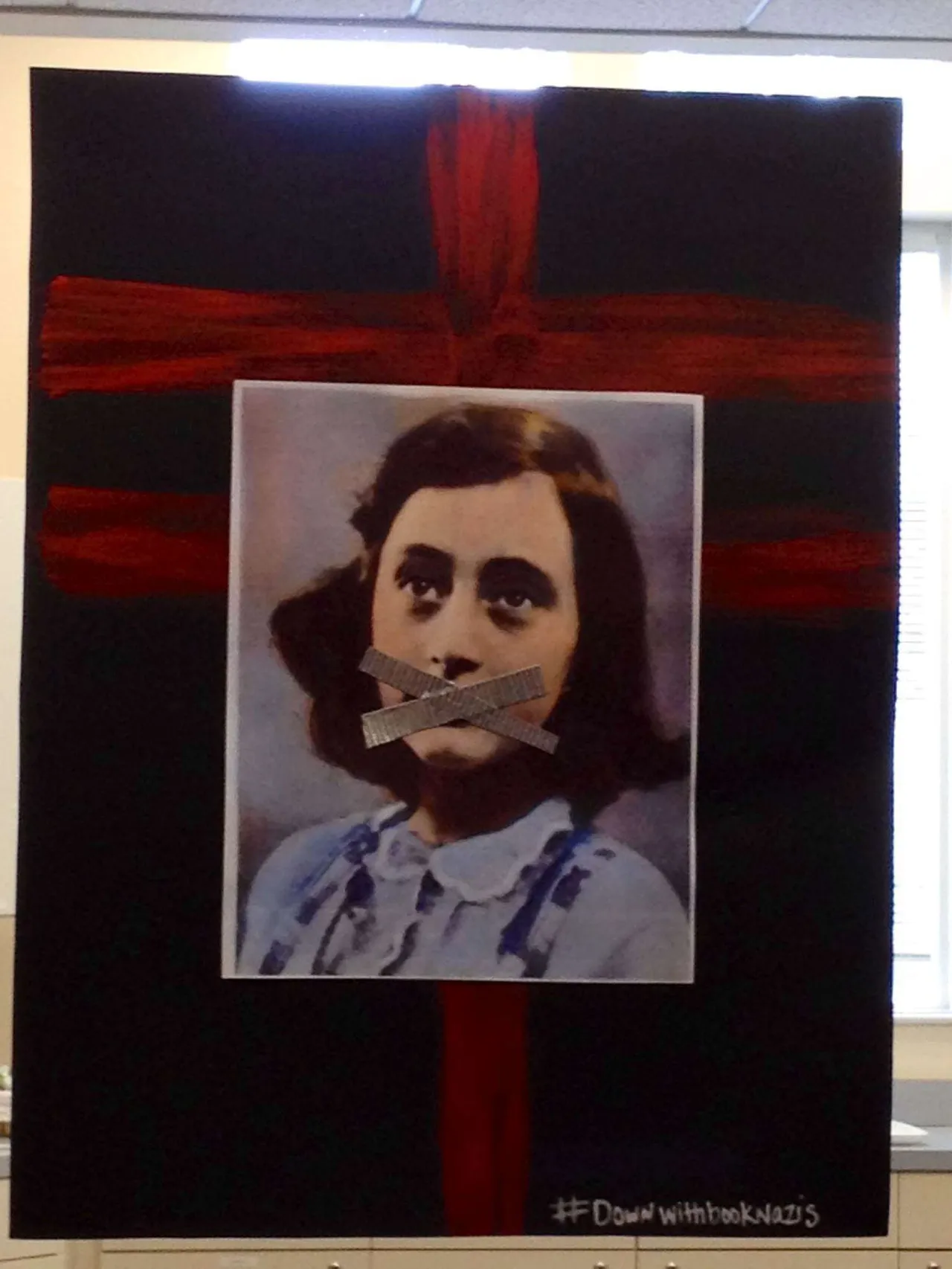
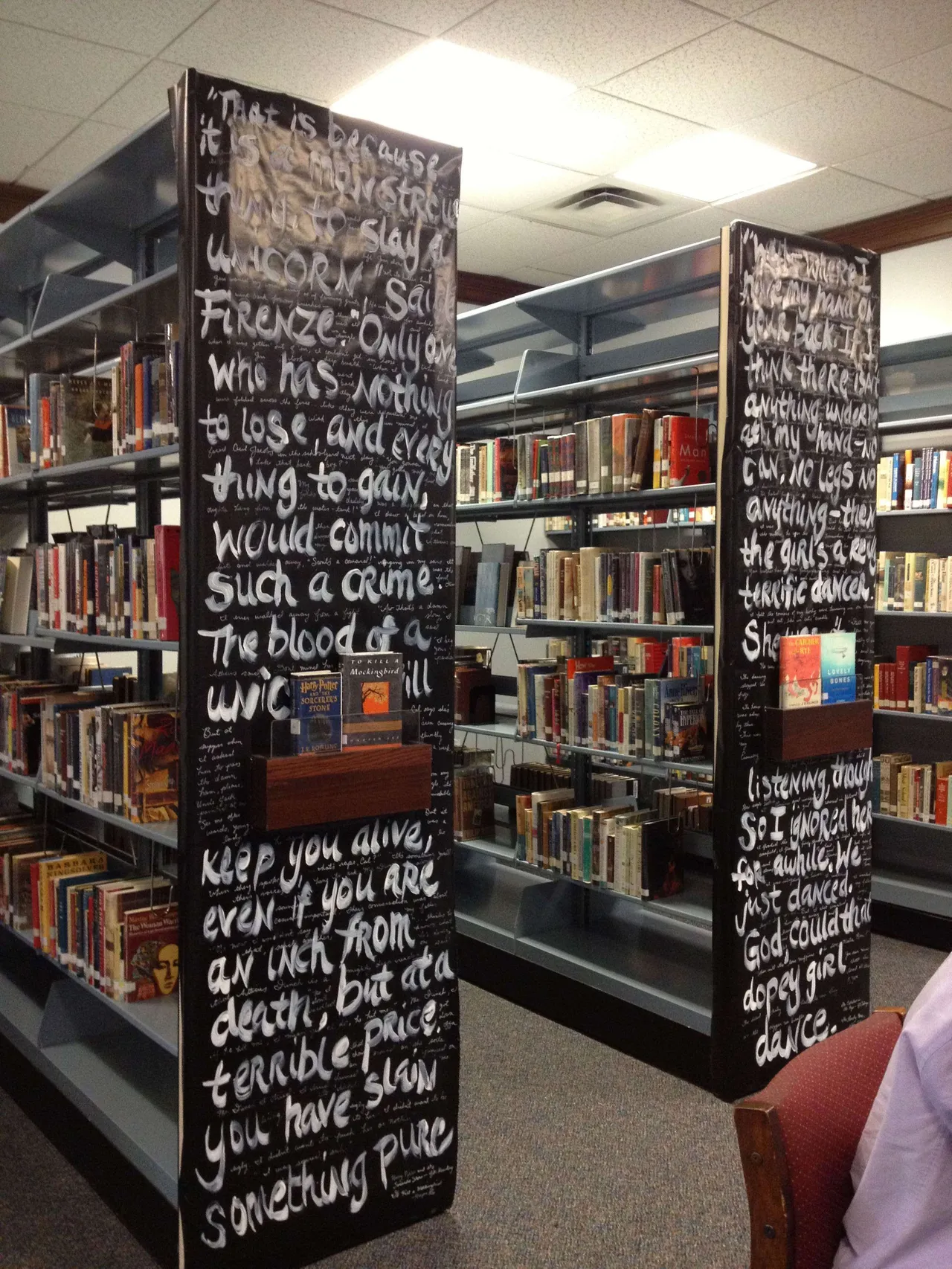
If you’ve come into the McCallie-Kennedy Library at the Upper School at any time in the past week, you may have noticed there are some curious decorations here and there that strike an odd resemblance to graffiti or some kind of militant propaganda. Well, that’s exactly what we were going for—an in-your-face awareness that every year, libraries and schools are pressured to limit access to books and other media because of individual responses to their content.
It’s easy for librarians to get their proverbial feathers ruffled at the mere mention of banned books, because when we’re in school, a lot of emphasis is placed upon freedom of information and open access. We spend a lot of time thinking and reading about the issues surrounding banning books while a large part of the world remains unaware of just how prevalent the issue remains. Hundreds of books are challenged each year and sometimes that challenge leads to a book being taken out of the library completely.
Here is what I want to point out: a lot of the challenges of book content come from good, concerned parents. They don’t want their children to be exposed to books and movies that have varying degrees of adult content before they are deemed prepared to handle it. It’s for a parent to decide what their kids should and should not read. If a parent believes that a book has something in it they find questionable and makes a point to let a librarian know they have a problem with its presence in the library; that is called a challenge. If enough pressure is placed on the library by a parent or group of like-minded people, there is the expectation that the library must do something to accommodate these protests.
This is where it gets sticky: book banning occurs when an individual or group gets the book removed completely—preventing everyone from using the library for its original purpose: free books. The American Library Association’s stance on this has always been unwavering—the library should not withhold. Ever. This is not to say there is no respect for people’s methods of parenting, but when it comes to books, choose whether or not to read them, and let everyone else do the same. Can you imagine what would happen if libraries and schools were subject to the literary opinions of any and every person who wished to keep others from reading? That would be a world in which some of the greatest literature ever written was kept under lock and key; brains would suffer mightily. No Atticus Finch gently lighting the moral way. No Holden Caulfield spotting all the phonies. No Albus Dumbledore with his piercing blue eyes surveying us over his half-moon spectacles—definitely no Harry Potter theme park.
In the simplest terms, book-banning is an infringement upon our rights. In more complicated terms, book-banning is an infringement upon our rights. Celebrate the freedom to read every day.