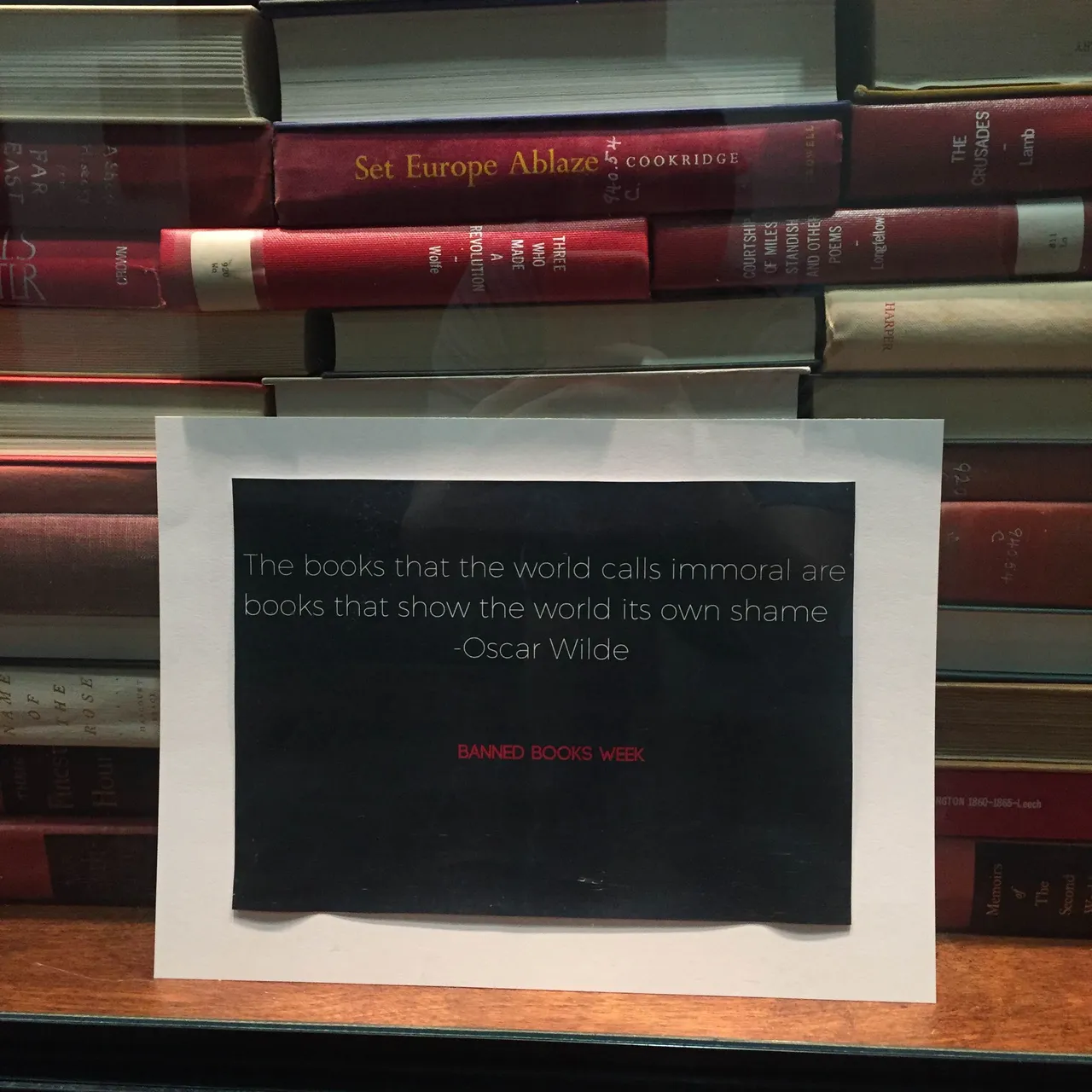
Banned Books Week | September 26-30

By Michael (Hall) Jacobs - FF/S
“The silent influence of books is a mighty power in the world…Silent, passive, and noiseless though they be, they yet set in action countless multitudes, and change the order of nations.” —Henry Giles
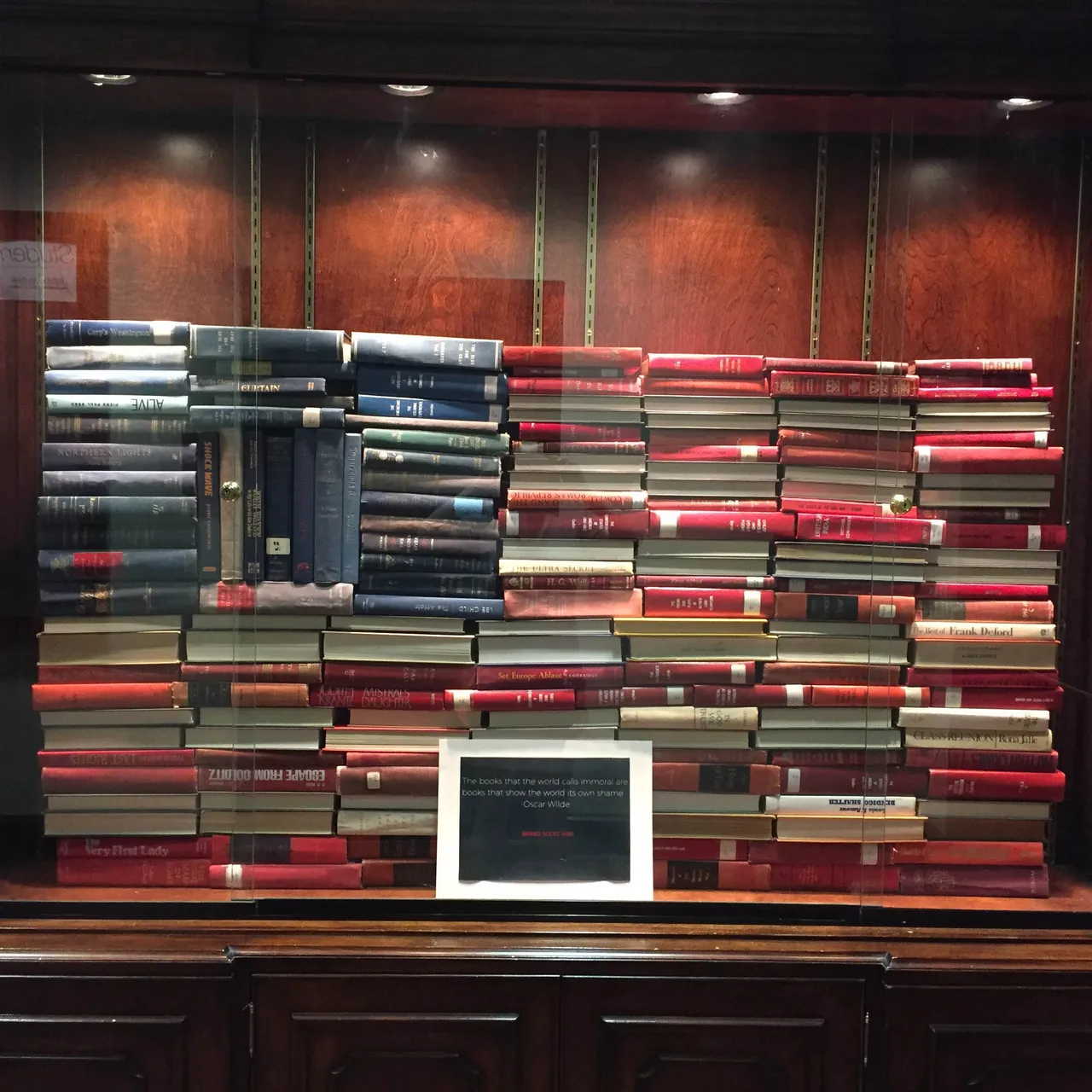
I spent a Sunday afternoon a few weeks ago setting up a prototype of the American book flag that is now in the library display case, a Sunday which happened to be September 11, and the 15 year anniversary of the deadliest foreign terrorist attack on American soil in history.
I sat down and looked at the finished product, the muted blue and red spines depicting the symbol of American freedom, at the same time suggesting a much bigger freedom within their recesses. In general, libraries and their books have been an accepted emblem of freedom and access to information for hundreds of years—anyone who can read may contribute to their own lifelong learning.
The fact that it is a library’s main mission to provide access to the information to whomever requires it is why the American Library Association devotes much of its time and resources to educating individuals about censorship and the slippery slope of book challenges leading to book banning.
Banned Books Week is one way out of many that schools and libraries celebrate the freedom to read and provide education on the negative effects of censorship, book challenges, and the global history of book-banning. Banned Books Week’s professed goal is to “teach the importance of our First Amendment rights and the power of literature, and to draw attention to the danger that exists when restraints are imposed on the availability of information in a free society”.
Globally, America is widely associated with the concept of freedom; Amnesty International is another organization that celebrates Banned Books Week by showcasing individuals who have been oppressed because of the writings they have produced, shared, or read. By updating current reported cases in which people have been killed, persecuted, or sent to prison by national authorities around the world specifically for their published writings, Banned Books Week has a timely impact on readers today. Book banning is not a thing of the past, and this week keeps us conscious of how our First Amendment rights are not easily won and not always attained in other countries.
Resources
For more information about the differences between a challenge and a banning:
https://www.ala.org/bbooks/about
American Library Association’s Intellectual Freedom Blog
Amnesty International website- censorship section
https://www.amnestyusa.org/our-work/issues/censorship-and-free-speech
Follow the trending #BannedBooksWeek all next week on Twitter!