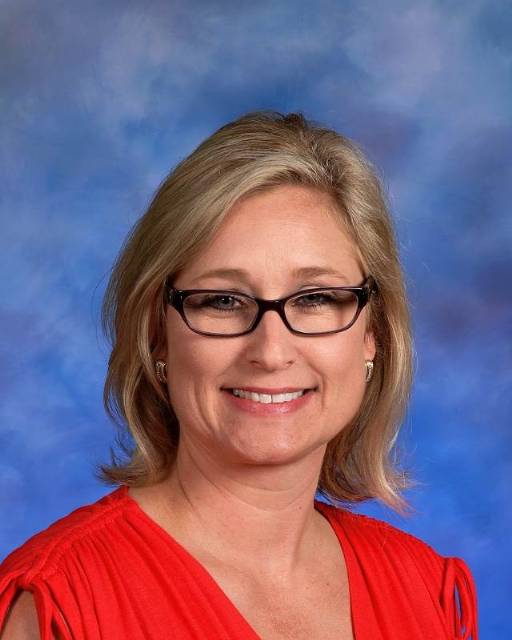
What a delightful afternoon I spent on Tuesday in the Early Learning Academy with Mrs. Hutchins and her three kindergarten students. The excited children were seated around a kidney-shaped table while Mrs. Hutchins was encouraging them to use round chips that were each labeled with a letter from the alphabet. She asked them to make a rainbow using their letters. The little girls were singing the alphabet song softly to themselves as they were placing the chips along the rainbow.
As they worked, Mrs. Hutchins reminded them that the vowels were different colored chips. Facilitating their learning, Mrs. Hutchins asked them questions such as, “How many letters are in the alphabet? How many of those are vowels?” She praised each child as she worked, specifically focusing on individual needs. The students began to spell words as Mrs. Hutchins asked them to pull out “at.” The small voices began to softly make the sounds /a/ and /t/ as they dragged them from the alphabet rainbow. They would expertly sweep their tiny fingers under /at/ to show that they understood the individual letters came together to make that word.
She continued to build upon their prior knowledge by telling them, “Now add “r” to the beginning of your word.” As the girls pronounced each letter in the new combination, they each read /rat/. “What if I replace the /r/ sound with an /m/ sound? What word do I have?” She continued to guide them by asking them to tell her a word that rhymes with at, rat, and mat. Isabella suggested, “cat”. All this time, she was finger tapping the individual sounds in the words. The children followed her lead and began tapping the new words with her. Mrs. Hutchins explained how easily new words were made simply by changing the beginning sound. She quickly praised the students and asked them to move their chips out of the way.
Connecting her instruction to the classroom, she asked the learners what letter was the focus in their homeroom. She reviewed the letter, as well as the others previously studied, by having the students trace the letters, while saying the letter simultaneously, on a small purple square of felt. She gave each student an individual assessment, along with feedback, as they were practicing their letters. This fast-paced lesson included continuous relevant feedback to each little girl.
Next, she introduced syllables by modeling the breaking apart of words to count individual syllables. She led the learners in counting the syllables in each word by tapping their wrists at each individual syllable. After the young ladies read their book, which featured the word of the day, “the”, they each read the sight words that were taped to the wall at the door as they returned to their classroom.
After her lesson, Mrs. Hutchins and I had the opportunity to discuss the unique method of instruction she uses to teach reading. She explained that she was trained six years ago in the Orton-Gillingham Method. This intensive method uses a sequential phonics-based system that teaches the basics of word formation before whole meanings. It utilizes the various learning modalities – visual, auditory, tactile, and kinesthetic. This multisensory approach is full of action and constant interaction between the teacher and student.
We have always known that the more ways information is put into the brain, the easier it is for the brain to retrieve it at a later date. It provides what experts call multiple “triggers” for retrieval. During Mrs. Hutchins’ direct, explicit instruction, her students were actively involved in phonogram drills, syllable work, review and reinforcement as well as oral reading. This lesson is a perfect example of what I have always known to be true, “Teaching reading IS rocket science!”