In light of the recent staph outbreaks reported by schools across the United States, Darlington’s Student Health Center staff felt it was important to share information on preventative measures that may be taken to decrease the chance of getting and/or spreading an infection.
According to Renate Starr, Health Center nurse, staphylococcus aureus is a common bacteria that is part of the normal flora found on the skin or inside the nose. Most people who contract a staphylococcus infection have no symptoms.
In fact, staph infections, often spread in gyms and locker rooms, are not life-threatening and can usually be treated with penicillin. However, in recent years, the emergence of new strains resistant to commonly used antibiotics has become an increasing health care concern.
The methycillin-resistant staphylococcus aureus (MRSA), first discovered in hospitals, and community-acquired MRSA (CA-MRSA) often start as a painful bump. The infection may be mistaken for a spider bite as it often presents as a pustule with a small mark in the center. The infection is spread by skin-to-skin contact.
To avoid the possibility of contracting a staph infection, one should adhere to the following preventative measures:
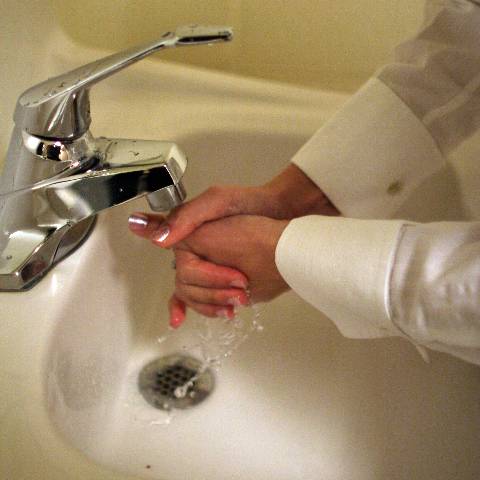
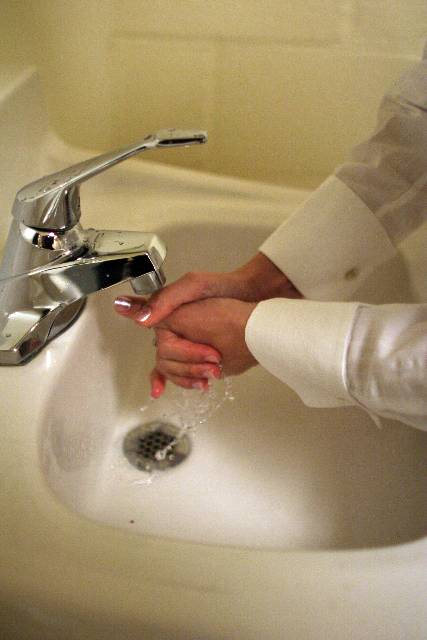
• Wash your hands frequently with soap and water;
• Cover any wounds or sores with a band aid or large dressing and keep them covered until healed;
• If you have a skin abrasion, cut, or other skin infection, keep your hands especially clean (before and after cleaning these wounds, before eating and after using the bathroom);
• Use your own soap, towels, and sports equipment, and clean shared sports equipment before use with antimicrobial towelettes;
• Get a flu shot; the flu greatly reduces a person's immunity to staph;
• See the school nurse or your health care provider if sores are swollen, red, painful, or draining. Do not try to drain lesions yourself. If it is MRSA, you may spread the germ;
• Notify the school nurse of any suspected cases or confirmed cases in order to look for patterns in groups or locations.
“This bacteria does seem to appear more often in athletic facilities due to humid, sweaty air and direct bodily contact,” said Starr. “Our facilities staff is aware of this potential problem and is using a bactericidal cleaner that specifically kills MRSA bacteria. Coaches have also been alerted to ensure that students know not to share soap or towels. Awareness and prompt treatment usually ensures a positive outcome.”
You may be hearing or reading various media reports on “Community Acquired Staph” or MRSA. Please know that Darlington staffers – nurses, teachers, coaches and facilities personnel – are being proactive to keep our school community healthy. If you have any questions, please contact Renate Starr at
rstarr@darlingtonschool.org.